Via Jacobi
Location: Switzerland, France
Duration: 12 days
Type: Pilgrimage/walking

The Camino de Santiago is a network of pilgrimage routes leading to the city of Santiago de Compostela, where, according to Christian tradition, the remains of Saint James are buried. For many centuries, pilgrims from all over the world have followed these well-marked and long-established routes. The main routes lead to the tomb of the Apostle through France, Portugal, and Spain itself.
These are well-traveled roads, followed every year by hundreds of thousands of pilgrims, each pursuing their own religious, spiritual, or simply touristic purpose.
Yet beyond these main routes there is a vast network of feeder routes stretching across Europe, gradually converging on the starting points of the principal Caminos. Together, they form a web spread across countries shaped by Catholic tradition and history.
So much has already been written, filmed, and said about the major Caminos that I have little desire to repeat it. Instead, I would like to tell the story of several segments of these lesser-known “approach routes,” lying thousands of miles from Santiago and consequently attracting very few pilgrims. And yet these roads are every bit as wonderful—and unforgettable.
Just 20 years ago, the Camino looked completely different from what it is today (I highly recommend Hape Kerkeling’s book “I’m Off Then” — a vivid, humorous account of walking the French route from Saint-Jean-Pied-de-Port in the early 2000s). Not to mention that relatively recently, in the 1980s, Paulo Coelho walked to Santiago de Compostela almost entirely alone.
And now, within just a few years, demand has grown to such an extent that alternative and more remote sections have had to be actively restored—some completely exotic routes leading into the main Caminos. Long-forgotten paths have resurfaced, along which medieval pilgrims once traveled to Spain from Malta, Sicily, Croatia, and who knows where else. A whole ecosystem has emerged to support these routes across different countries, consisting of volunteers, private organizations, and travel companies. The Church and relevant municipalities have also not stayed on the sidelines.
As a result, today all of Europe, much like in the Middle Ages, has once again become covered with a web of countless active walking trails leading toward the "place marked by a star"

(https://www.caminoninja.com/routes)
When planning this trip, I was guided by two main ideas:
- If it’s not possible to walk the entire long route in one go (and it isn’t), then it is better to break it into sections and complete it in several stages, rather than settling for a single final but shorter stretch.
- If there are many Caminos and multiple access routes to their starting points from different countries, and these themselves consist of numerous segments, then why not select the most atmospheric and scenic ones—those that best match our idea of an ideal, meaningful journey (that is, secluded but not extreme; challenging but without long stretches along highways or industrial zones). And thus, walk not one continuous route, but several segments from different paths, with the final one being the last approach directly to Santiago de Compostela.
And so our plan took shape, one that will last several years and stretch across a thousand walking kilometers.
Our first Camino segment is the Via Jacobi (Fribourg – Geneva)—the shortest, gentlest, and a kind of trial run. I tried to ensure that no day’s walk exceeded 20 kilometers, considering my mother’s age and almost complete lack of experience with backpacking (upd. didn’t quite work out). This section is meant to test what we are actually capable of (upd. turns out—quite a lot!).
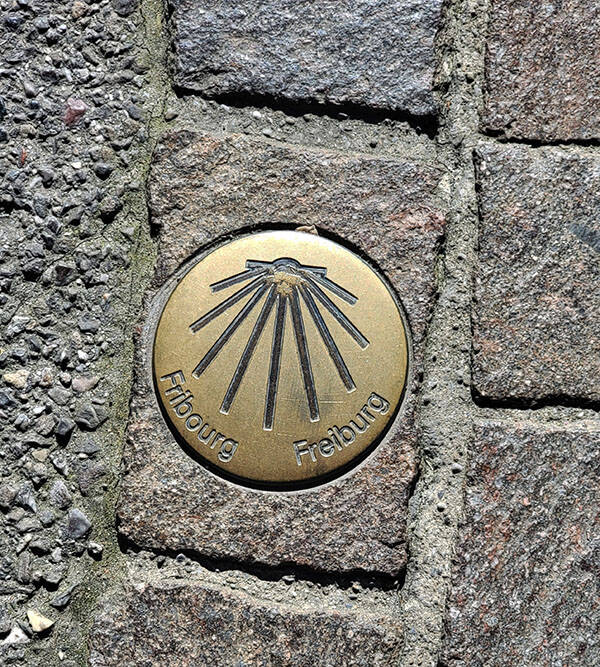
One small remark: we will occasionally deviate from the shell-marked path to visit places of interest outside the Camino itself. As a reminder, the scallop shell markers on the Camino symbolize the pilgrimage route to Santiago de Compostela, and its radiating “rays” represent the many roads leading from different places toward the same destination—Santiago. In addition, the first few days can safely be described as a warm-up. So this narrative should not be taken as a strict guide to the Via Jacobi.
Since we will be traveling in a “everything I need I carry on my back” format, we can’t really be called turigrinos (those who walk without luggage while their bags are transported separately). We are rather comfortable pilgrims, who still prefer private hotel rooms with showers and baths over hostels and albergues.
Well then—backpacks packed, shoes comfortable, weather forecast excellent. Time to set off!
Arrival day

We arrived in Geneva in the second half of the day, which meant that in our heads it was already night. So all that was left to do was get to the city center, stock up on food, and head to the hotel.
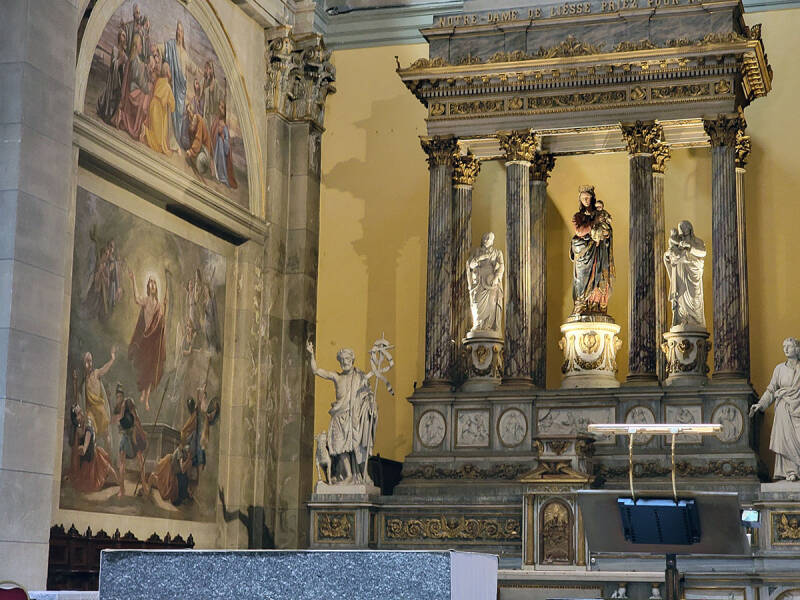
Geneva is the final point of our journey, but who knows whether there will be enough time and energy for stamps at the end of the trip, so first we stopped by the nearby Basilica of Notre-Dame close to the train station.

The elderly man who stamped our pilgrim passports was very eager to share his Camino experience with us, but our French, to put it mildly, leaves much to be desired. So all we really managed to catch were “magnifique cathedrals,” “landscapes,” and “Le Puy-en-Velay,” with which, of course, we fully agreed—we dream of going there ourselves.
We stocked up on food at the best shop in the world—the Geneva Food Manor—and headed to the hotel. Geneva in April is incredibly green, warm, and fresh.

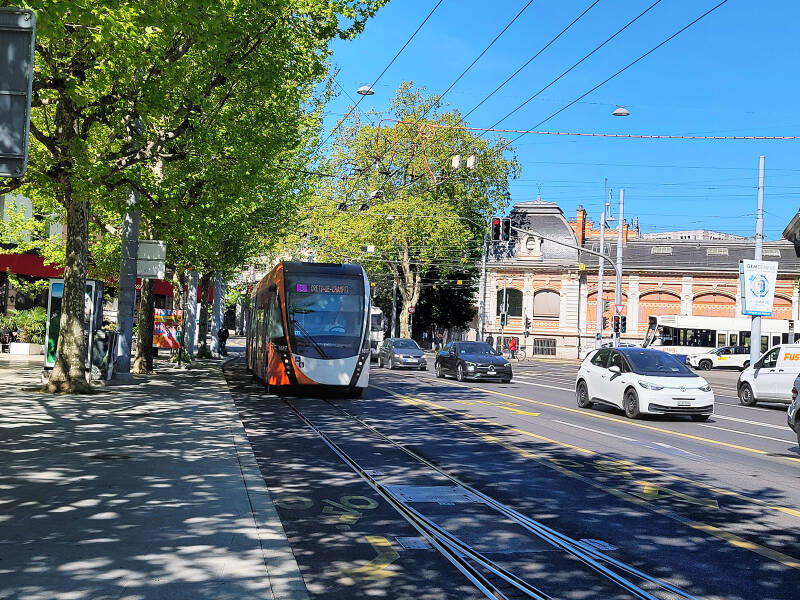
Everything around us felt sunny and gentle; the city smelled of expensive perfume, delicious food, the coolness of the purest lake, and fresh young grass.


We arrived hungry, since neither of us can tolerate airplane food. The feeling was strange—I had left with sharp lower back pain, and twelve hours of sitting on a plane, of course, did nothing to improve it. So the arrival felt dissonant: I wanted to howl from pain and from delight at the same time.
We limped our way to the hotel and checked in, insisting we were wide awake and full of energy. We were, after all, the very picture of alertness! We took off our backpacks—ah! sat down on the edge of the bed—oh! How? How had we already slept four hours? When did that happen? And how did we manage to eat everything—we had packed a full bag of food, hot meals and desserts included?
Well then. A few back exercises, and back to sleep. Early start tomorrow.
Along the way, I will note the places where we received stamps, because on lesser-known Caminos these are not always as obvious as in Catholic Spain, France, or Portugal (it should be remembered that Switzerland was for a long time a center of Protestantism, and although the number of Catholics is now growing again, Catholic churches are still less common).
Gratitude of the day: thank you to my lower back for letting me reach the starting point. I believe in it! The beginning is made!
Mood: joyful anticipation
Stamp: Basilica of Notre-Dame, Geneva
Day One
Today’s plan is a walk to Geneva’s Old Town and the Cathedral of St. Peter, followed by a train ride to the starting point of our route: the city of Fribourg.
We received our stamps together with other pilgrims at the main cathedral in Geneva.


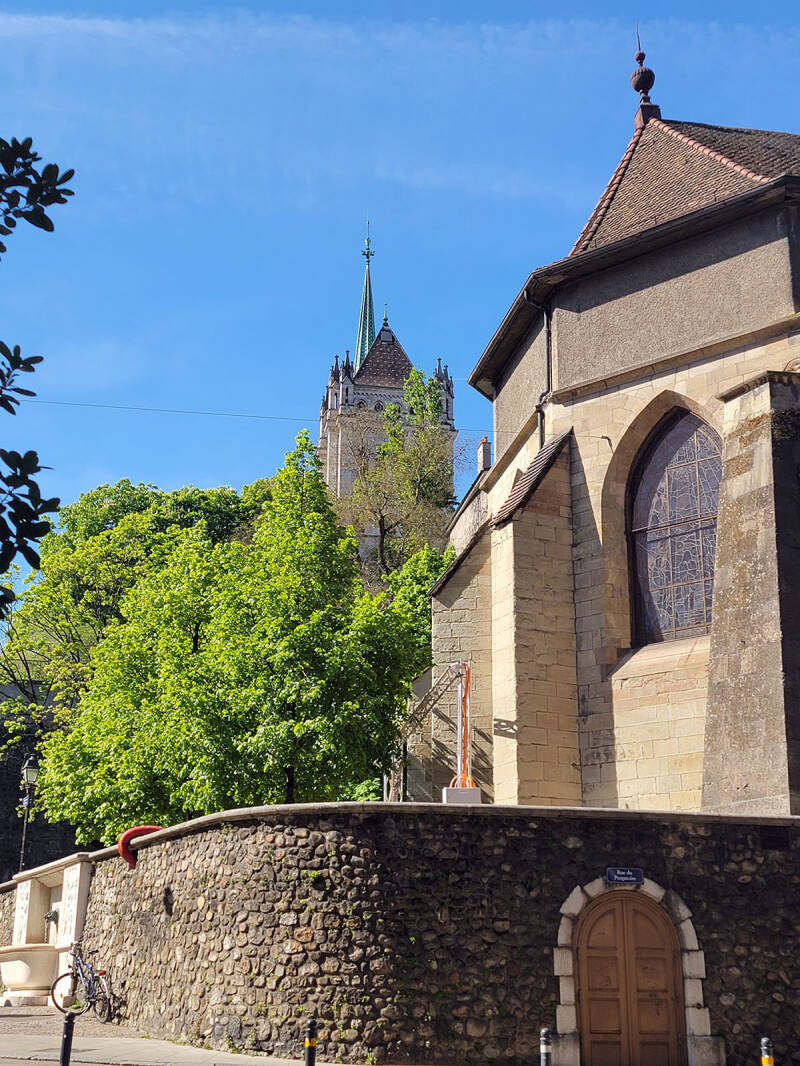
After a short walk through the Old Town, we headed to the train station.
Train service in Switzerland is organized with flawless precision—perfectly punctual, maximally convenient, simple, clear, rational, and safe. Every train is clean, with excellent restrooms, screens showing the list of stops and the train’s current location. We would take many trains on this journey, and not once, anywhere, were we asked to show our tickets, even though of course we had bought them all in advance.
We boarded the train. Outside the window, yellow rapeseed fields gave way to perfect pastures, then to fields of blooming coltsfoot, and again to rapeseed fields. The sky was blue, warm, and sunny.
Fribourg struck us with its emptiness. It felt like a set from a historical film that had already been shot and left behind.


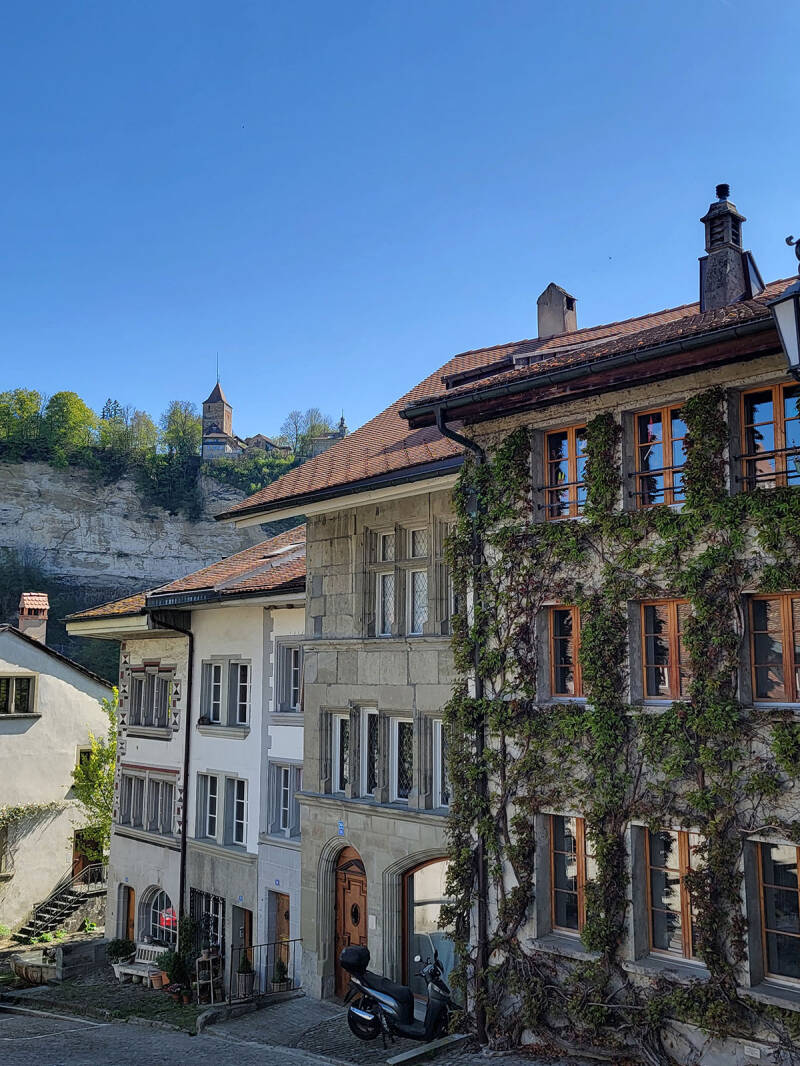
Cleaned, beautiful, and empty. Fribourg is part of German-speaking Switzerland and, in appearance, it really feels more like Germany. We walk through the Old Town.

Underfoot, the Camino markers appear again, and that immediately sets the tone for adventure—people pass by without even noticing these signs, while you walk with your own quest, searching for clues along the way. There is something mysterious and intriguing in that.
We stepped into the magnificent Cathedral of St. Nicholas.

I adore sunny days in churches with bright stained-glass windows — it always feels like a play of light, a living rainbow.


We got our stamp

and left the Old Town, heading down the steep slope toward the river and the Bern Bridge. It was not so much the bridge itself that impressed us, but the picturesque steep riverbanks.


To make our way back to the Old Town and the hotel, we took a loop through the deserted streets. Everything was so neat and beautiful, yet so empty that it almost felt awkward. How all the many bakeries and cafés survive, I have no idea—perhaps they are simply waiting for the tourist season.
Gratitude of the day: to my head, for deciding to settle for a one-day migraine instead of a long one. It did turn me completely inside out, of course, but at least it happened in a hotel! Which is far more convenient than, say, right in the middle of Versailles or on the Norwegian fjords, as has happened before. Definite progress.
Mood: excellent!
Stamps: Cathedral of St. Peter, Geneva; Cathedral of St. Nicholas, Fribourg.
Day Two
So, we are finally at the starting point — and immediately stray from the Way of St. James, because not far from Fribourg there is a small town that simply had to be included in our plans. And the route there follows an incredibly beautiful trail.
In the morning, we took the train to the station in Bulle.

And off we went.
It immediately became clear that we had made the right decision in spending this day on a side trail—around us unfolded such idyllic pastoral scenes that stress levels dropped instantly to zero, and all possible happiness hormones seemed to bloom in full force.

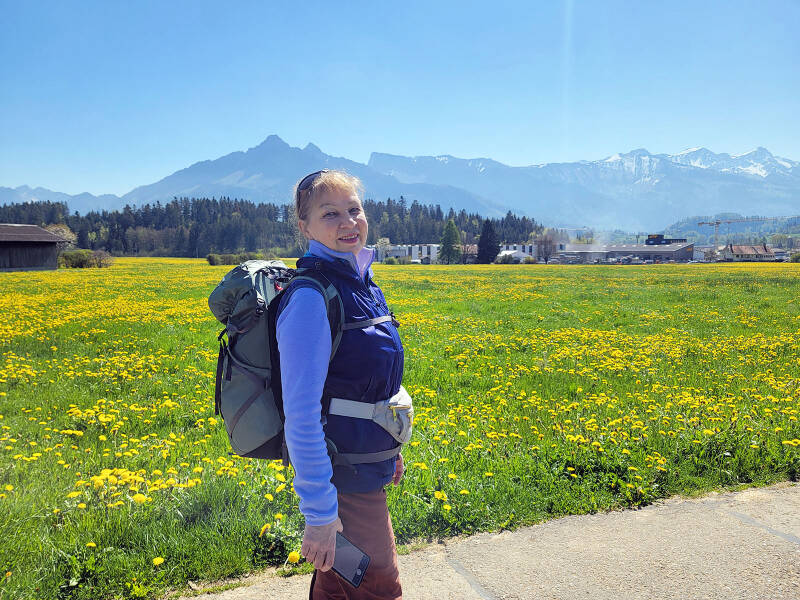
And the head clears. Goodbye, migraine.
Throughout the entire walk, there was a complete sense of being inside a fairy tale. Alpine meadows, cows, mountains on the horizon, and thousands upon thousands of flowers in every direction.
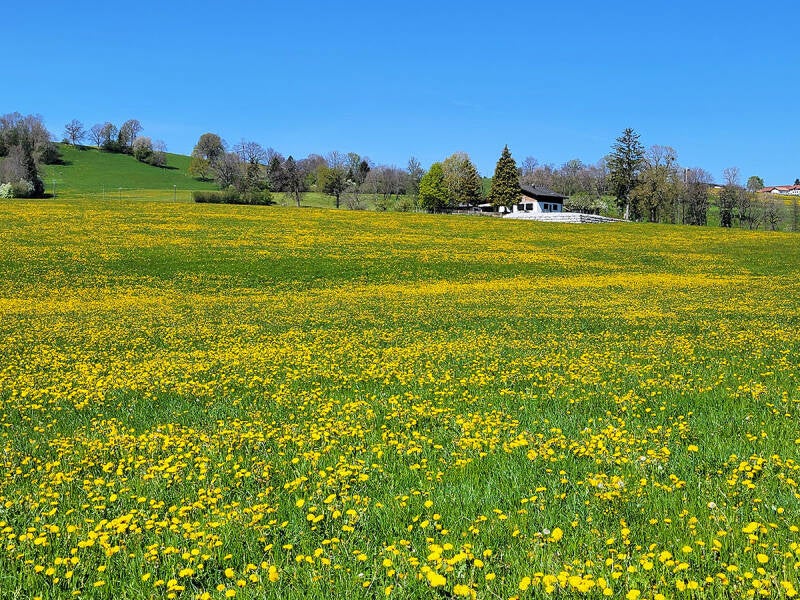
Narrow paths linked one village to the next in a chain,


until they finally led us to the ridge on which the town of Gruyères is located.

A kind of Disney-like landscape.

Before climbing up the hill toward the town, we stopped at the foot of it for lunch at the cheese factory that produces the famous Gruyère cheese.
And oh my God, what kind of soup did they have there! It was one of those moments when I honestly couldn’t even tell what I was eating. All I can say is that there was spinach in it, and a lot, a lot of cheese. And it was insanely delicious—absolutely, outrageously good.

We rested, ate well, and then headed up the hill.
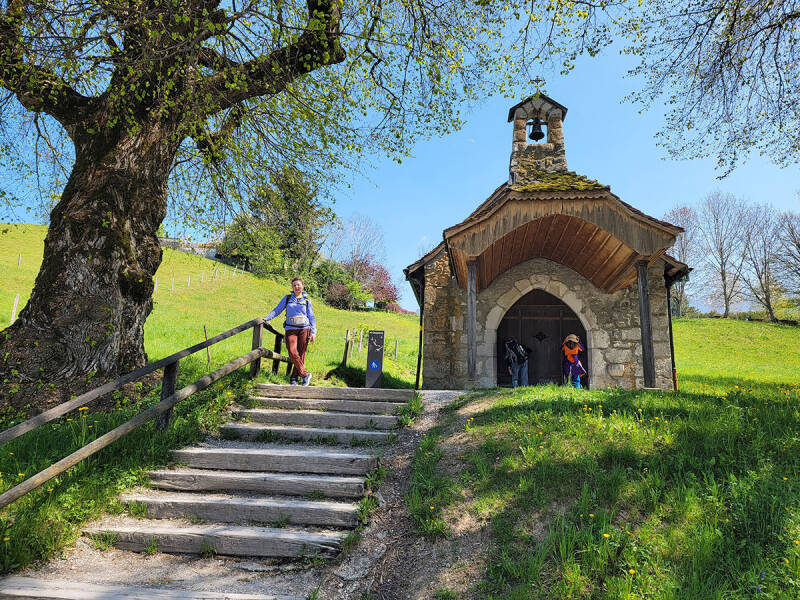
The town was tiny, with just one main street, but an interesting one!

We dropped our backpacks at the hotel and went for a walk along that very street.

First, local enthusiasts demonstrated to us how Gutenberg’s printing press works, explained the entire history of its invention, and how he was inspired by a wine press. Then they printed a few pages in front of us and gave them to us as souvenirs. Such lovely people—absolutely charming!
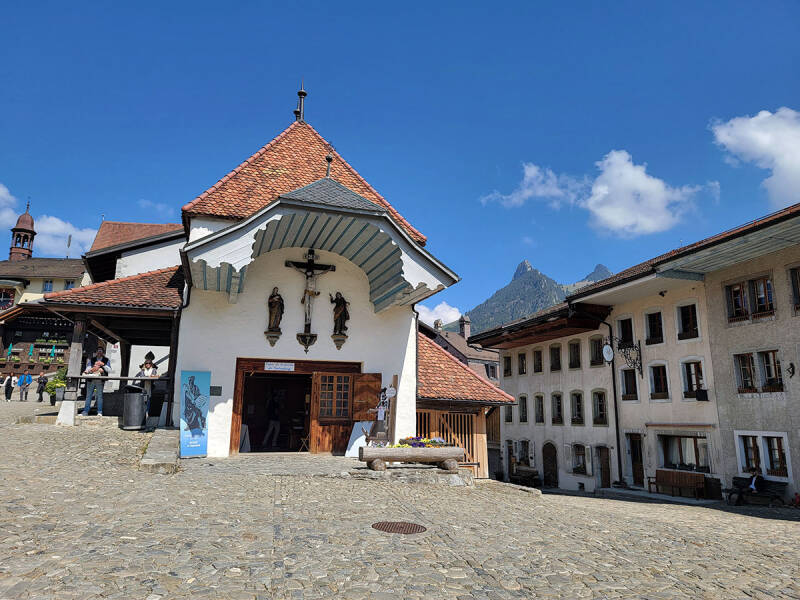
Then we reached the H.R. Giger Museum, the famous artist and creator of the visual design for the film Alien. And this was perhaps the most striking contrast to everything else we had seen—a fragment of a mad hell placed right in the middle of a paradise garden.
I don’t know what was going on in his poor mind, but his paintings are something else—intense, disturbing. Genius combined with what clearly feels like serious psychological disturbance. Still, genius.
Some works were almost unbearable to look at; I literally had to turn my head away and walk faster to escape that kind of sadomasochistic imagery. And yet, the Aliens are brilliant.

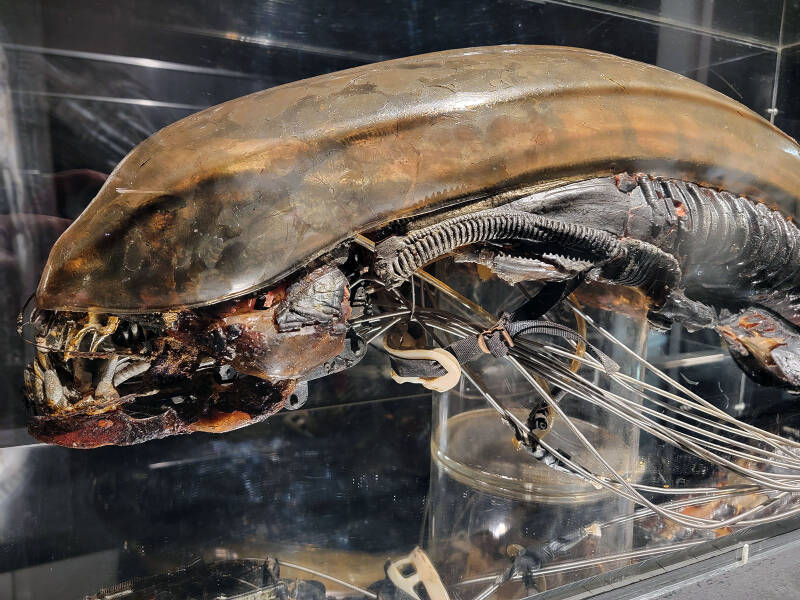
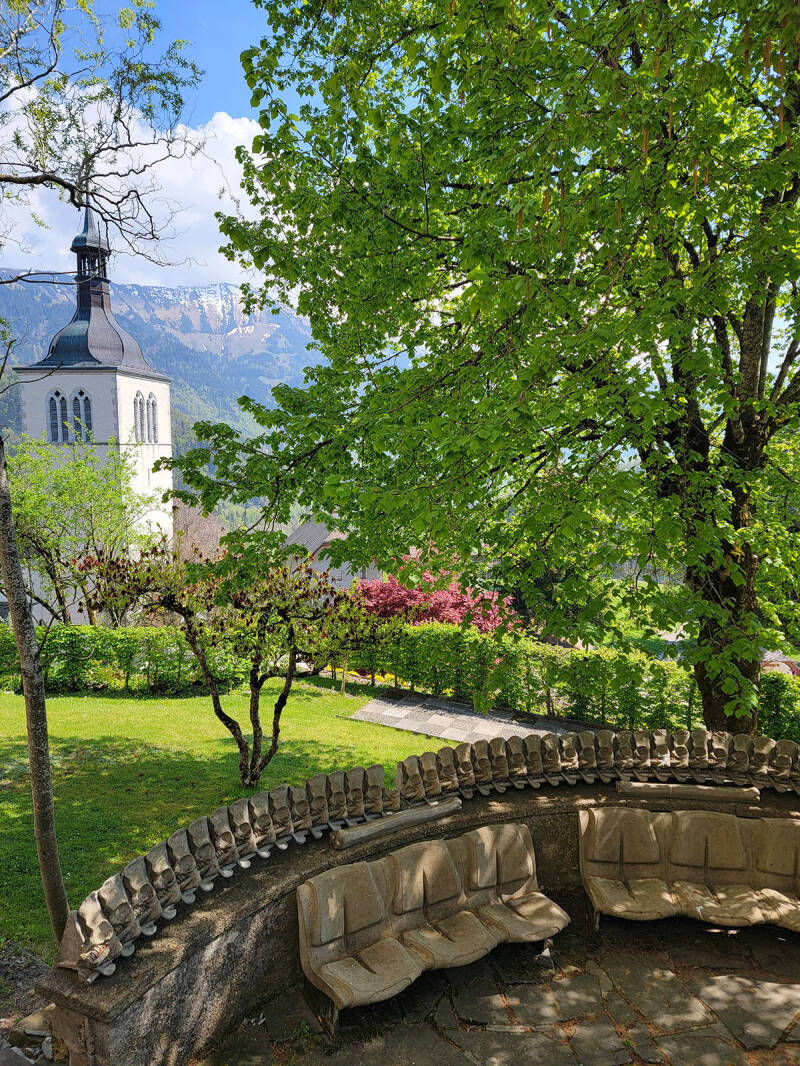
After the museum, we headed to Gruyeres Castle, crowning the entire hill above the town.

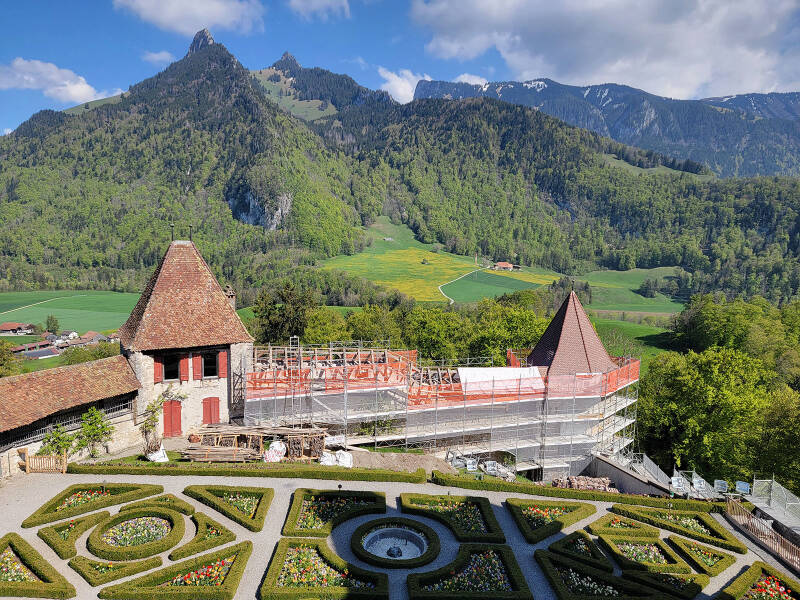
A Roman settlement existed here as early as the 2nd century, but both the town and the castle received their name from the founder of the Gruyères family—Gruerius (who, according to legend, caught a crane and chose it as his heraldic animal; the French word for crane is grue).
The castle was built in the 13th century, and the Gruyères family owned it until the 16th, when they fell into financial ruin.
Today, Gruyère cheese is known worldwide, and judging by the living conditions of the local cows, it must be good (upd. it is good).
Impressive masonry:
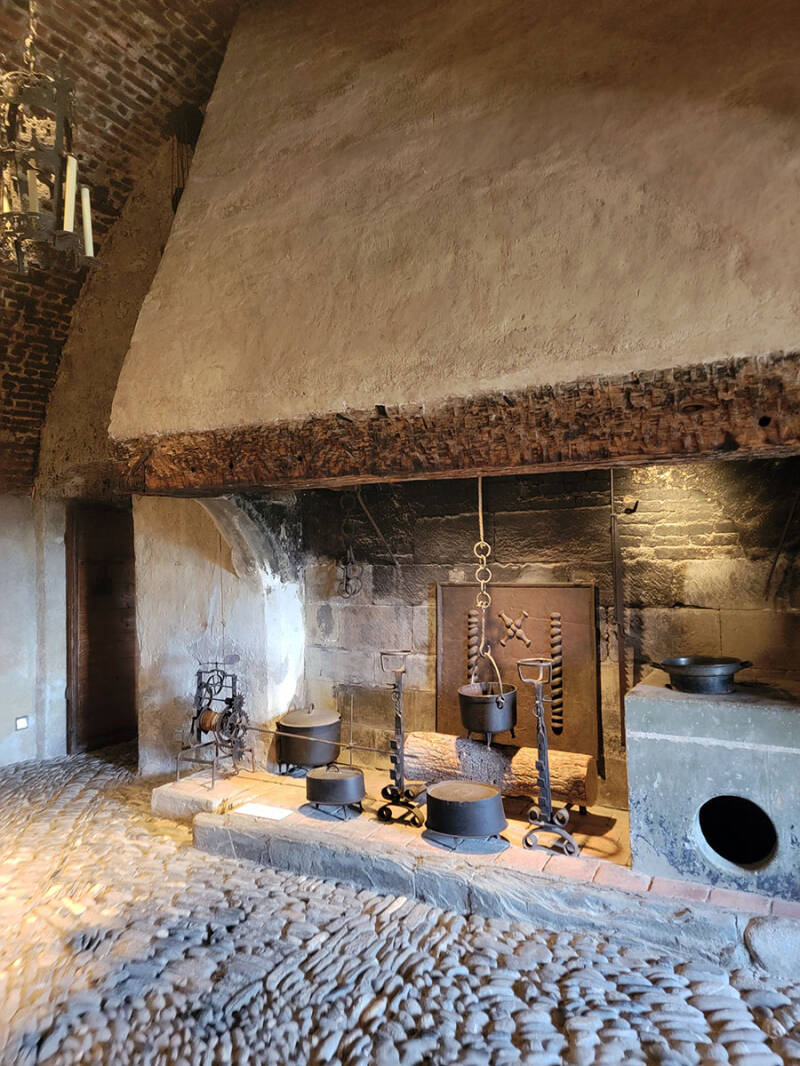
Dining room:

After the castle, we went to the Giger Bar, designed in the style of H.R. Giger’s imagination. Very atmospheric. We had a tasty cheese pizza made with Gruyère.


And from our hotel, the view opened onto the other side of the hill:
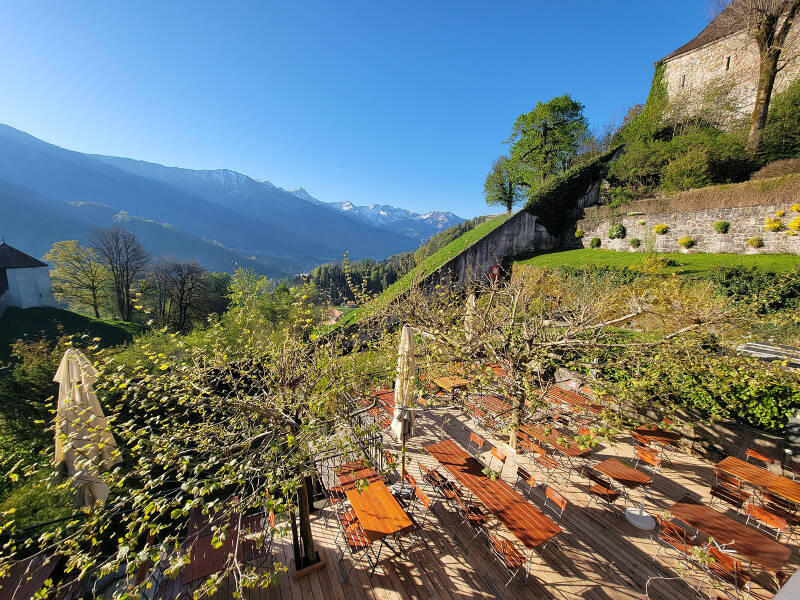
Gratitude of the day: to the magnificent weather, which enriched already perfect landscapes with warmth and sunlight.
Mood: euphoria and delight
Stamp: none today, as we are not on the Camino.
Day three
And once again, a magnificent sunny morning. Crisp and invigorating!
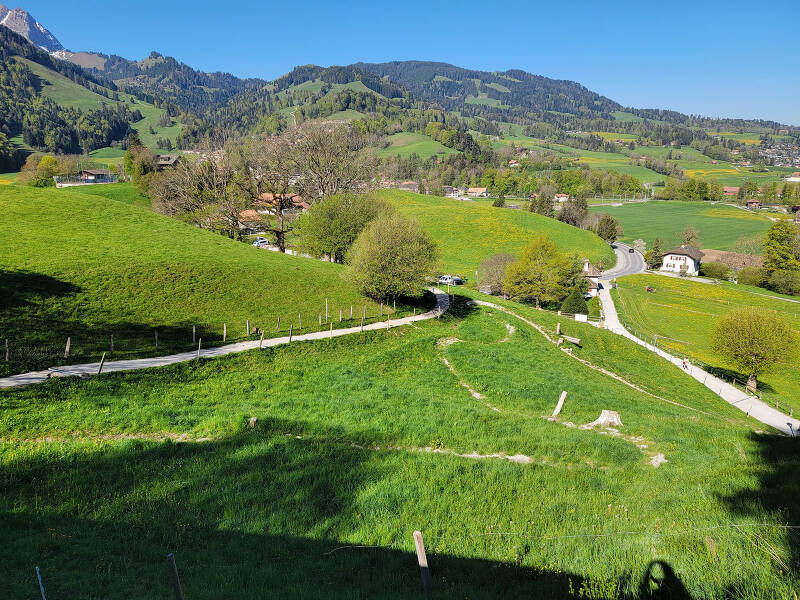
The wind is still piercing, but you can already feel that the day will be warm.
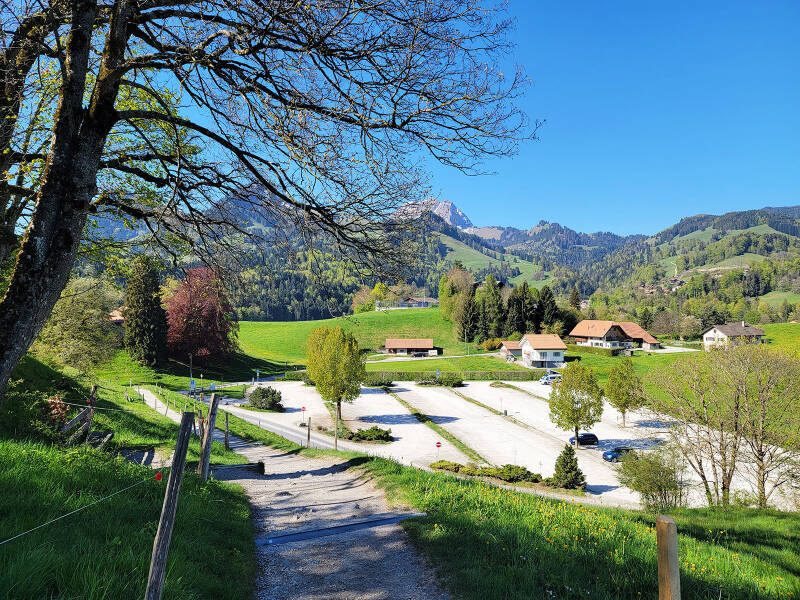
We said goodbye to beautiful Gruyères, slightly weighed down our backpacks with souvenirs, and headed down to the station.
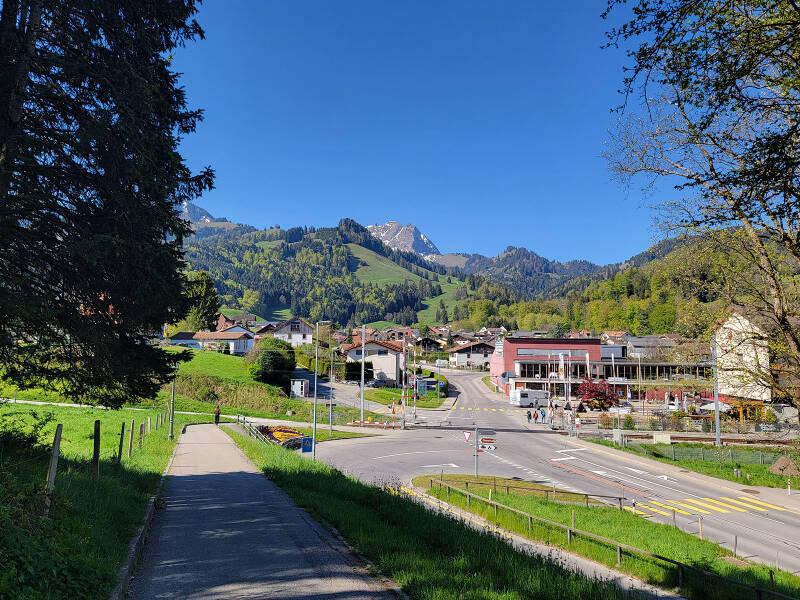
Yes, narrow-gauge railways certainly didn’t look like this in my childhood…
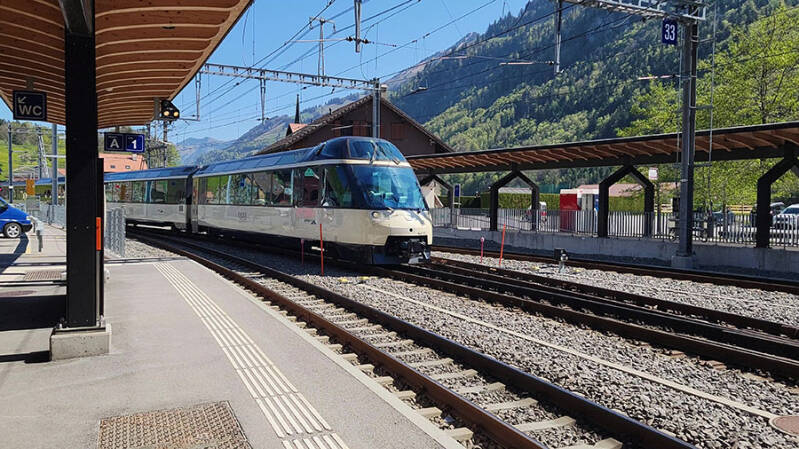
Today’s plan was a descent to GoldenPass Express aboard the famous panoramic train toward Montreux. The entire route between Montreux and Lausanne is part of the pilgrimage route Via Francigena rather than the Jacobi Way, but it is so breathtakingly beautiful that missing it would be a crime.
The panoramic train winds its way down the mountainside in zigzags, so whichever side of the carriage you sit on, you are constantly treated to views of the Alps, the lake, forests, or vineyards.
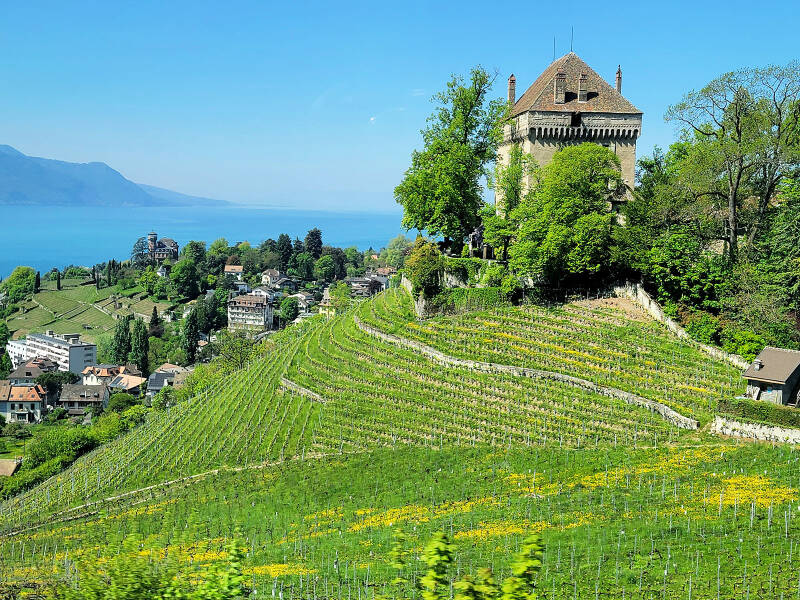
We didn’t ride all the way down — from there, we continued descending on foot through Montreux.
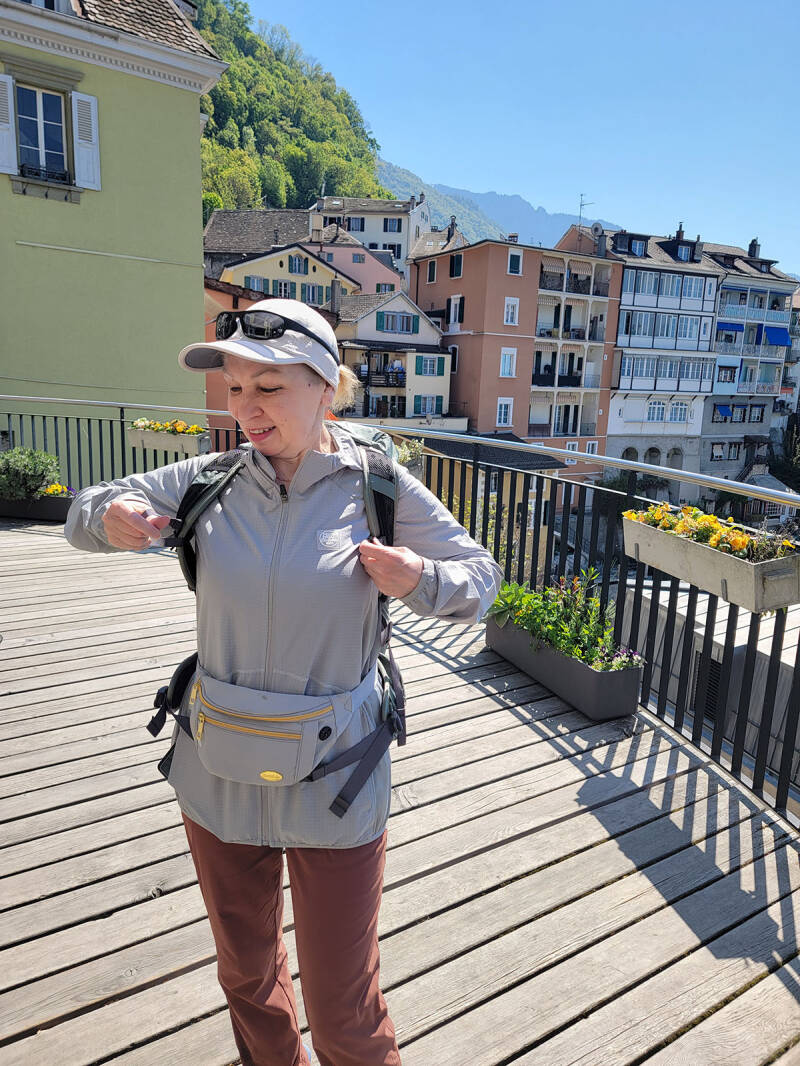
Our destination was actually Lausanne, but Chillon Castle was only a forty-minute walk in the opposite direction — and we simply couldn’t leave it without attention. Especially since I had visited the castle not long ago and knew for certain that my mom would love it. So off we went.
The road down through the town:
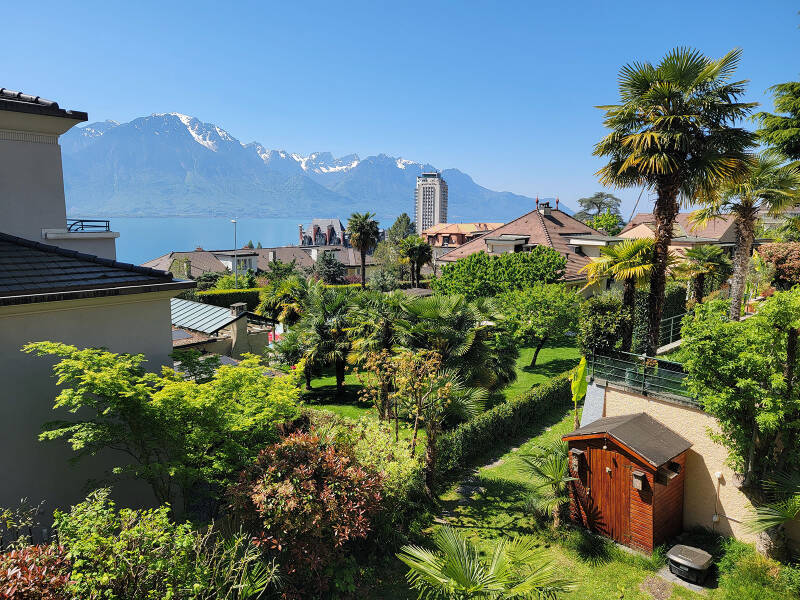
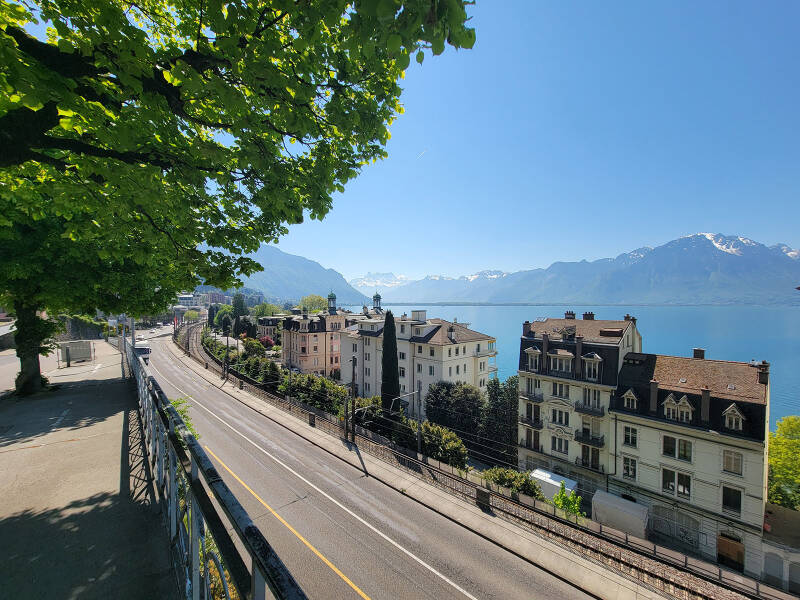
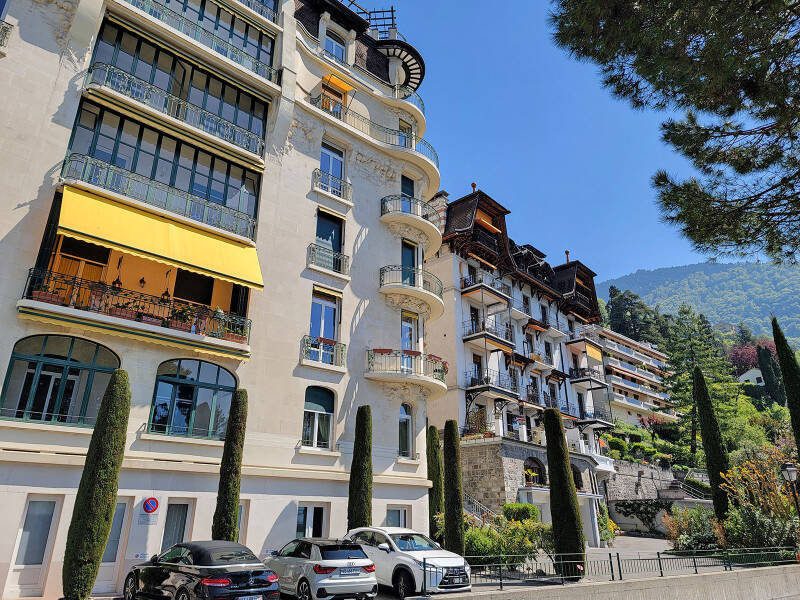
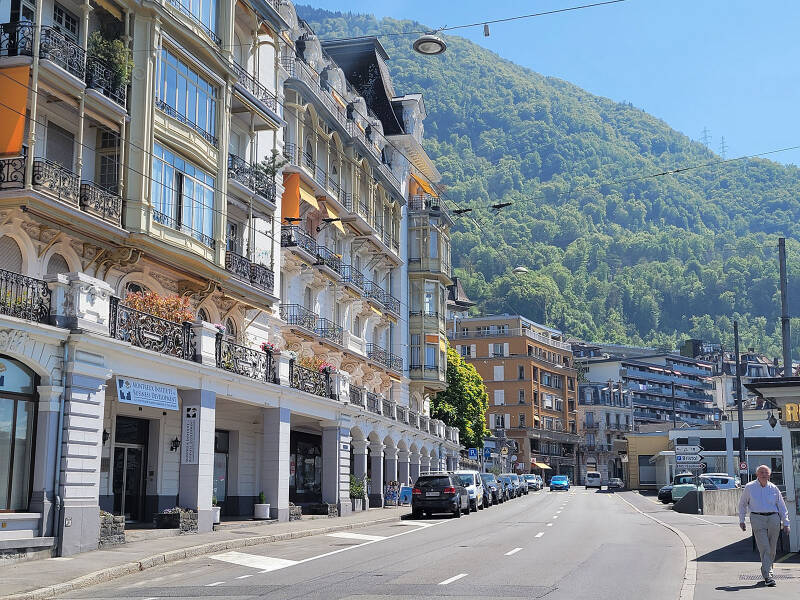
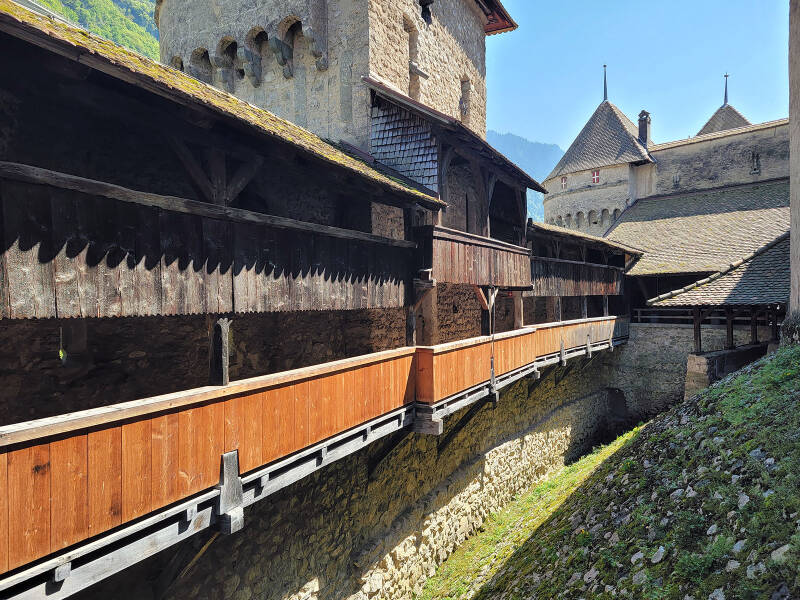
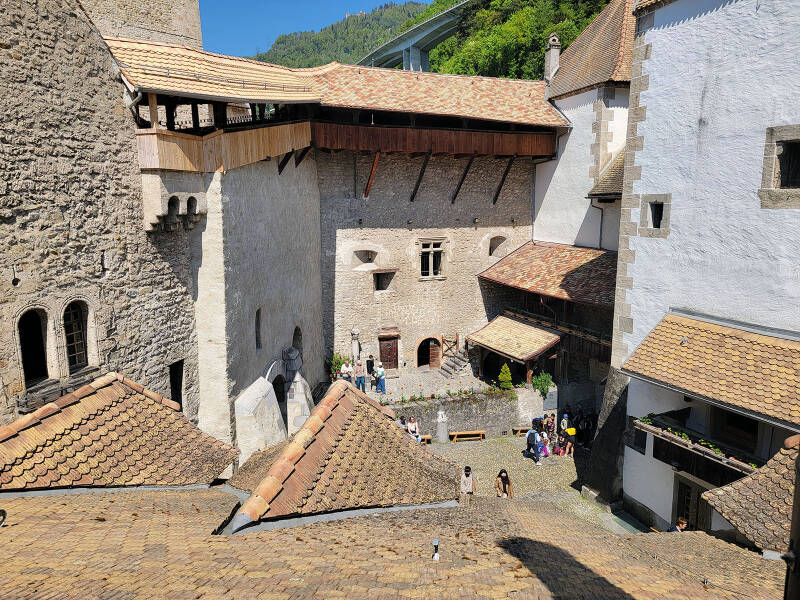
I’ve already written here about Chillon Castle — it’s one of those places you can visit several times and still enjoy every moment, it’s that wonderful.
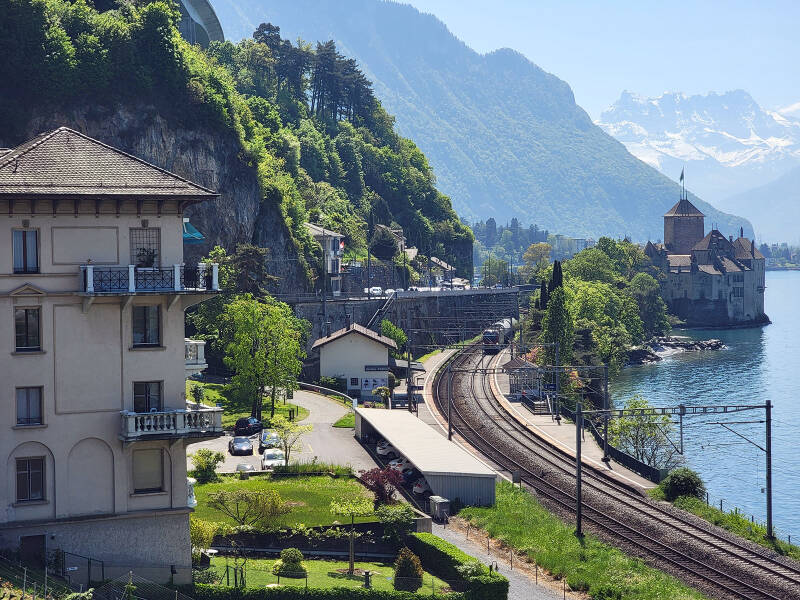
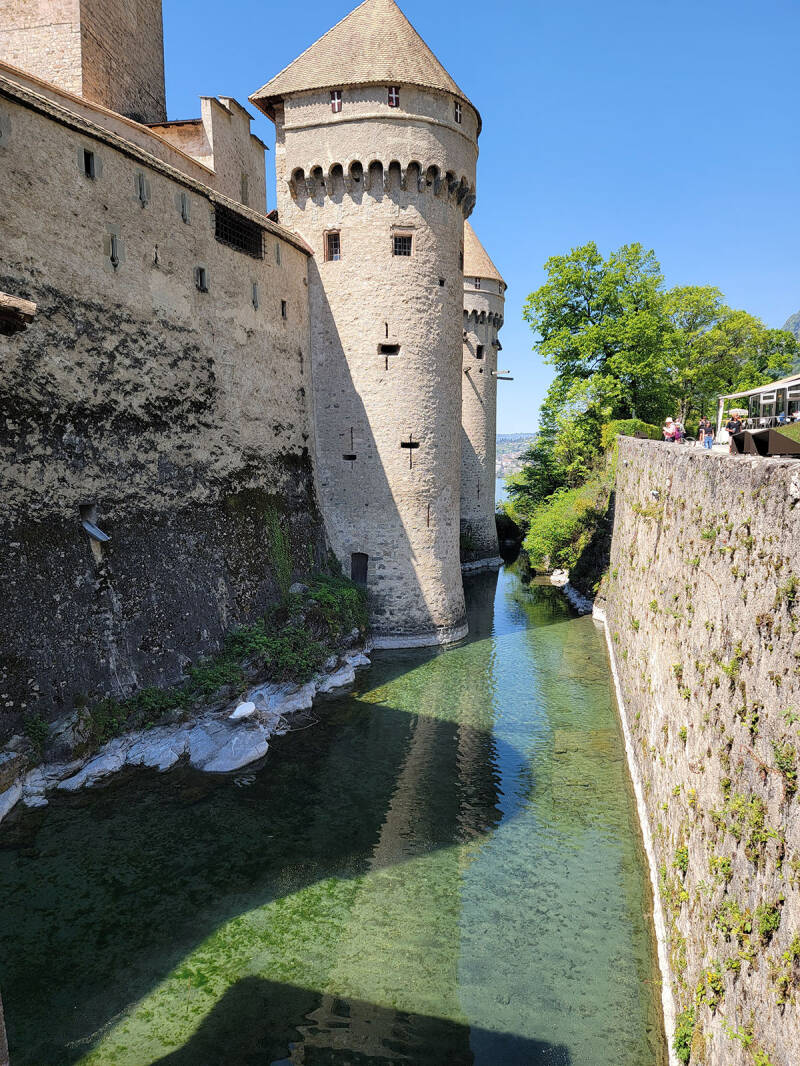
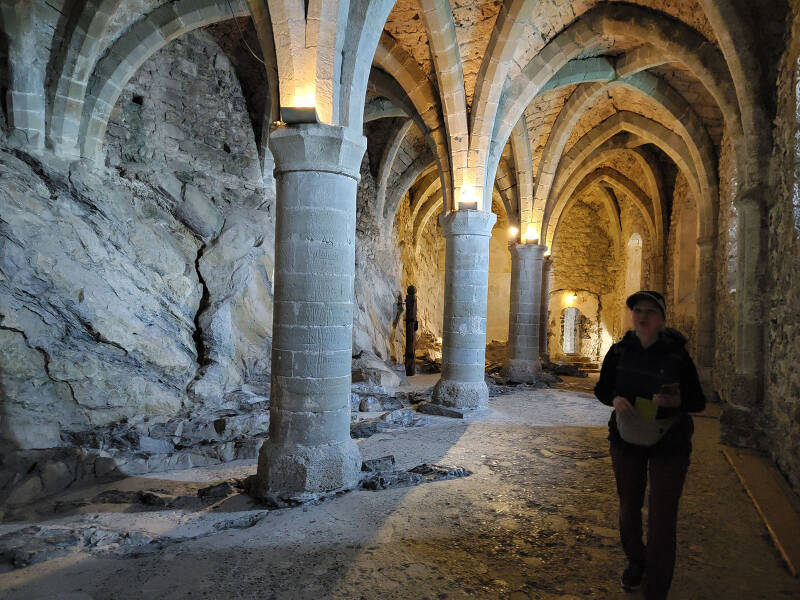
It is remarkable that the underground chambers of the château make an even stronger impression than the upper part, but perhaps that reflects the logic of architecture in those times, when wars were endless and storerooms, weapons, and dungeons mattered more than the refined living quarters above.
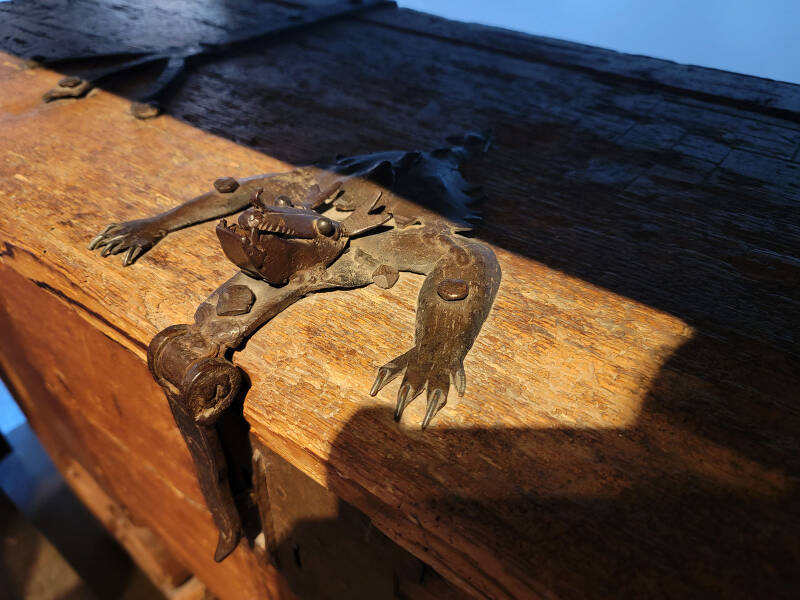
The valuable chests are guarded by little iron dragons:
We had lunch right there at Café Byron. Then we continued on through Montreux, this time not along the upper roads, but directly along the lakeside promenade.
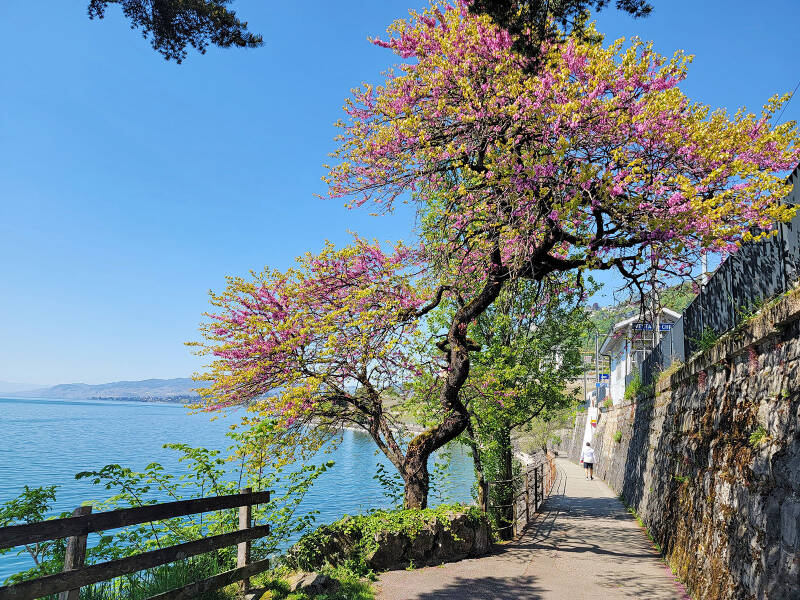
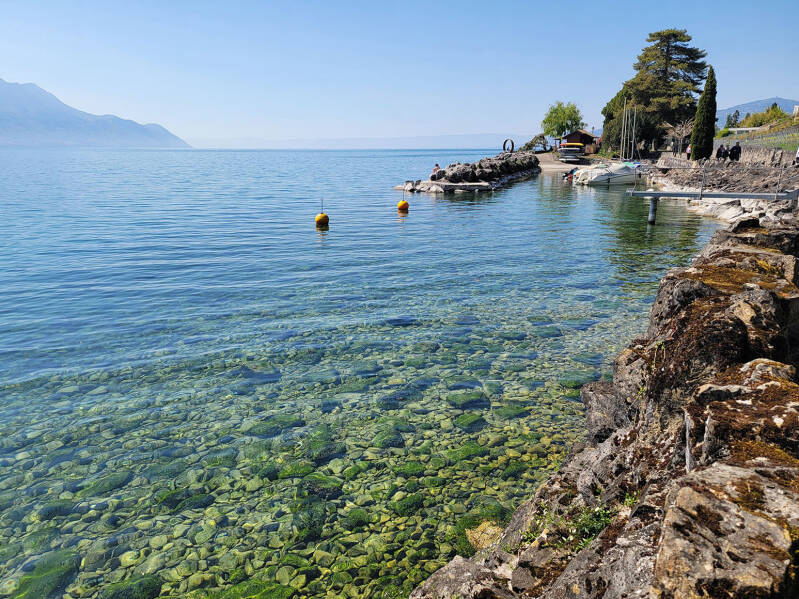
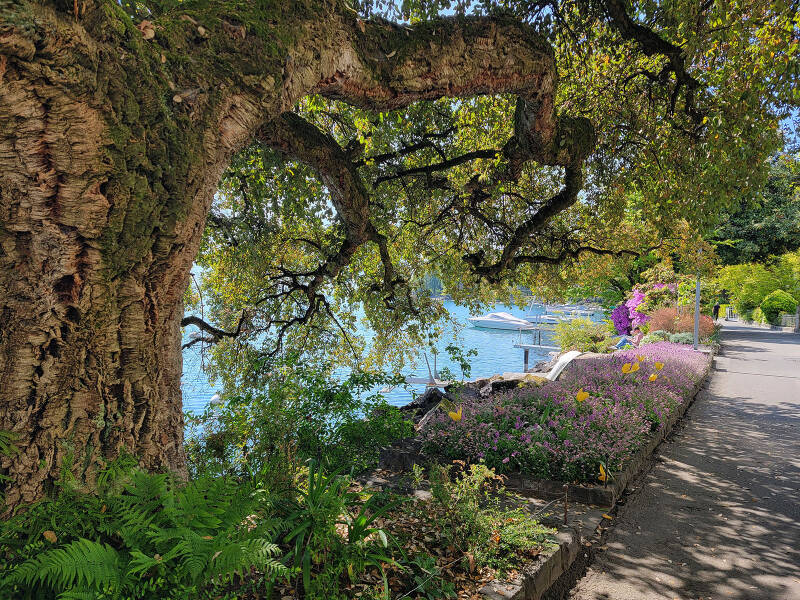
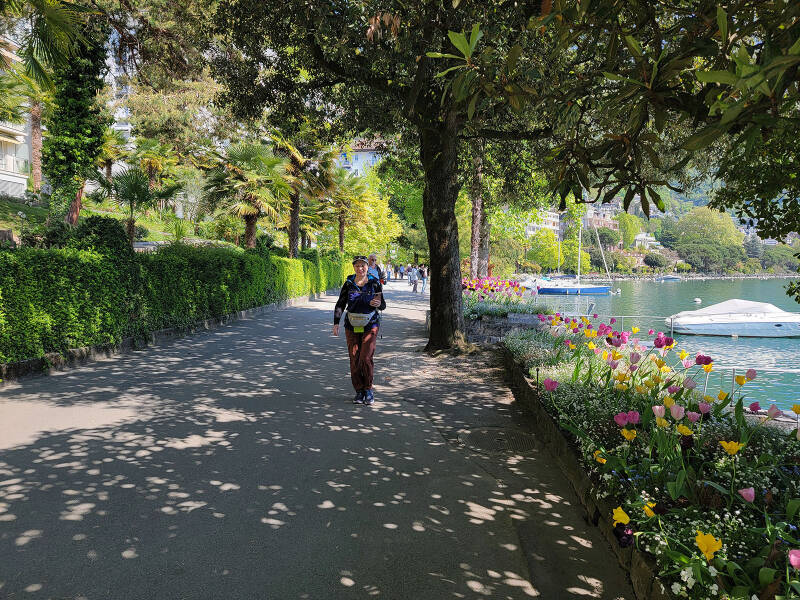
It was so beautiful that it became impossible to stop taking photographs — every few meters brought a new floral design, and not a single one was repeated.
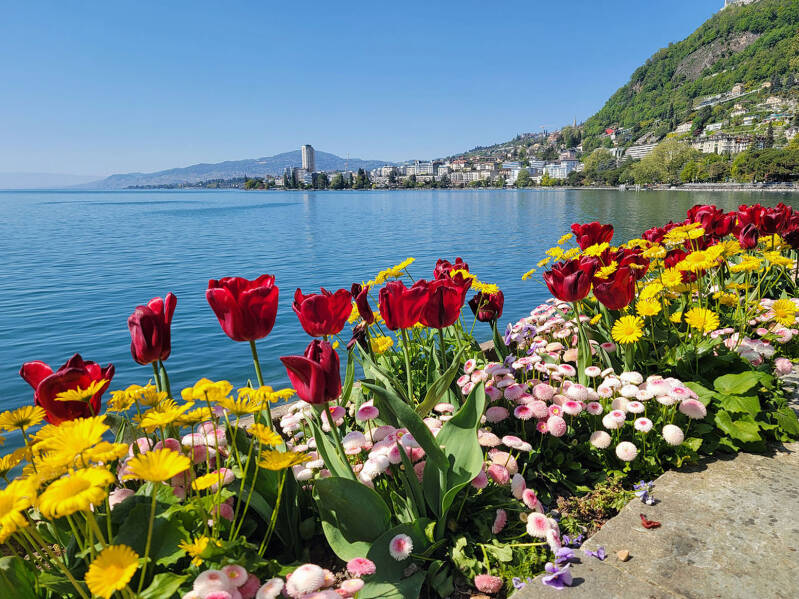
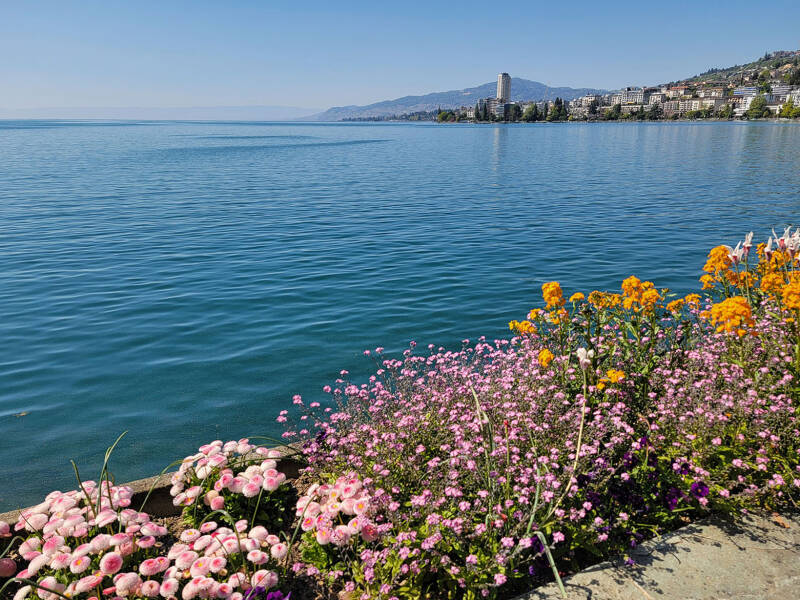

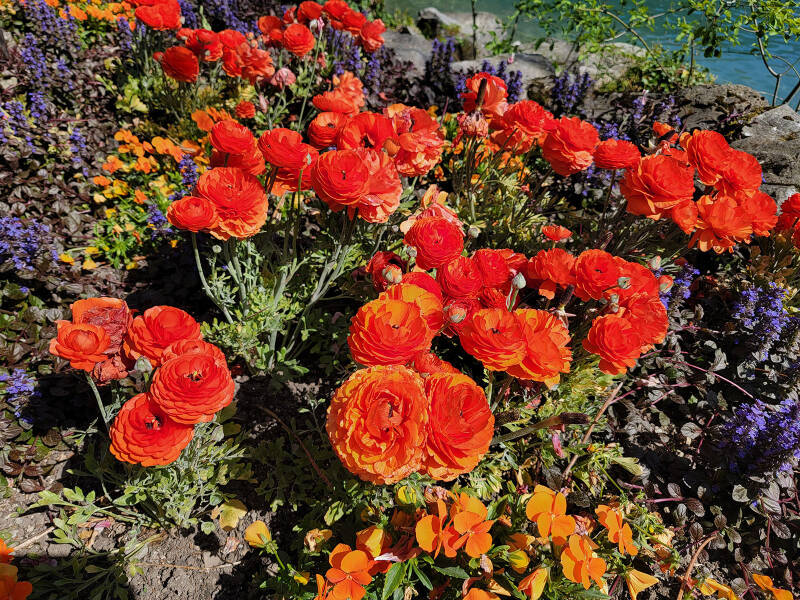
I had always thought it would be difficult to find a city greener than our hometown. But here… well, it certainly isn’t any less green. The city is literally drowning in greenery.
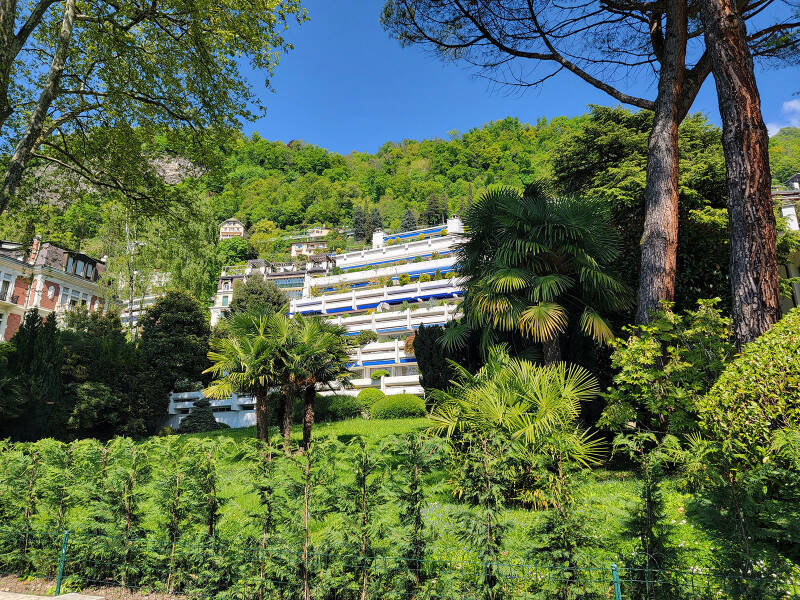
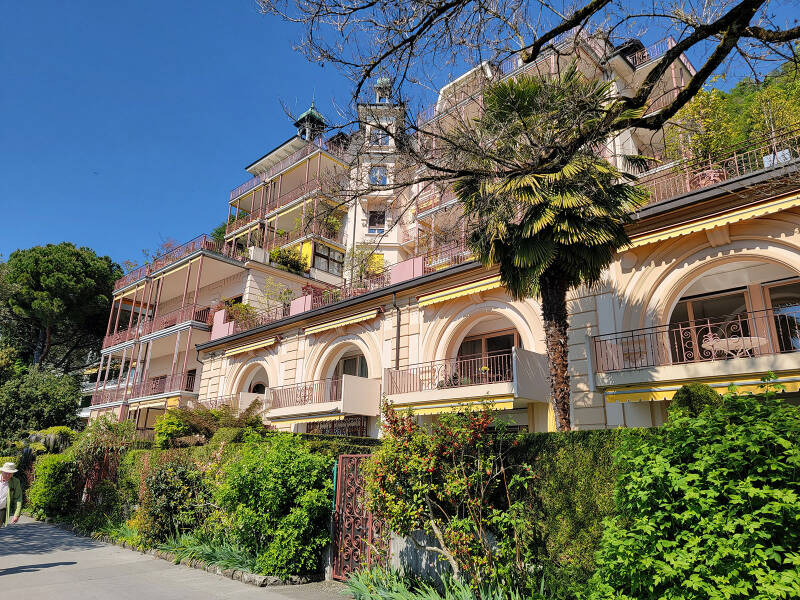
and Alps:
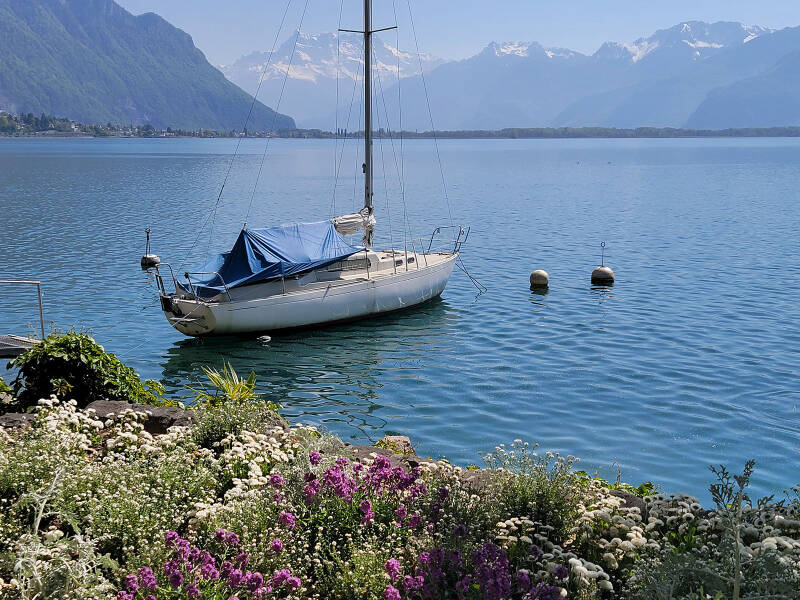
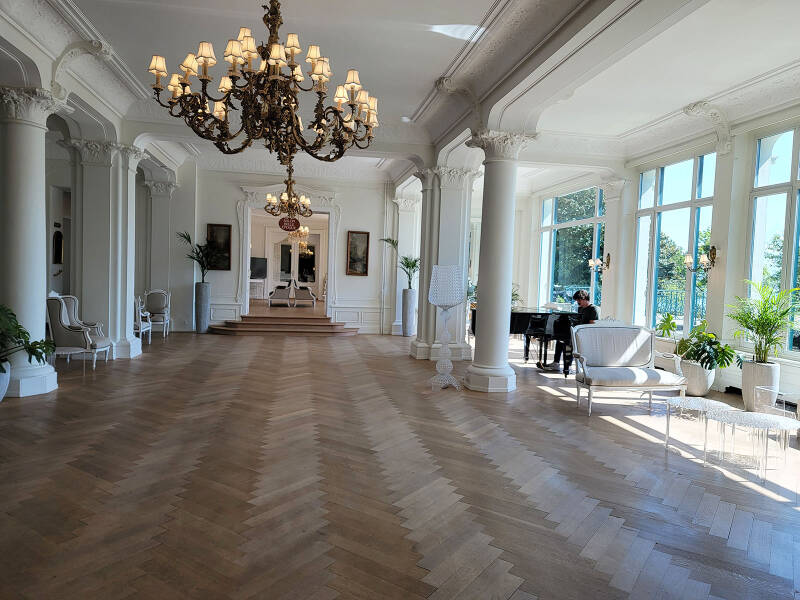
In Montreux, we checked into a snow-white hotel with a grand piano, where we were welcomed by live performances of Queen hits — not by coincidence at all, since right next door is the studio where all those songs were recorded.
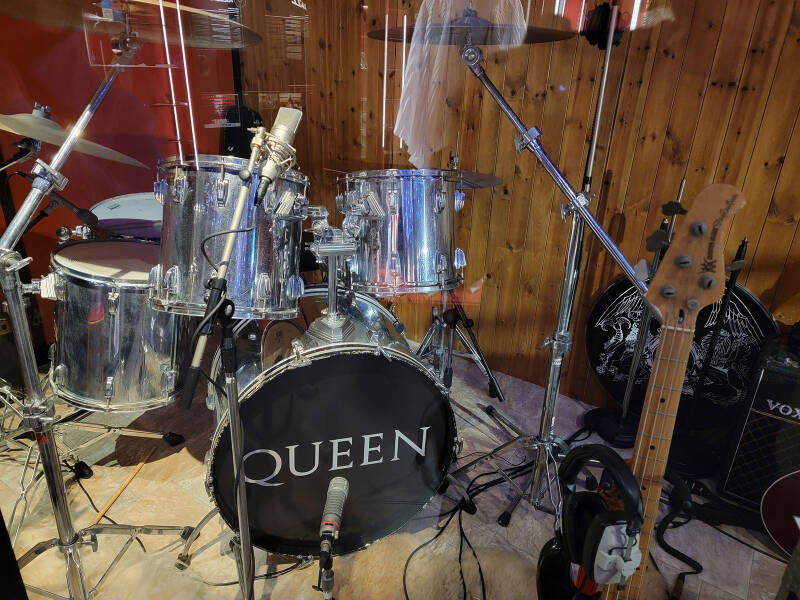
Today the studio has become a museum, and since my mom is the greatest Queen fan of all time, we naturally hurried there straight away.

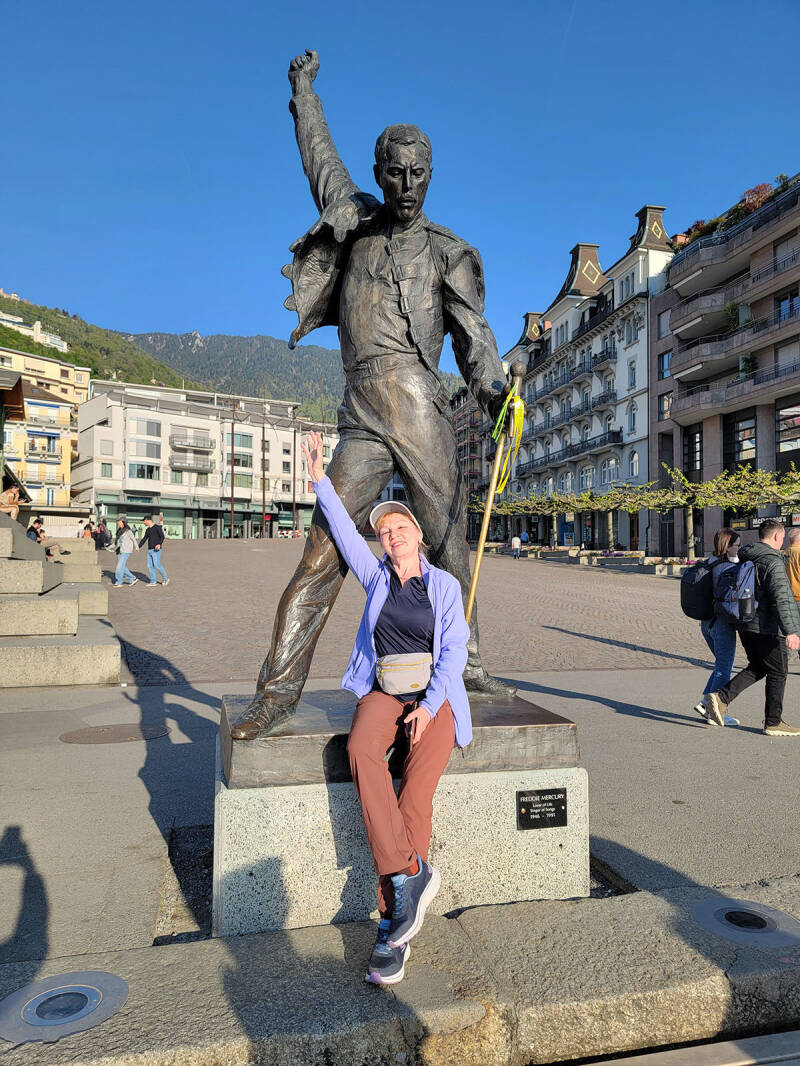
After the museum, we headed to the lakeside promenade, to the statue of Freddie Mercury.
The promenade just opposite our hotel:
Gratitude of the day: for the happiness of having lived in the same era as such musicians.
Mood: lyrical, from Byron to Freddie Mercury.
Stamp: tourist information office, Montreux.
Day four
Today, at last, we focus exclusively on the pilgrimage route, without any distractions. A long day awaits us — steep ascents, descents, more ascents and descents along the Via Francigena. I don’t know about my mum, but for me, it was the most beautiful day of the entire trip.
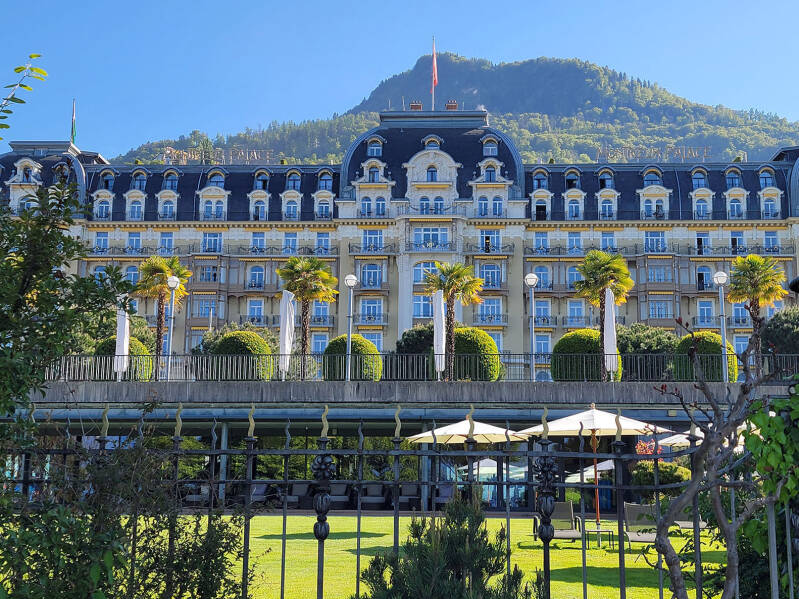
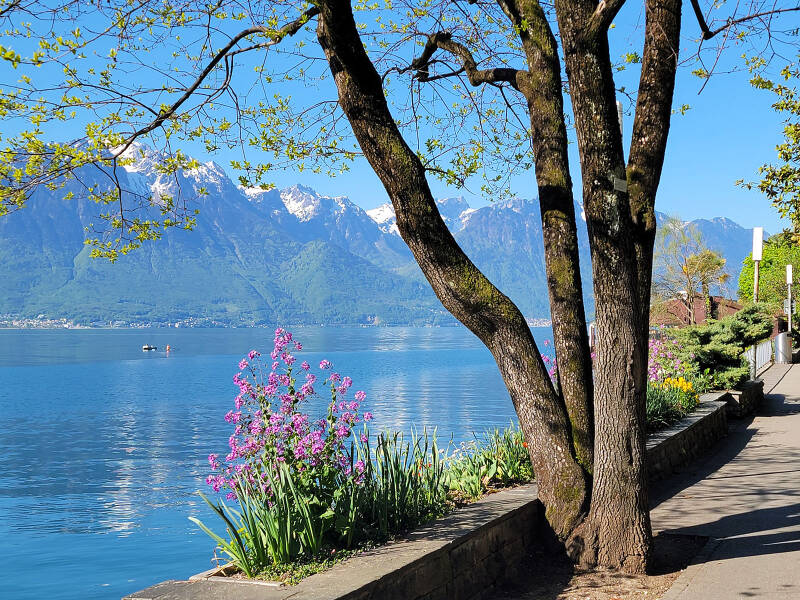
It began with an exceptionally scenic departure from the city along the lakeside promenade.
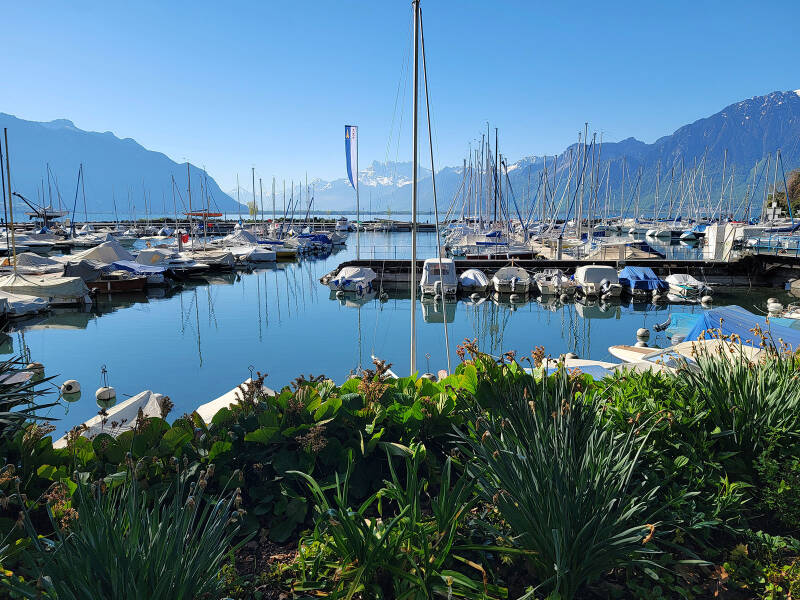
passing by Charlie Chaplin and the famous fork sculpture.
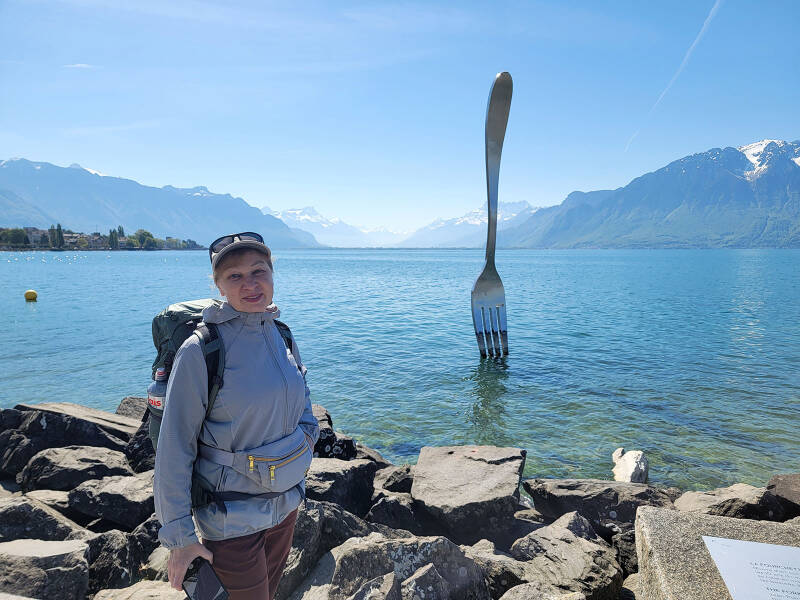
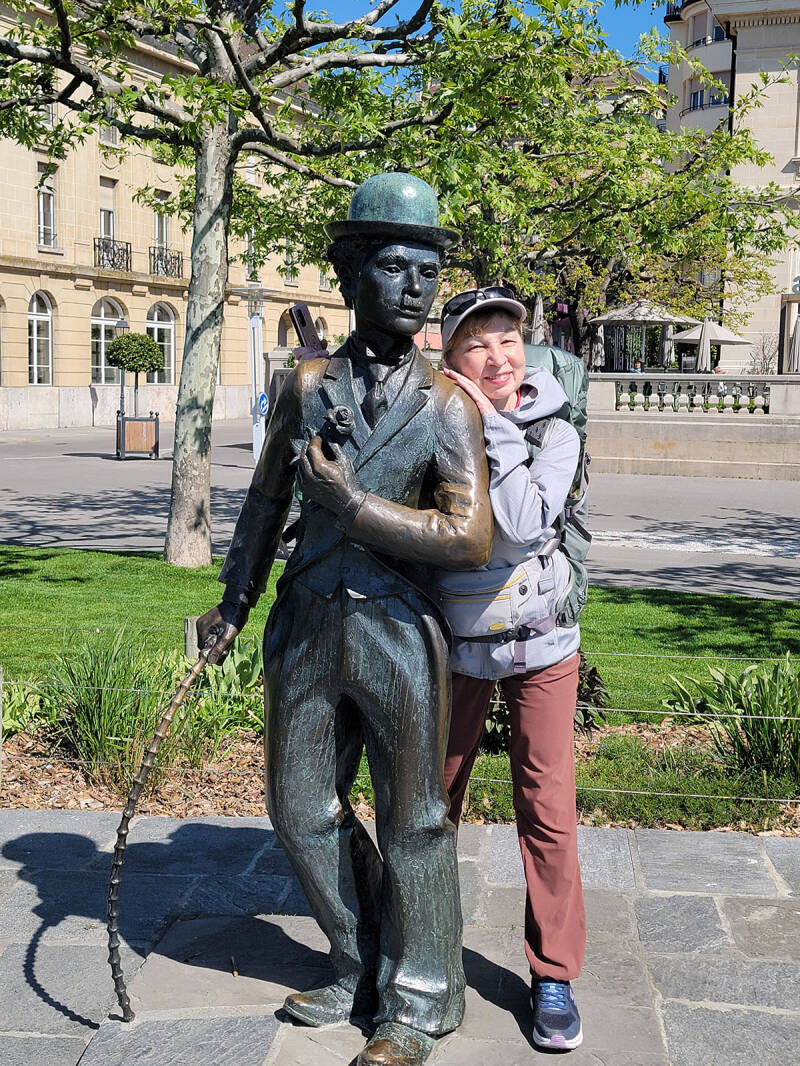
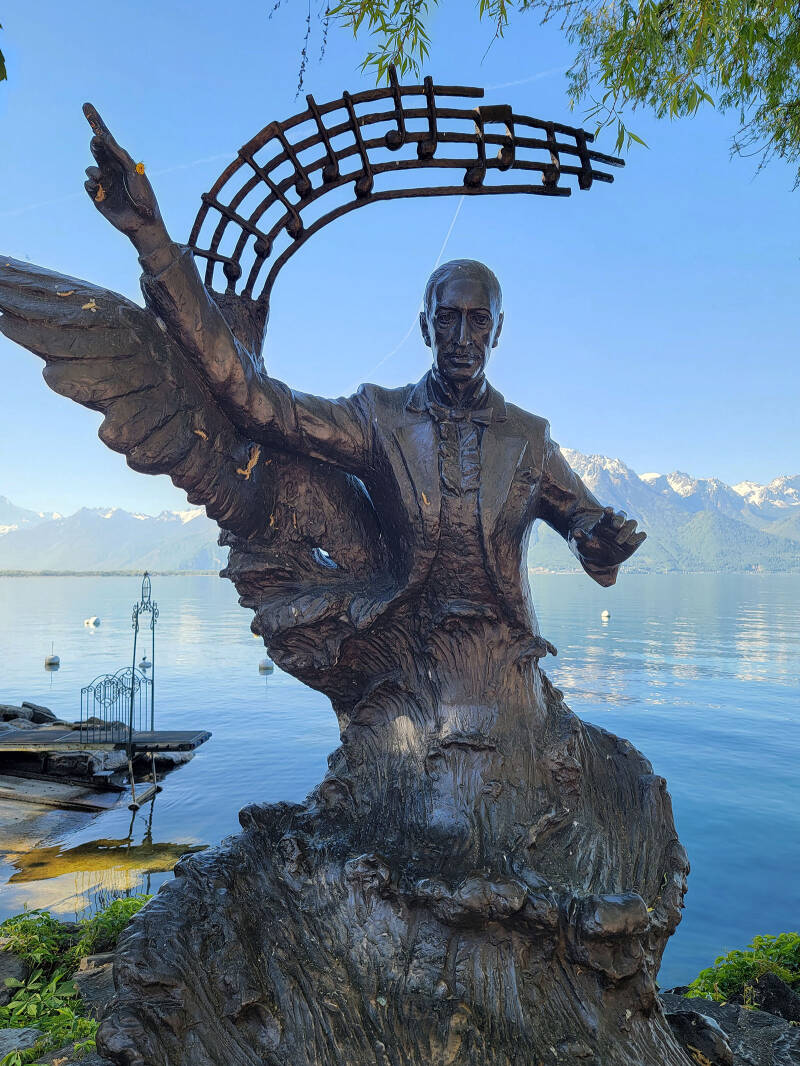
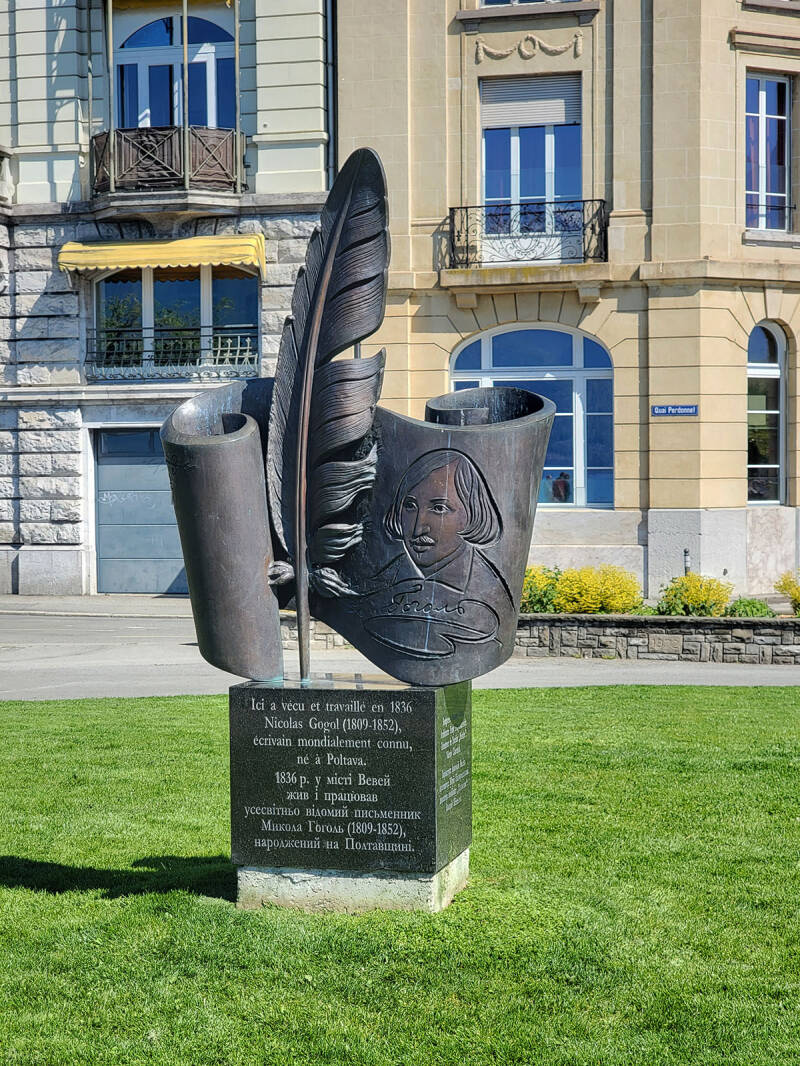
The Swiss pay great attention to the writers, artists, musicians, and philosophers who came here and chose to live for long periods of time. And there are, to put it mildly, quite a few lovers of the Swiss Riviera, which is why along the entire promenade you can find commemorative plaques or monuments dedicated to figures such as Nikolai Gogol, Igor Stravinsky, Leo Tolstoy, Voltaire, and dozens of others, often accompanied by their reflections on Switzerland.
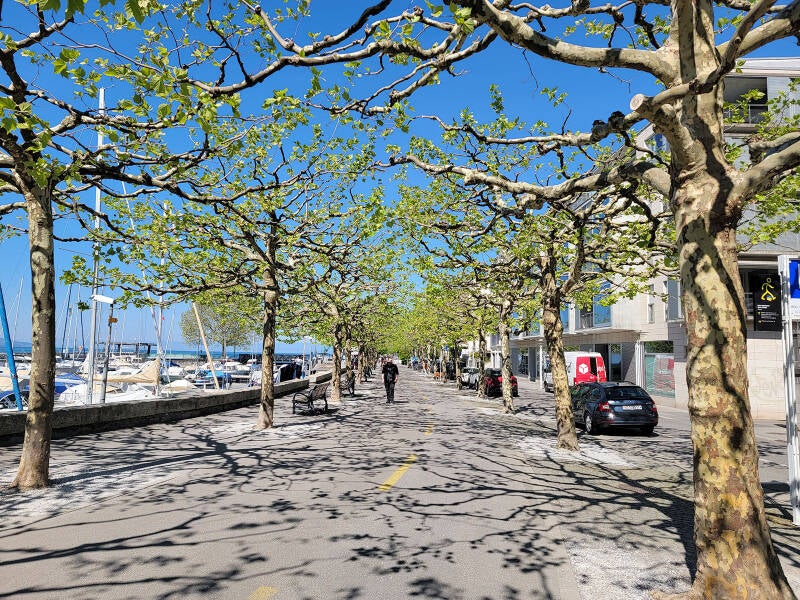
The delicate, lace-like shadows cast by the plane trees, combined with the intricate balconies of the white hotels along the shore, give Montreux an almost weightless, airy aura.
And then our path turned away from the lake,
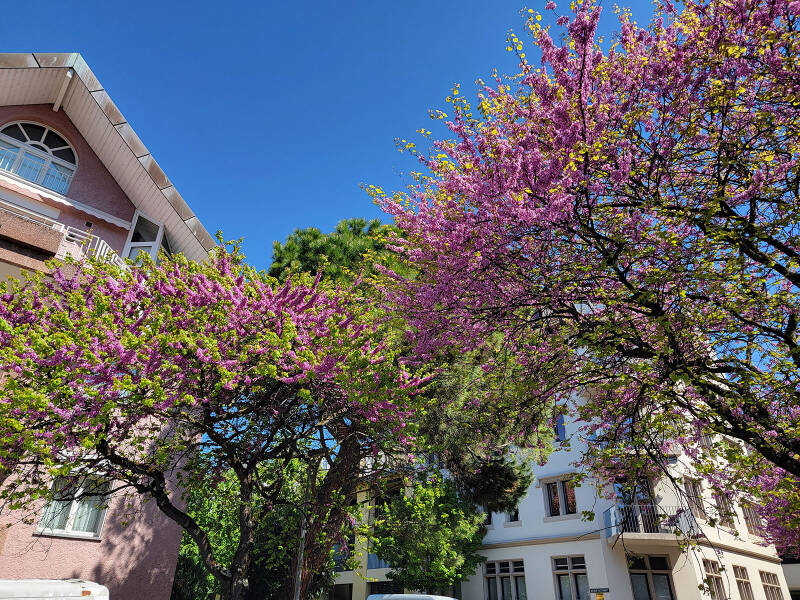
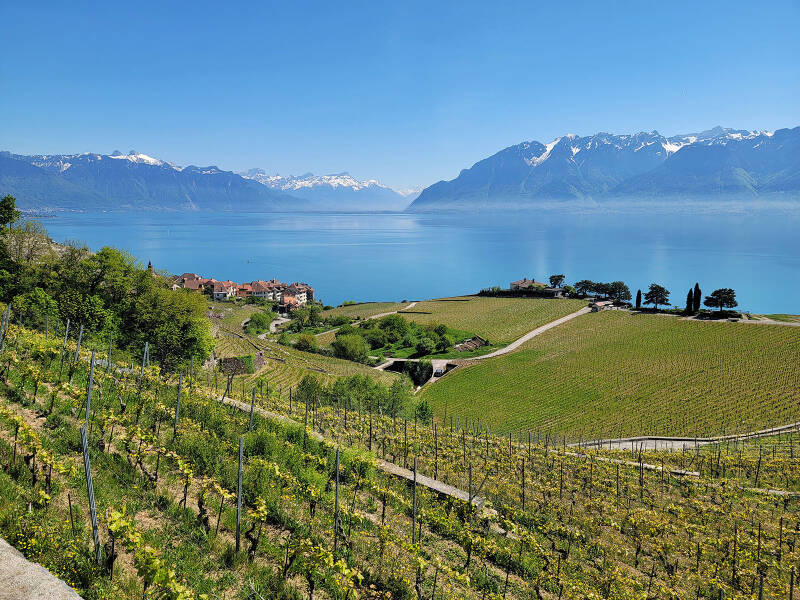
and a steep climb began up into the mountains, toward the vineyard terraces.
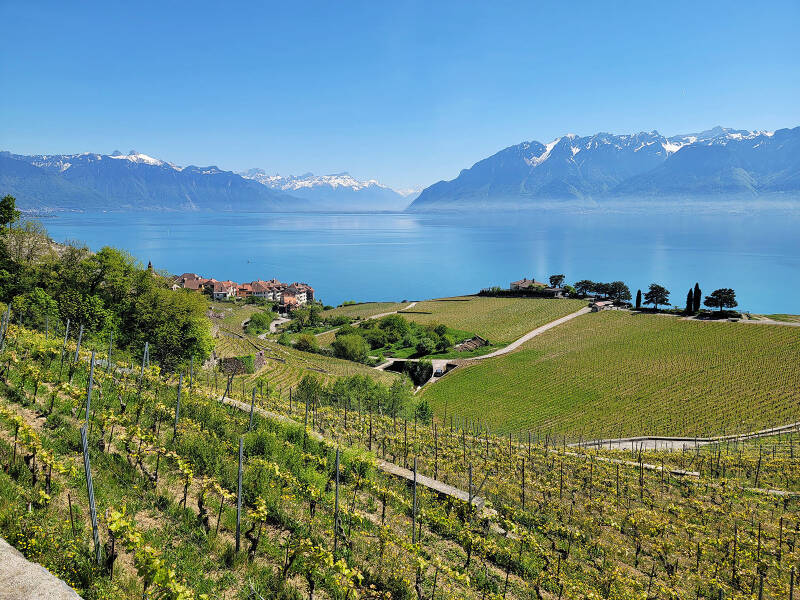
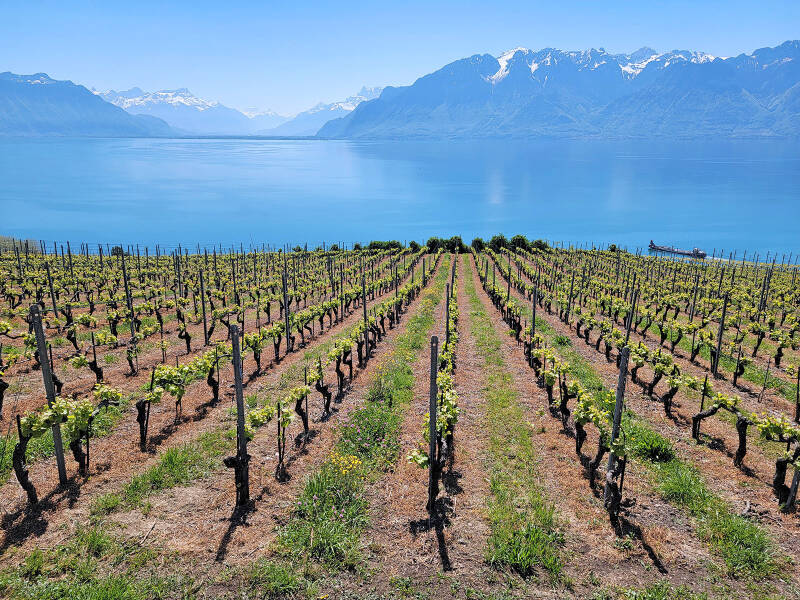
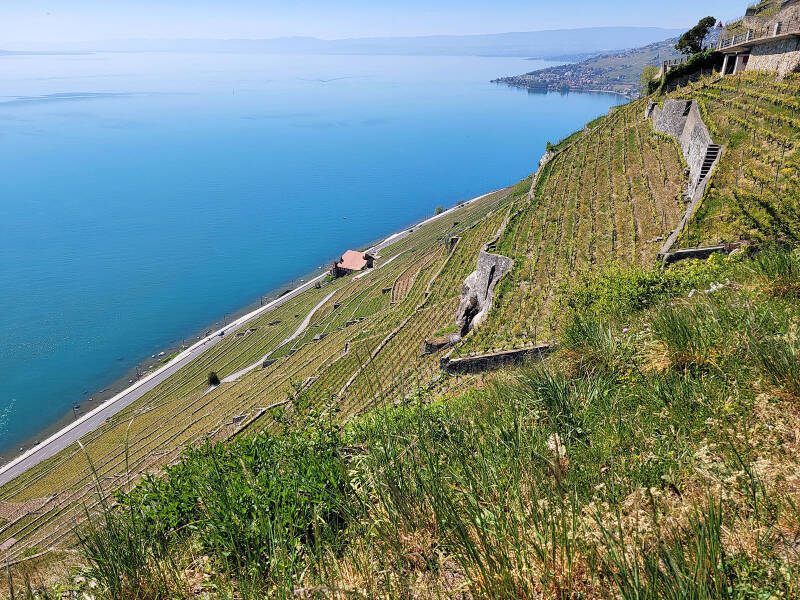
More than twenty kilometres of nothing but young vineyards stretching above a lake of the deepest blue. I think this may be the most beautiful sight in the world. I hope the local winegrowers realize just how fortunate they are.
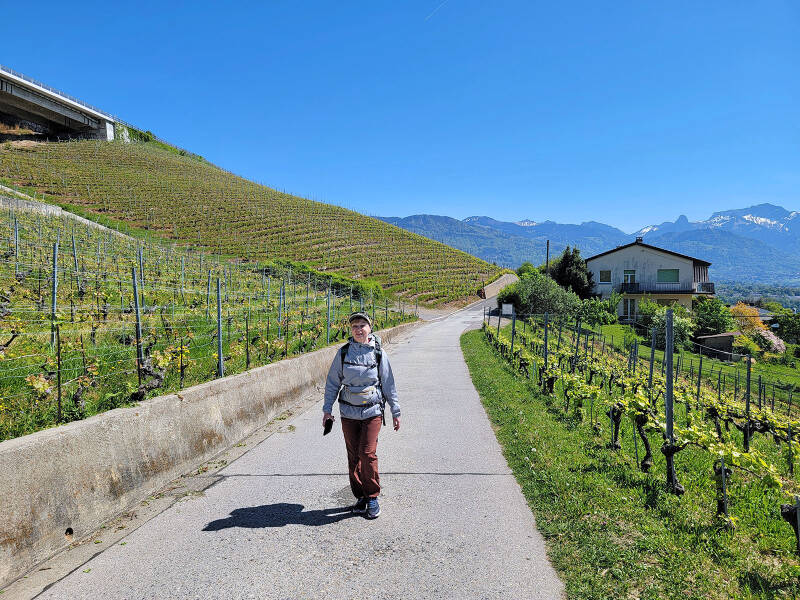
The slopes of the Swiss Riviera are both steep and expansive. Roads at almost every elevation, except for the very bottom and the very top, are reserved for local residents. The footpaths connecting the lower and upper terraces appear to have been built a very long time ago, and consist of narrow, steep stone stairways without handrails. Some of them were so vertiginous that simply looking at them made my head spin.
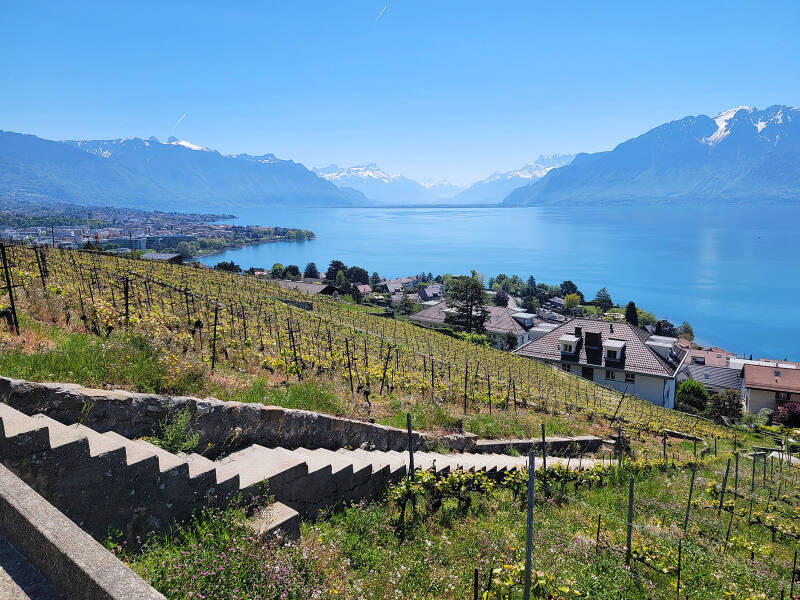
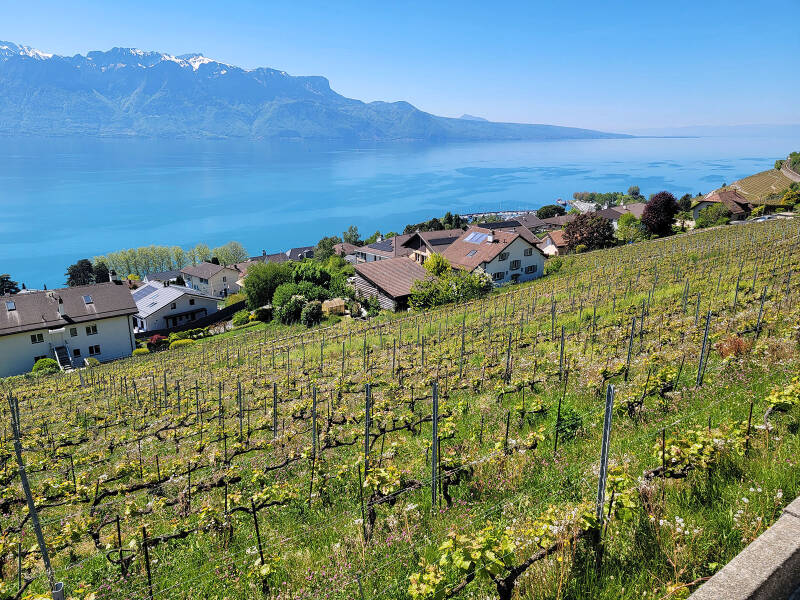
The terraces are slightly deceptive. You feel as though you can see the entire landscape stretching far ahead and that you have already reached the highest point, only to round the next bend and discover that the path continues climbing steeply upward — a path that was completely invisible just five minutes earlier.
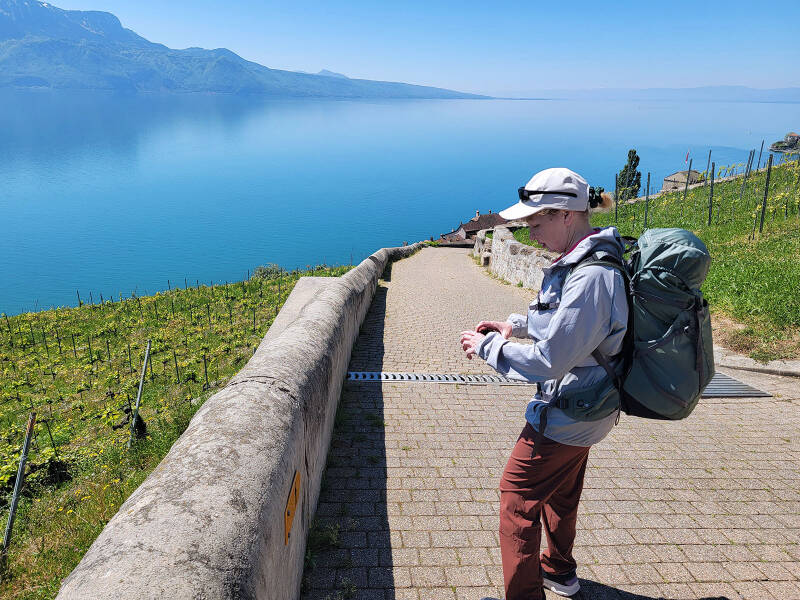
But the sense of euphoria in this place is so overwhelming that the hills hardly matter at all. You simply want to keep walking all day long and never leave.
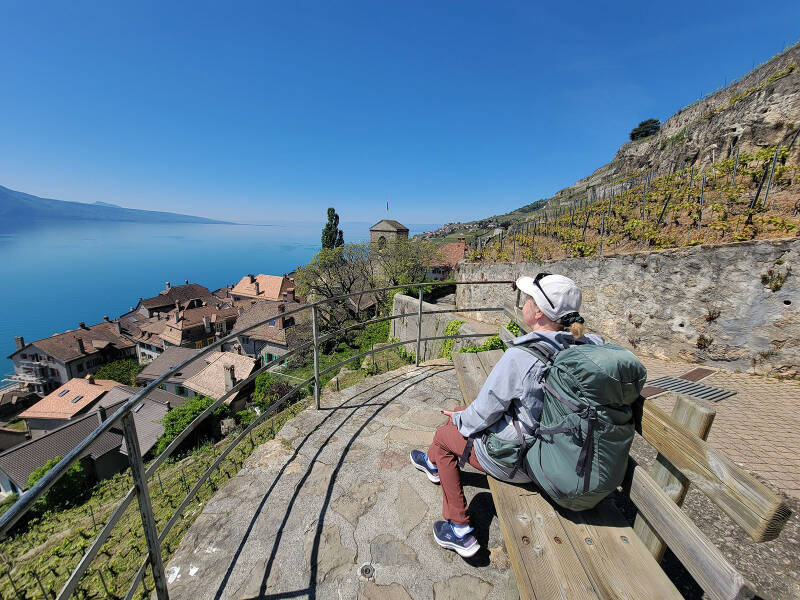
In April, the vines had only just begun to unfurl their first leaves. The grapevines were still short and delicate, full of the tenderness of early spring.

By lunchtime, we decided to leave the terraces and descend to the lakeside village of Saint-Saphorin. It felt like stepping down into some magical medieval fantasy world.
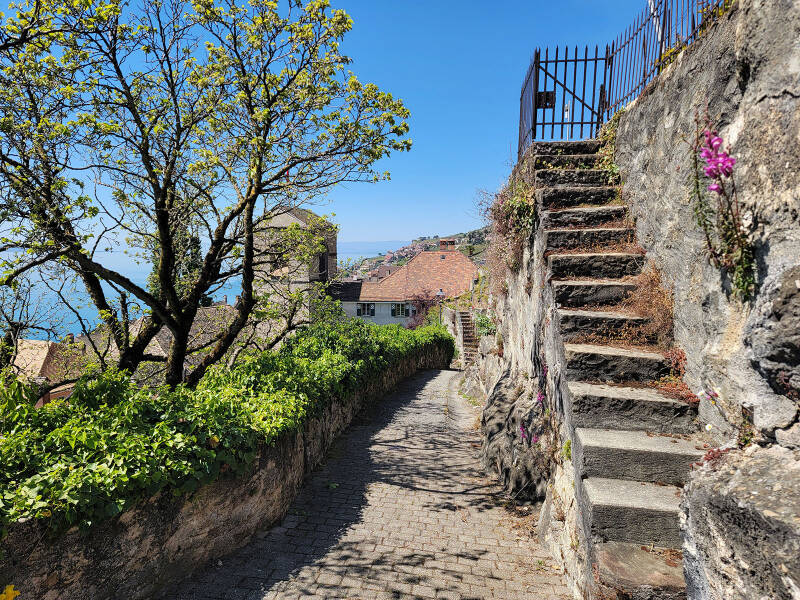
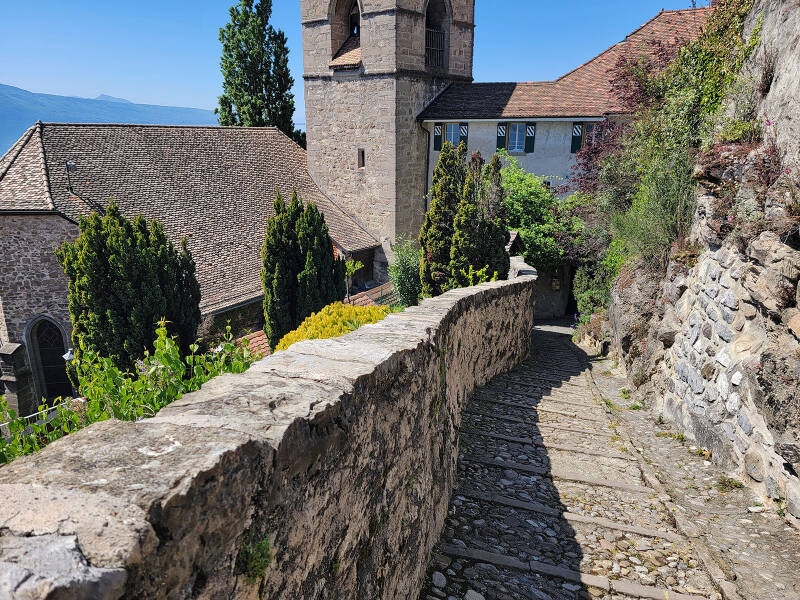
Super-narrow lanes, flowers everywhere, the ringing of church bells, peace and tranquillity, and immaculate cleanliness—as, indeed, everywhere in Switzerland.
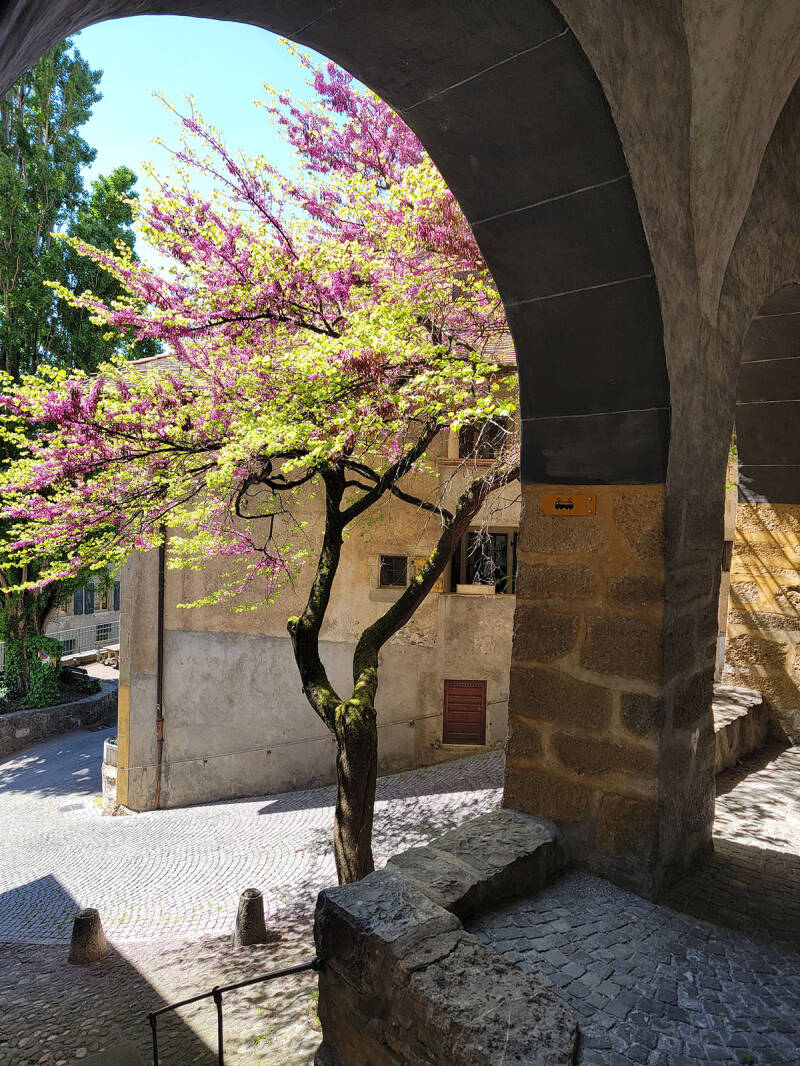
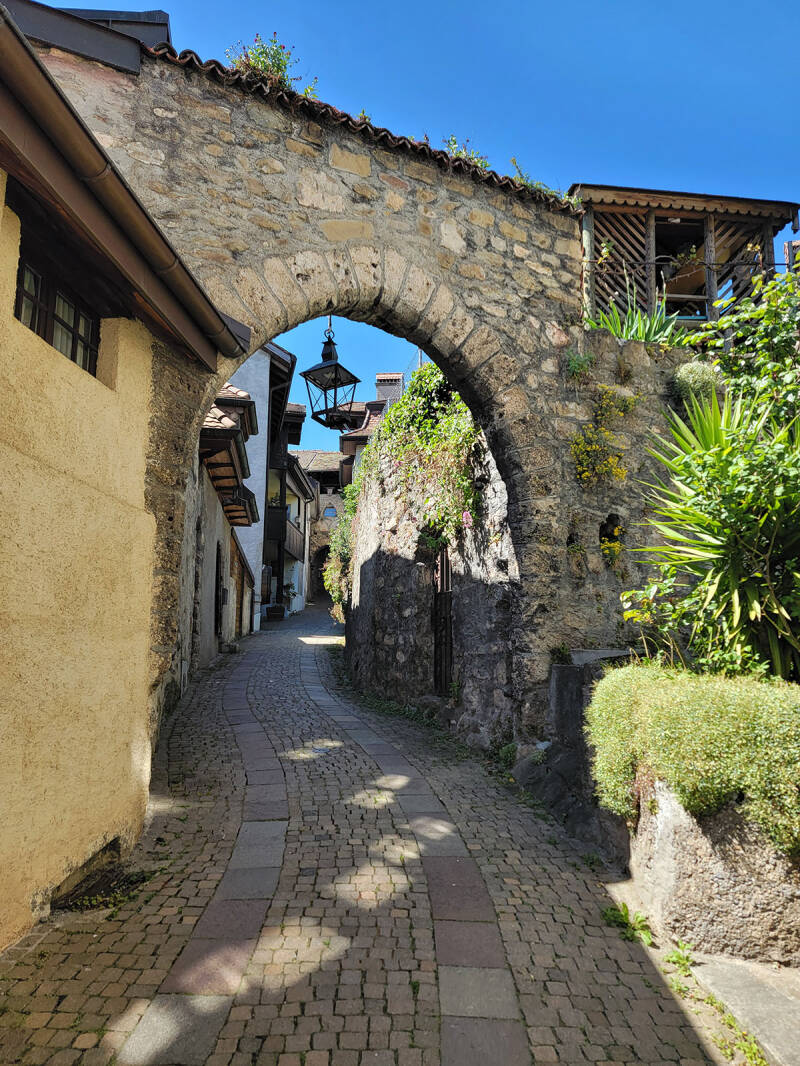
The little restaurant we stopped at turned out to be excellent. We ordered simple boiled potatoes with herbs and some lake fish—perch, I think, just ordinary perch. Served with salads and a sauce, it was exactly what we needed. We lingered over lunch for a full hour, giving our backs a welcome rest from the backpacks.
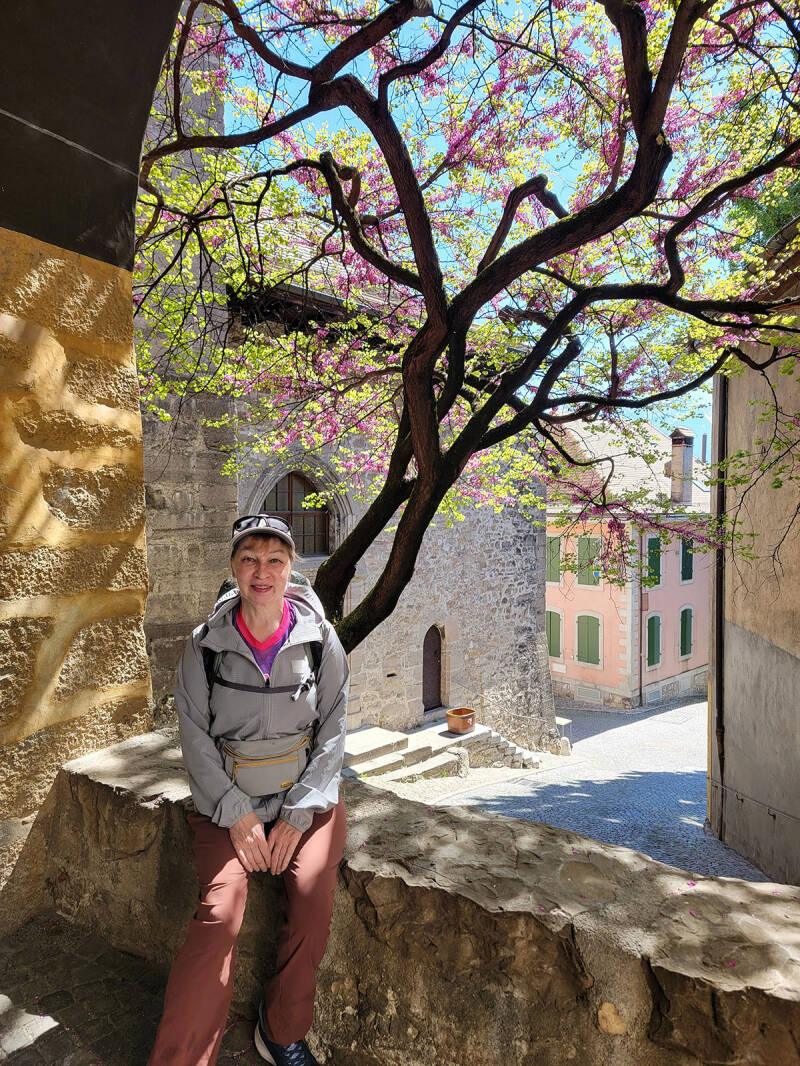
Time to continue on to Cully. I can highly recommend Café du Raisin. (Then again, just about everything around here is named after grapes or wine in one way or another.)
And once again, through the vineyards.
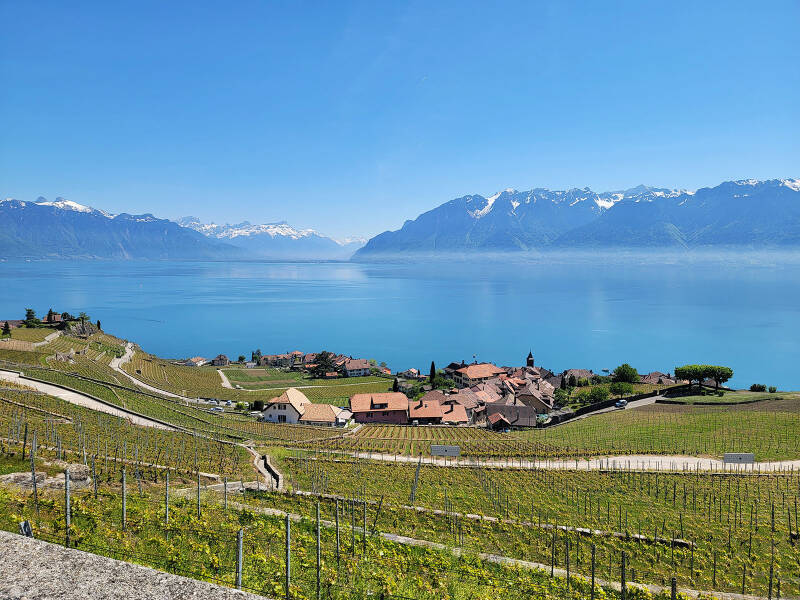
In Cully, we checked into our hotel and then headed out to collect stamps at Temple de Cully and to the grocery store to buy dinner. And because of that dinner, the night that followed went, to put it mildly, not according to plan.
Gratitude of the day: to a wonderful pair of walking shoes that neither pinch, nor rub, nor cause blisters.
Mood: from complete euphoria during the day to mild panic at night.
Stamp: Temple de Cully.
Day five.
The evening before, while tasting some kefir, my mother remarked that it seemed to have an odd sourness to it, though perhaps, she thought, that was simply how it was supposed to taste. It turned out that it wasn’t. My mother had food poisoning.
We had just finished swimming, done our laundry, and settled down in soft white bathrobes to relax after a long day’s walk when the nausea began.
The poor thing spent the entire night being violently sick. I was worried that a fever might develop or that other symptoms would appear and force us to look for a doctor, but thankfully nothing of the sort happened, and by morning it had passed. Neither of us slept at all. My mother was exhausted, though she did her best to keep her spirits up.
Fortunately, that day’s stage was a very short one—only about ten kilometres. So we stayed in the hotel until nearly noon, resting as much as possible, and then slowly made our way toward Lausanne.
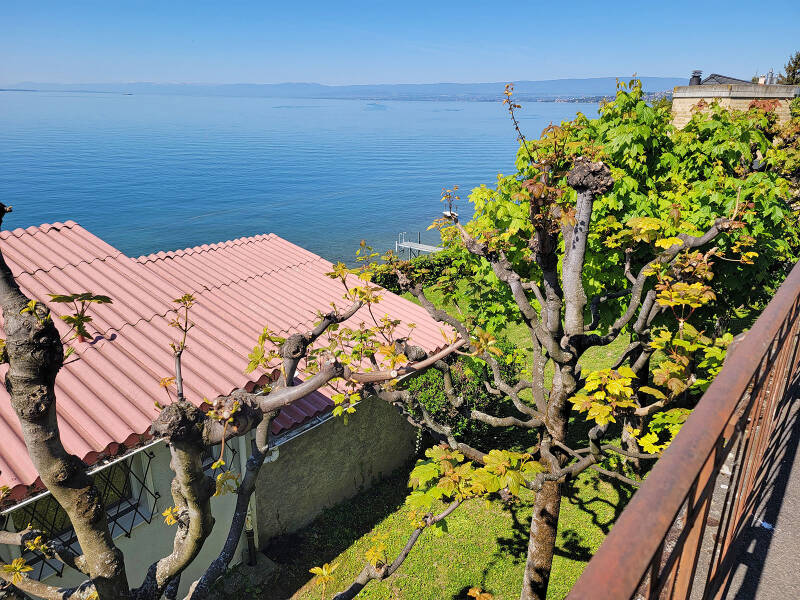
First, we made our way down to the lake.
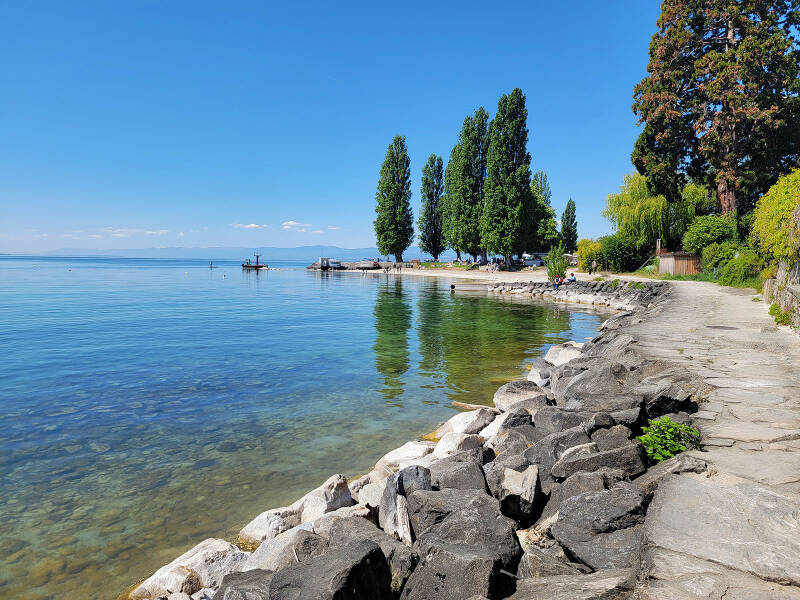
By then, it had become properly warm.
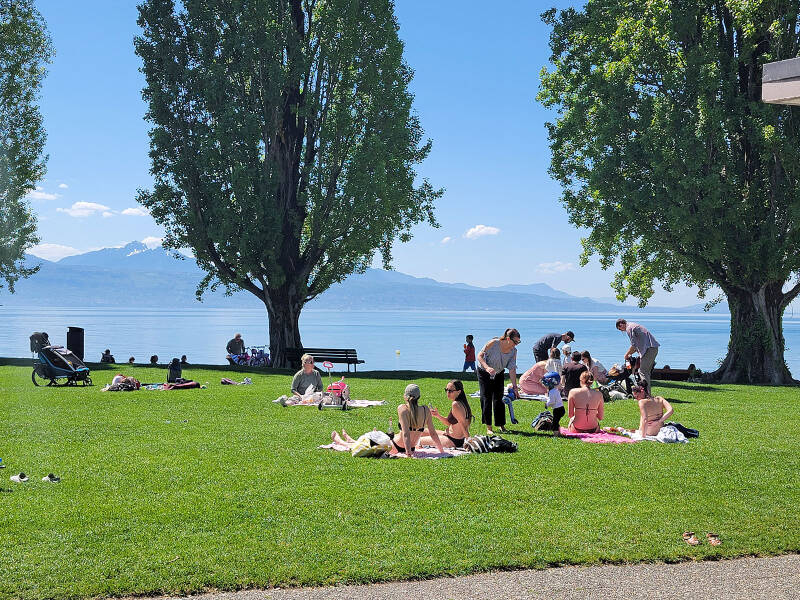
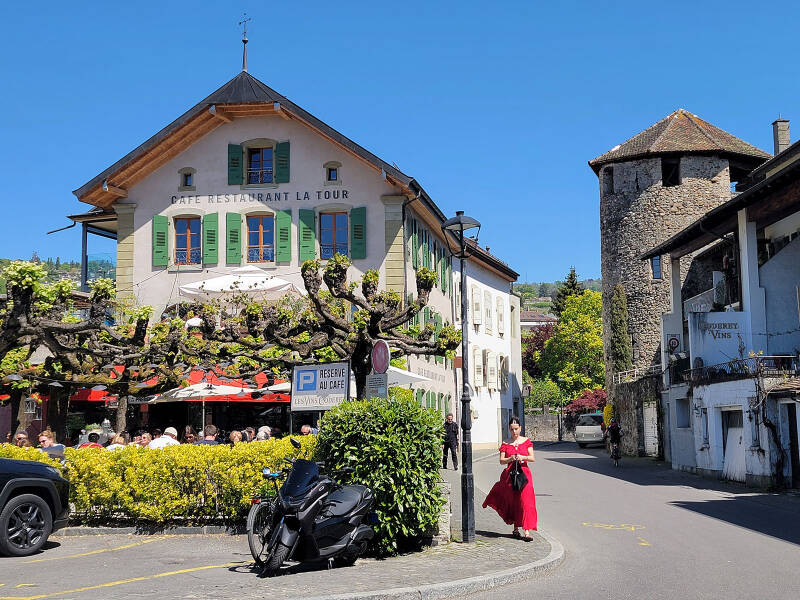
The rest of the route led through suburbs rather than vineyards and was, in that sense, rather more ordinary. Even so, it is always interesting to see how everyday people live.
An affluent suburb:
which gradually gave way to residential neighbourhoods:
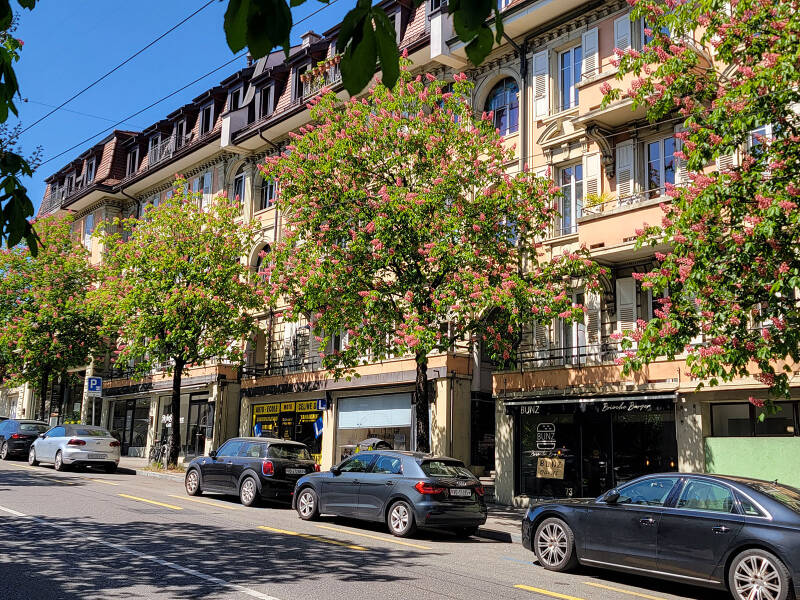
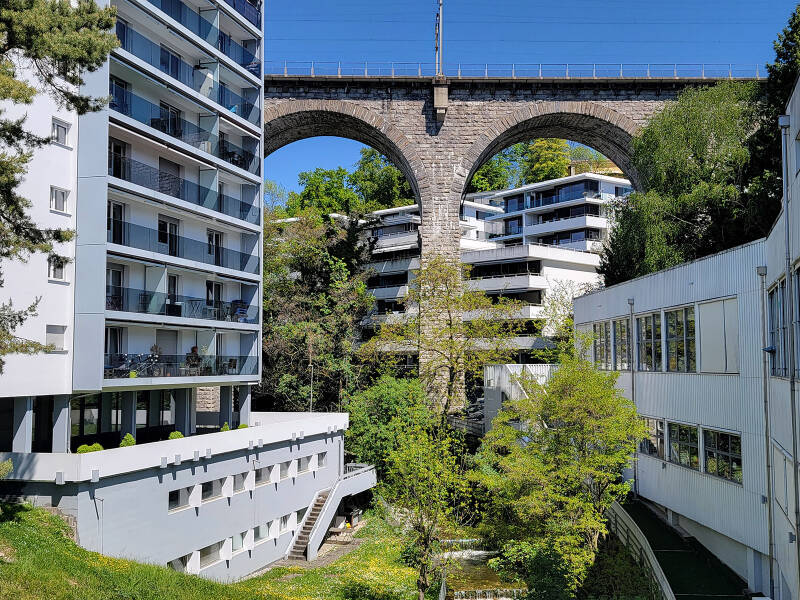
We stopped for lunch at a charming Italian café halfway along the route. (I never thought I would find myself eating a green spinach-and-rice purée soup that was called minestrone. I’ve never come across that version in America.)
The weather was once again magnificent—warm and sunny. I had visited Lausanne before, but not this part of the city, and it struck me as even more appealing than it had on my first visit.
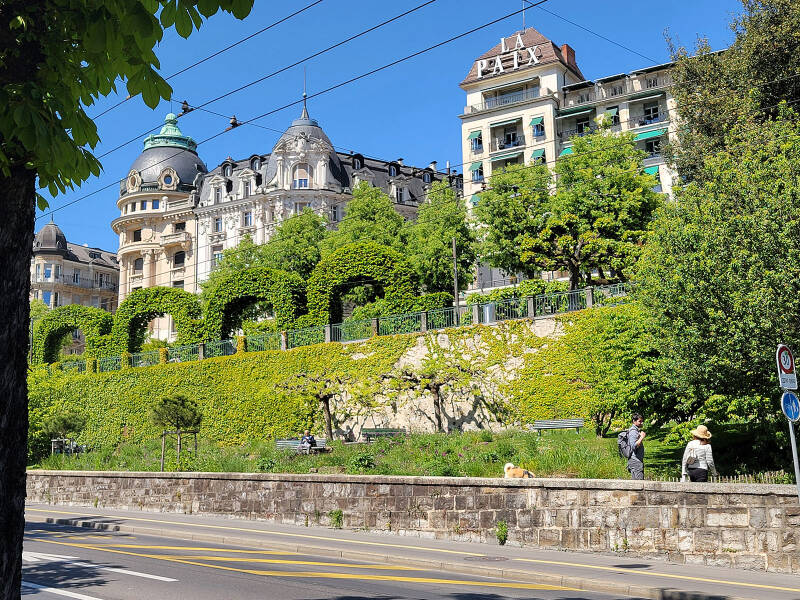
We checked into our hotel and were just about to settle down for some well-earned rest when my mom decided that she really was feeling better after all. Since she was up and about, we might as well go and collect a stamp and perhaps buy some summer clothes. We had prepared for rain, for chilly weather, even for frost—but not for heat. You simply do not expect +26°C in April.
If my mom is worrying about how she looks, then she is genuinely feeling better. Or perhaps it works the other way around: the moment she starts to recover, she immediately begins worrying about beauty and fashion again. Either way, it is a very good sign.
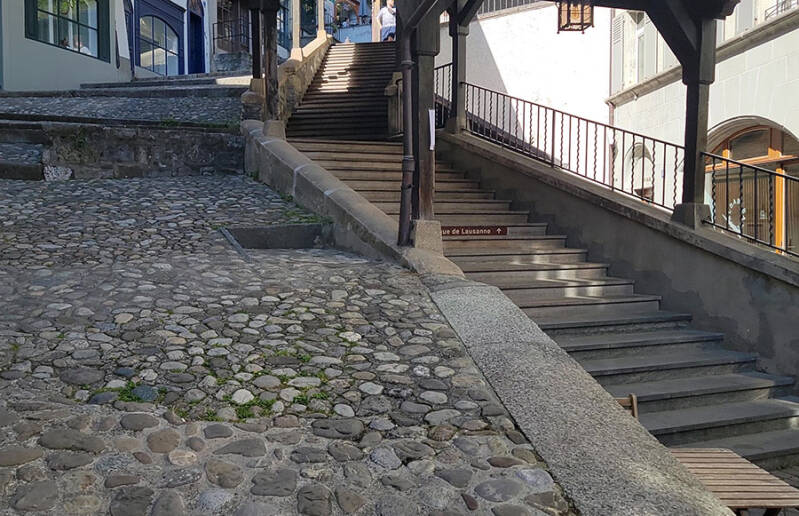
Lausanne is unique because of its many levels. Its cathedral, Lausanne Cathedral, stands so high above the city that it seems almost to float in the air. When you are down below looking up at its spires, it feels as though reaching it will take an eternity. Yet the navigation app calmly says, “10 minutes,” and it is not wrong. It is simply ten minutes of very long staircases.
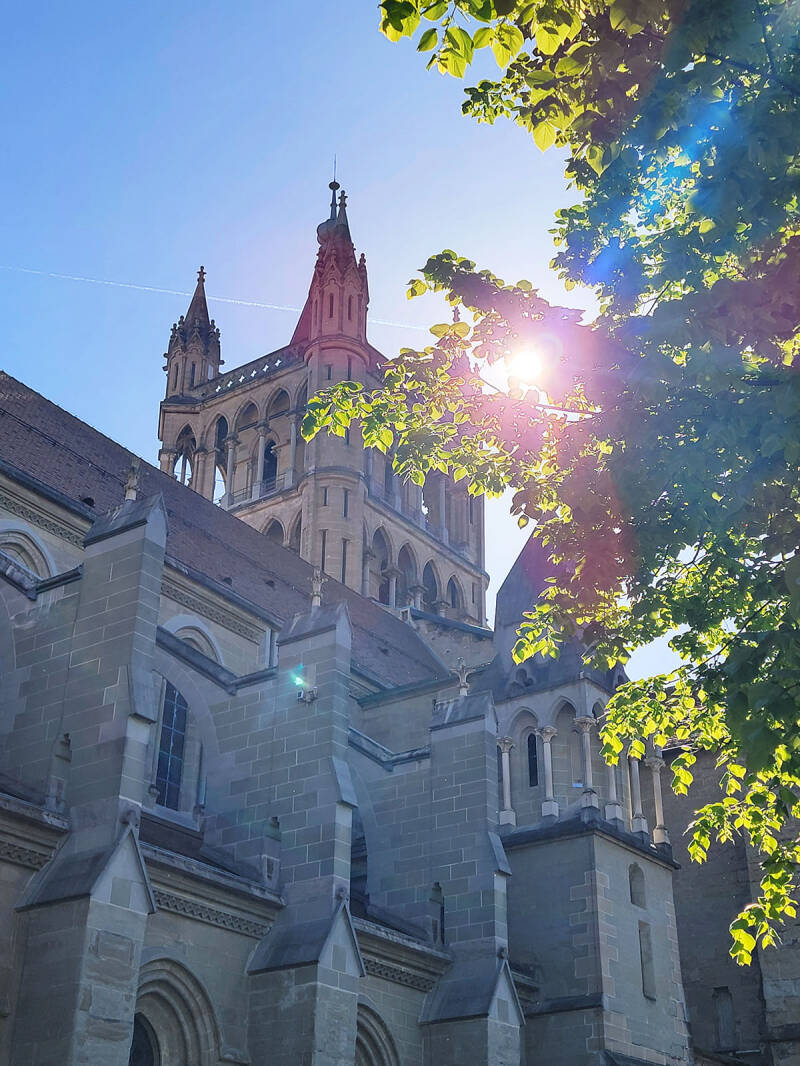
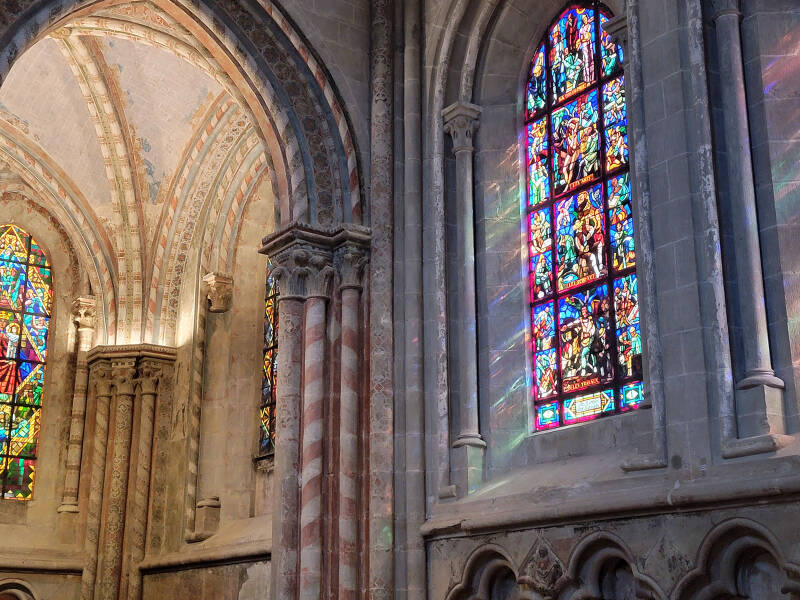
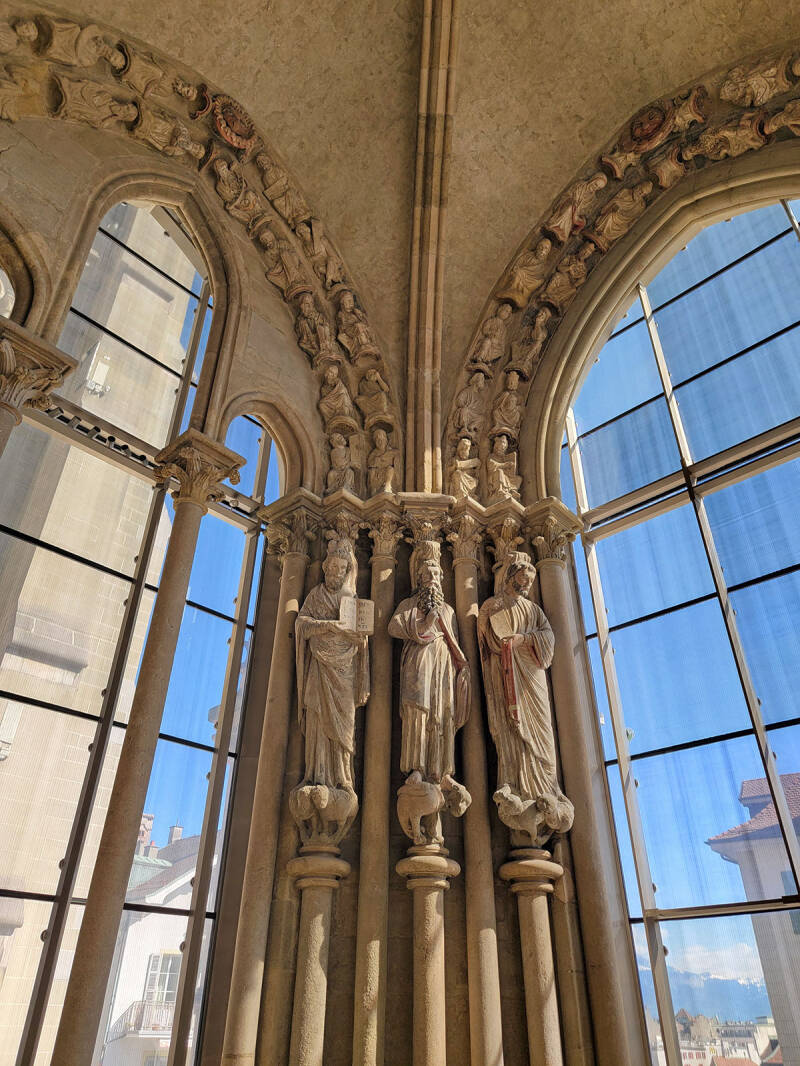
The cathedral is truly beautiful—one of those places that feels larger on the inside than it appears from the outside.
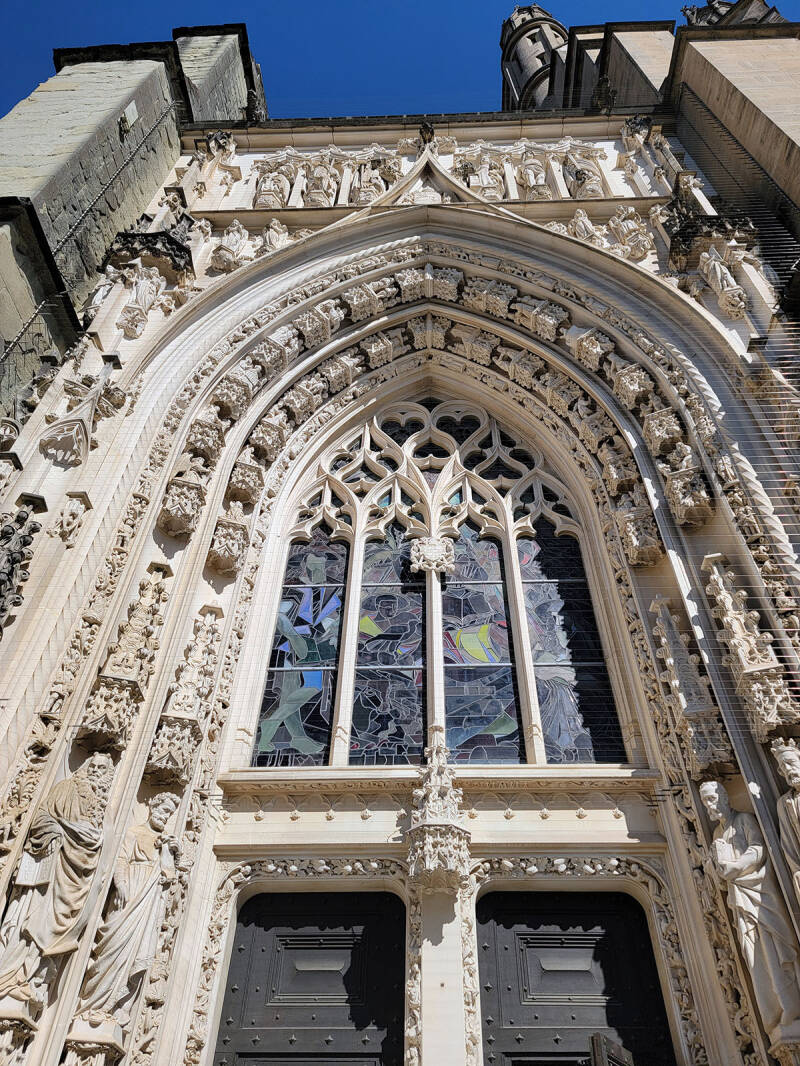
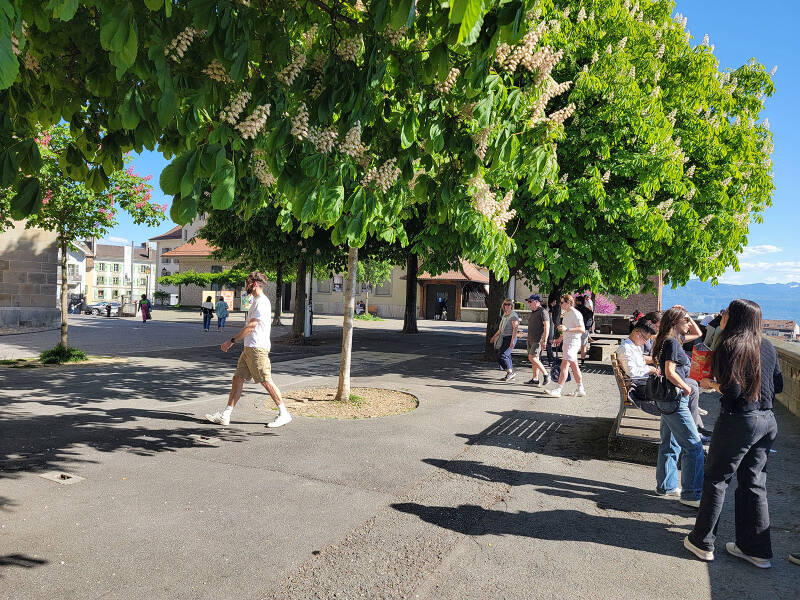
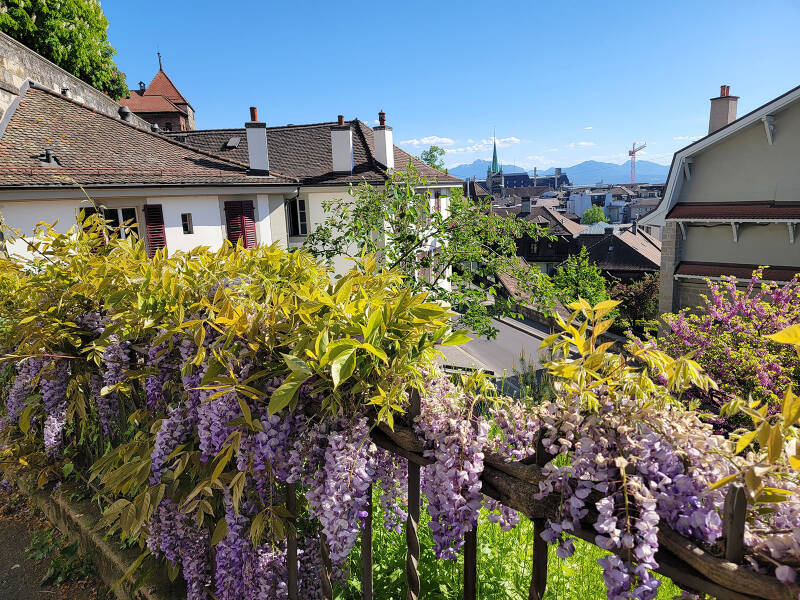
And right next to it there is a viewing platform, offering panoramic views over the entire city.
After coming down, we headed out to do some shopping. Lausanne is a large, lively city with no shortage of stores. A few new purchases quickly lifted Mom’s spirits.
Back in our room, we decided to turn in early and sleep in the next morning to make up for the difficult night before. Besides, we would be spending the following night at the same hotel, so there was no need to rush.
Gratitude of the day: the chance to catch up on sleep after a sleepless night.
Mood: renewed inspiration and a second wind.
Stamp: The Cathedral of Our Lady of Lausanne.
Day Six
Today is not a pilgrimage day, but there will still be plenty of walking. The good news is that we'll be doing it without our backpacks. We left them at the hotel and set off to visit an attraction unrelated to the pilgrimage route — the Grotte de Vallorbe caves.
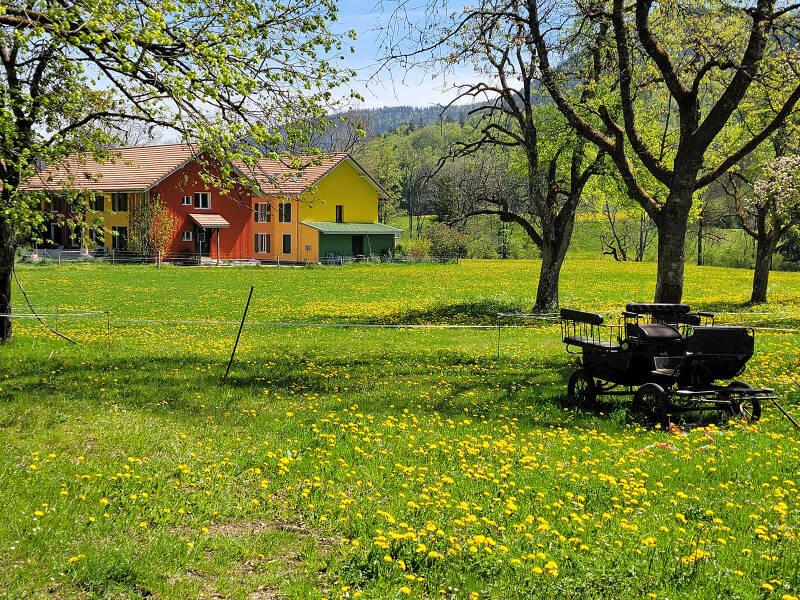
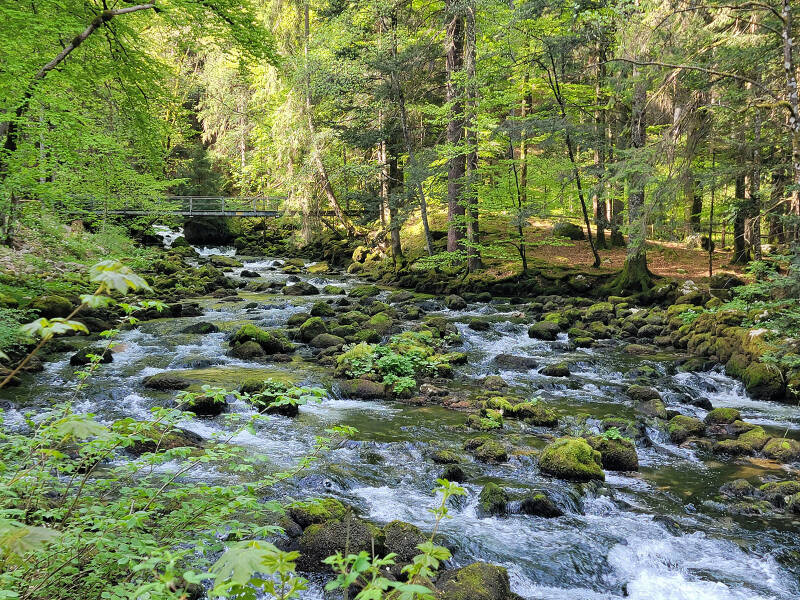
We took the train to Le Day station, and from there began our walk to the caves. We never seem to tire of the weather and the scenery. Everywhere we look feels almost unreal in its pastoral beauty. After the wild, grand landscapes of the Pacific Northwest, everything here seems so neat, gentle, and delicate.
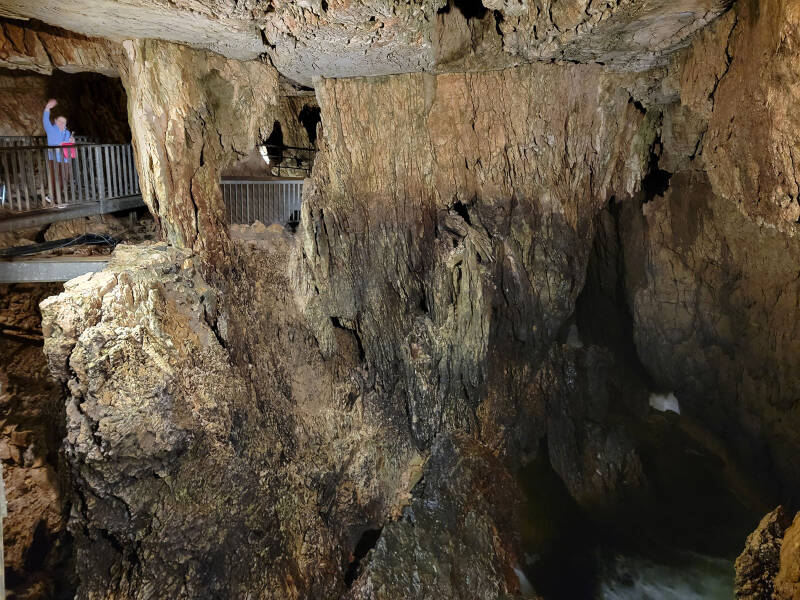
Whenever there are caves nearby, we make a point of visiting them. Over the years we've seen dozens of caves, so impressing us is no easy task anymore.
Even so, the Vallorbe caves delighted us. First of all, they contain a fast-flowing underground river. We've seen caves with subterranean lakes, waterfalls, and even rivers that you can navigate by boat. But this was our first time seeing a rushing mountain river deep underground, and it was absolutely wonderful.
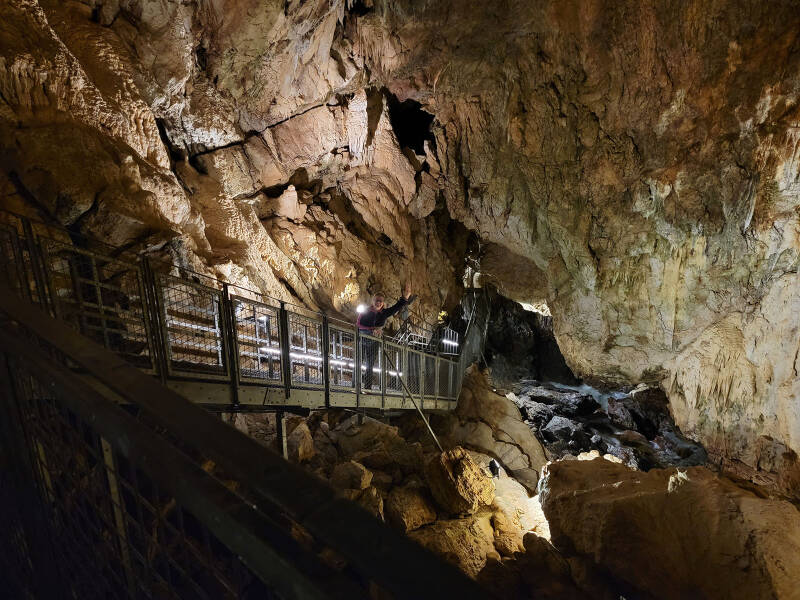
Of course, there were also the seemingly bottomless pools:
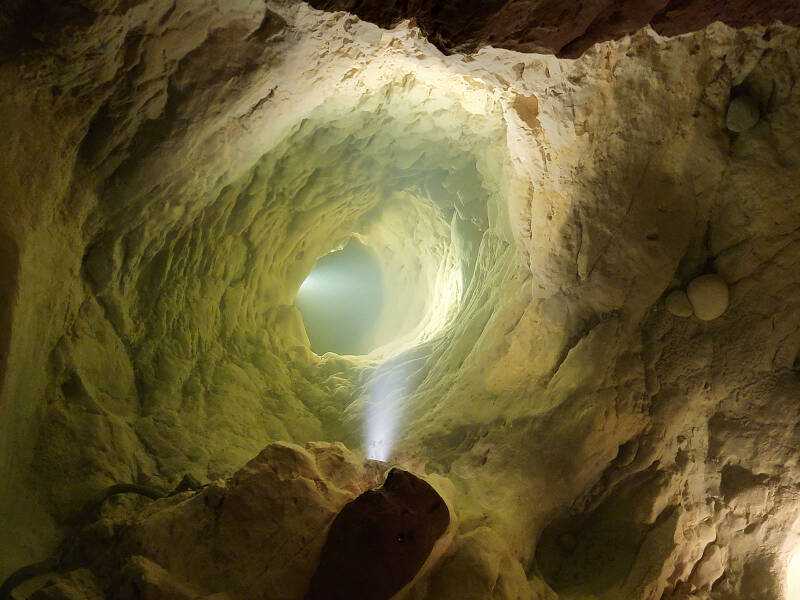
Secondly, the Swiss have done an excellent job of enhancing the experience through thoughtful and remarkably subtle touches. Unlike some caves that rely on harsh, colorful lighting, everything here is restrained and perfectly suited to the setting.
For example, in the great chamber—where the vaulted ceiling resembles the dome of a cathedral—you can hear faint angelic singing in the distance. Occasionally, the sound of thunder rolls through the cavern, while spotlights briefly illuminate towering stalactites that would otherwise remain hidden in the darkness. Together, these effects create a magical atmosphere and elevate the cave from merely impressive to truly unforgettable.
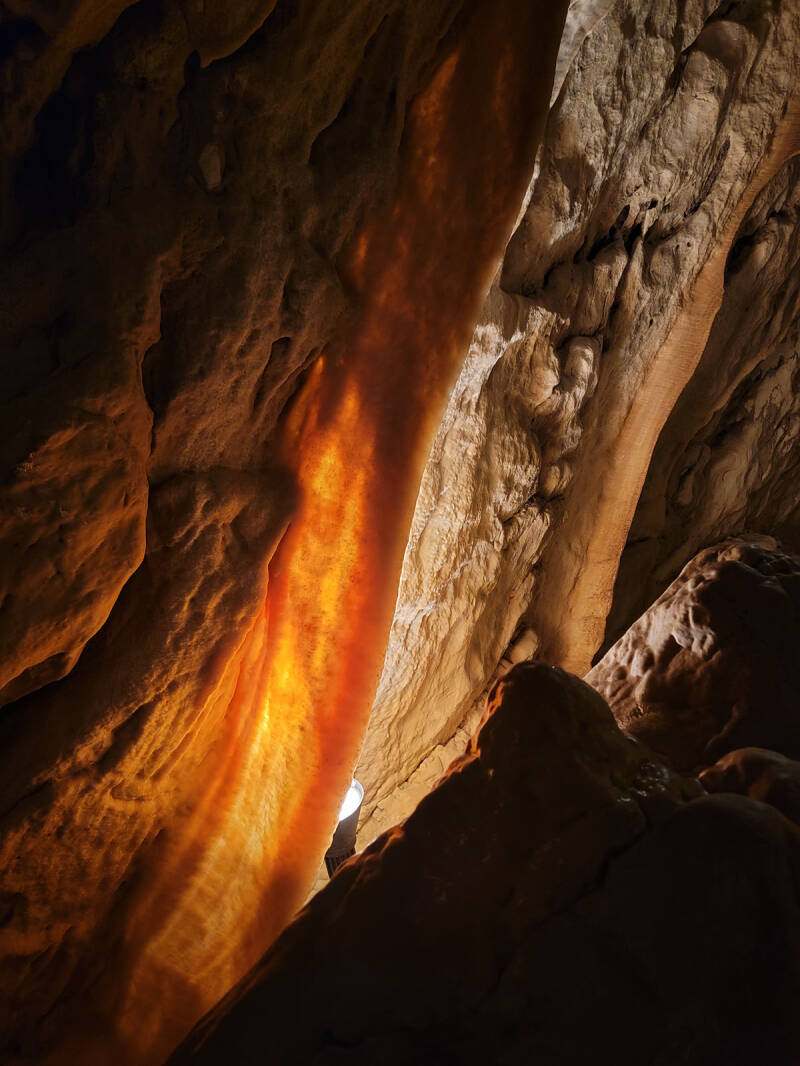
Bacon of the day:
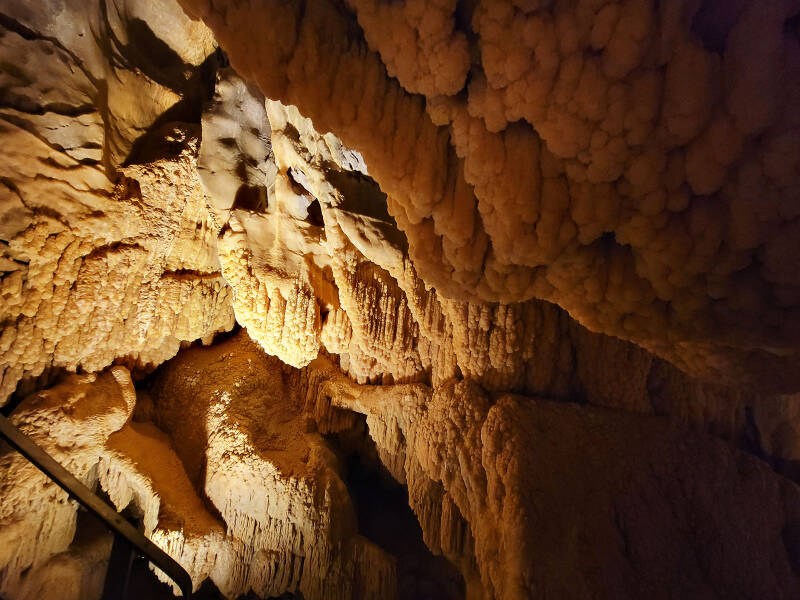
cauliflower:
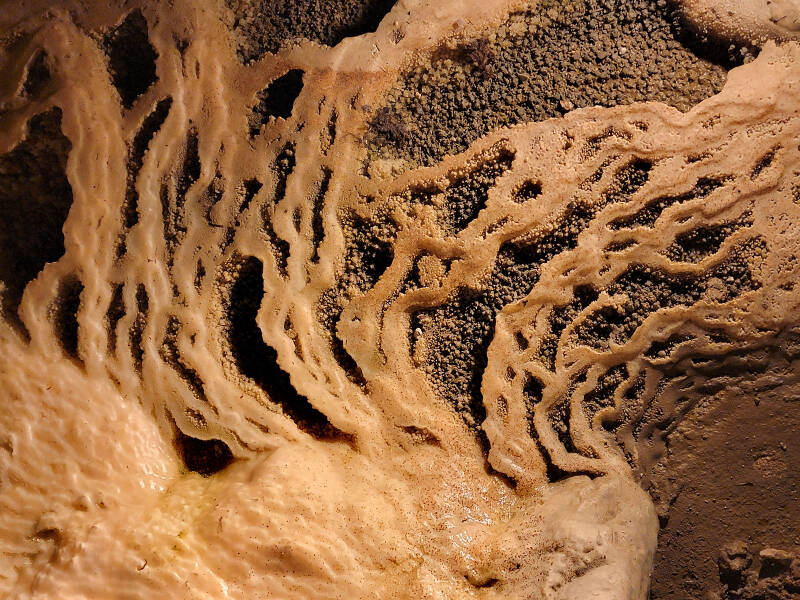
A flaky pastry... or maybe someone is simply overdue for lunch?
And the mineral and gemstone museum at the end of the tour was an absolute delight.
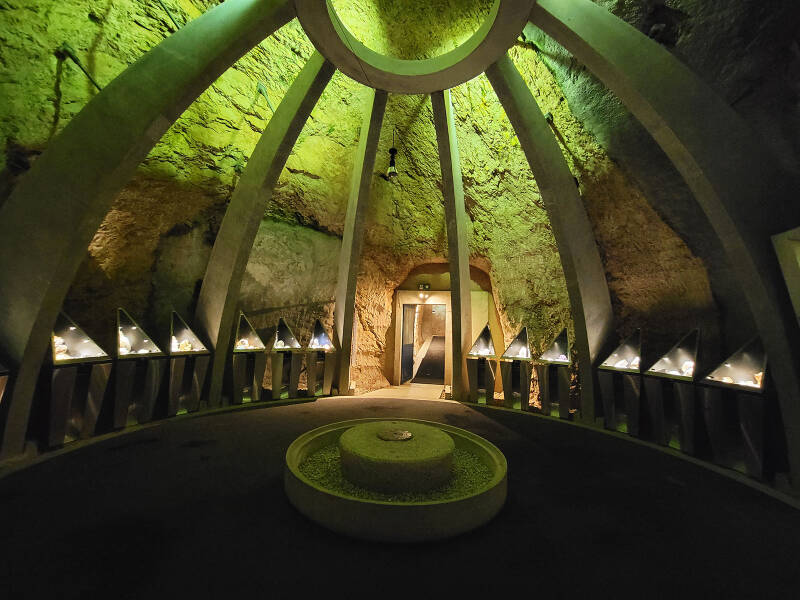
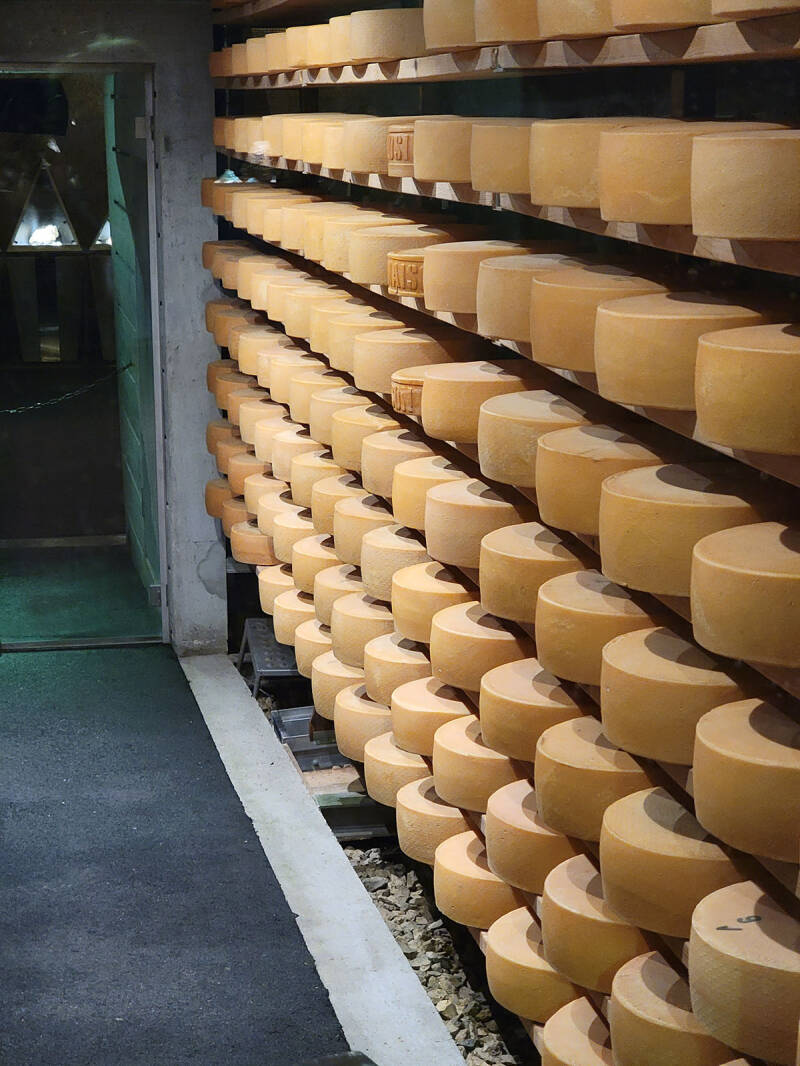
Behind glass doors, wheels of cheese slowly age at their perfect temperature, while nearby wines mature quietly in the cool cellar air.
Wonderful caves.
After our visit, we had lunch at a café, picked up a few more souvenirs, and decided not to return to Le Day station. Instead, we walked to Vallorbe station by a different route.
The path was just as scenic, winding above several small villages. No matter which way you walk or where you look, everything seems perfect—beautifully kept, simple, and charming. Switzerland has a way of making even the most ordinary scenes look like they belong on a postcard.
Wherever you walk and wherever you look, everything seems perfect—spotless, simple, and utterly charming.
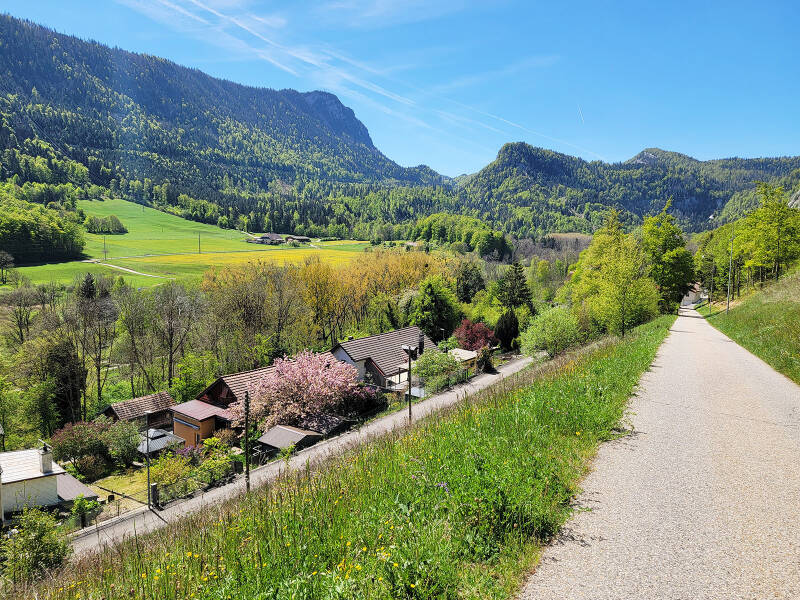
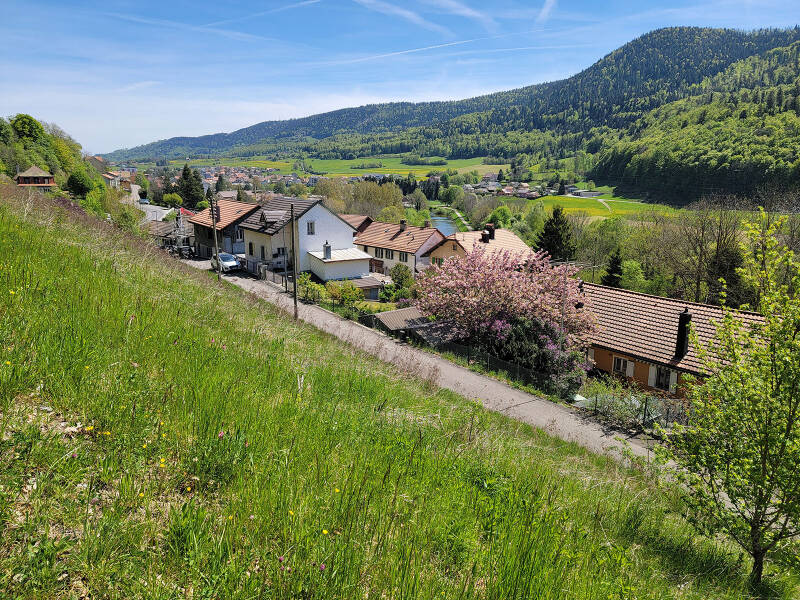
We returned to Lausanne and spent the rest of the day relaxing. It turned out to be an easy, restorative day—exactly what we needed.
Gratitude of the day: our consistently good spirits.
Mood: gratitude for all the beauty in the world. A bit of a circular definition, perhaps, but that's exactly how it feels.
Stamp: none today.
Day Seven
Today is a pure walking day on the Via Jacobi. The plan is simple: keep walking, one step at a time.
Lausanne is quiet in the early morning. The only people out seem to be the workers slowly making their way through the streets, scrubbing everything with soap and water. They clean with the kind of care one might give to their own home.
Leaving Lausanne takes almost as long as entering it. We pass through the railway station and collect another stamp. The city's landscaping is absolutely stunning.
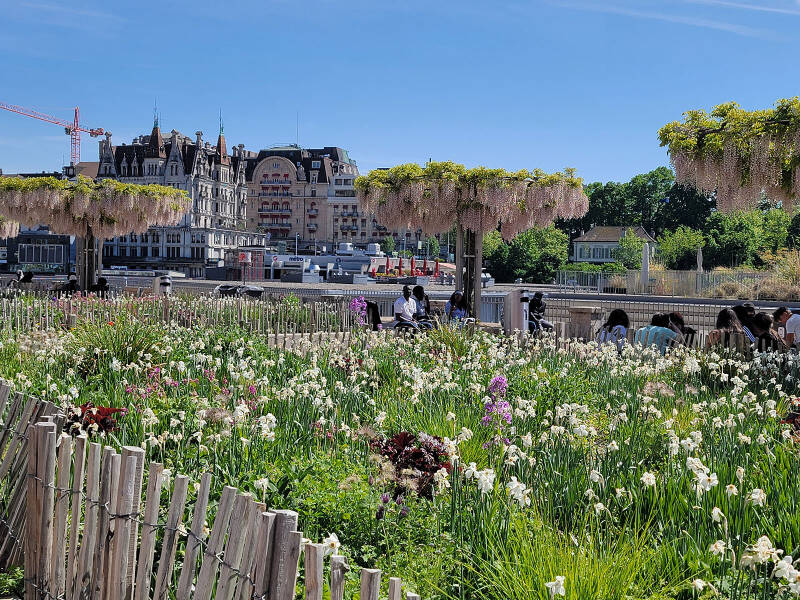
Then begins the long descent back to our faithful companion, Lake Geneva. Our route leads through parks and the botanical garden, surrounded by lush greenery at every turn.
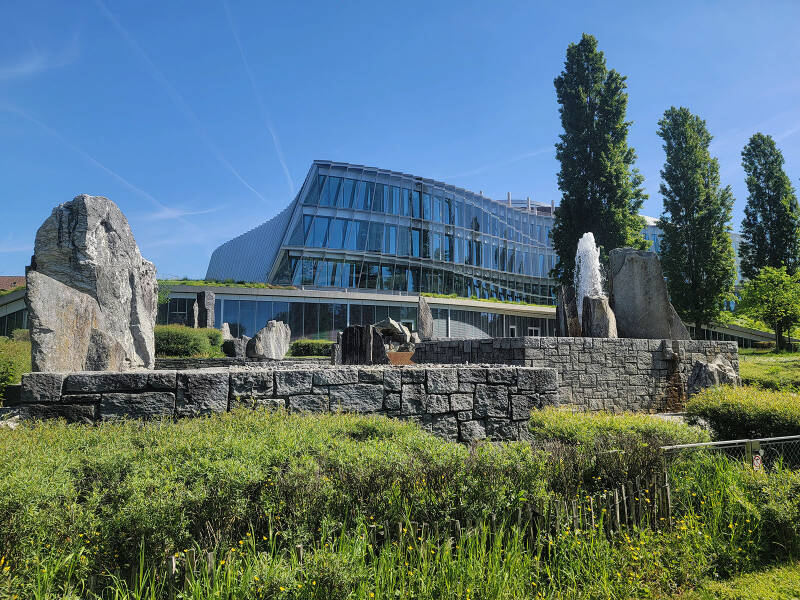
We descended all the way down to the lakeside promenade. Because the weather is hot and we are constantly heading west, the left side of our faces has been slightly sunburned and is starting to peel, while the right side remains noticeably paler. It looks rather amusing.
The weather is still magnificent. The promenade here is less ornate and decorative than in Montreux—everything feels more natural and simple—but it is a deceptive simplicity.
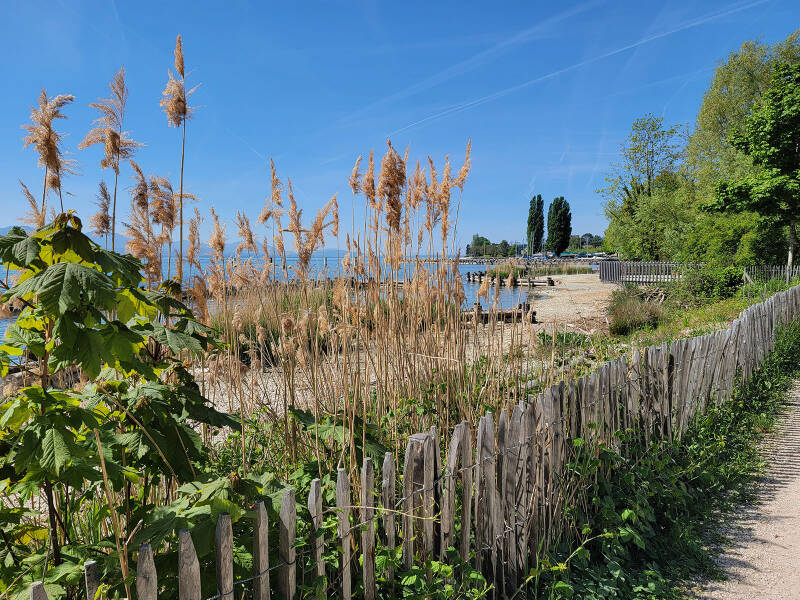
In fact, on that day we walked through small towns where everything exuded not just prosperity and affluence, but a kind of quiet, serene luxury. Photographs never manage to capture that vibe.
And yes— in these towns, only people over 90 walk. Everyone else runs. I swear.
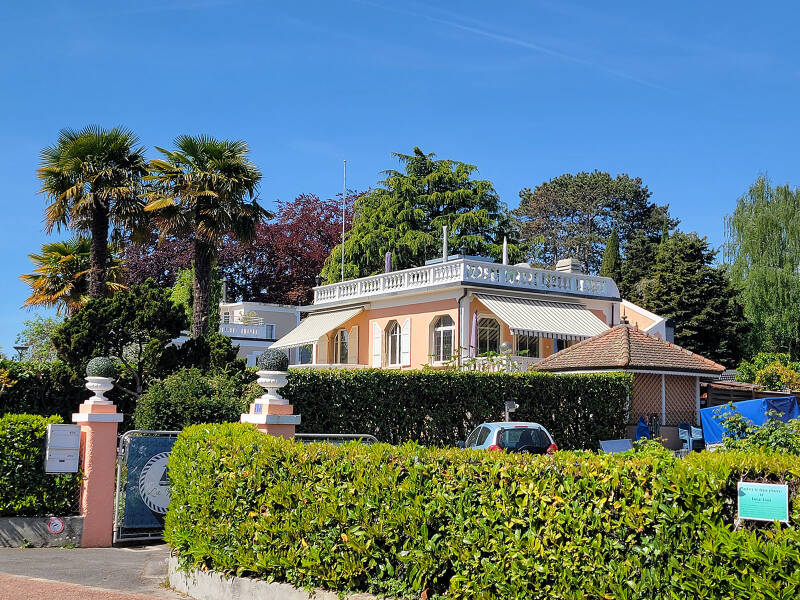
We decided to have lunch in the town of Saint-Sulpice at a small restaurant overlooking the lake, right next to the church. We found ourselves dining among local elderly couples who, it seemed, eat there every day. With our backpacks, we didn’t quite fit into this refined community of heavy rings and earrings—but that hardly mattered. The food was excellent, and that was all that counted.
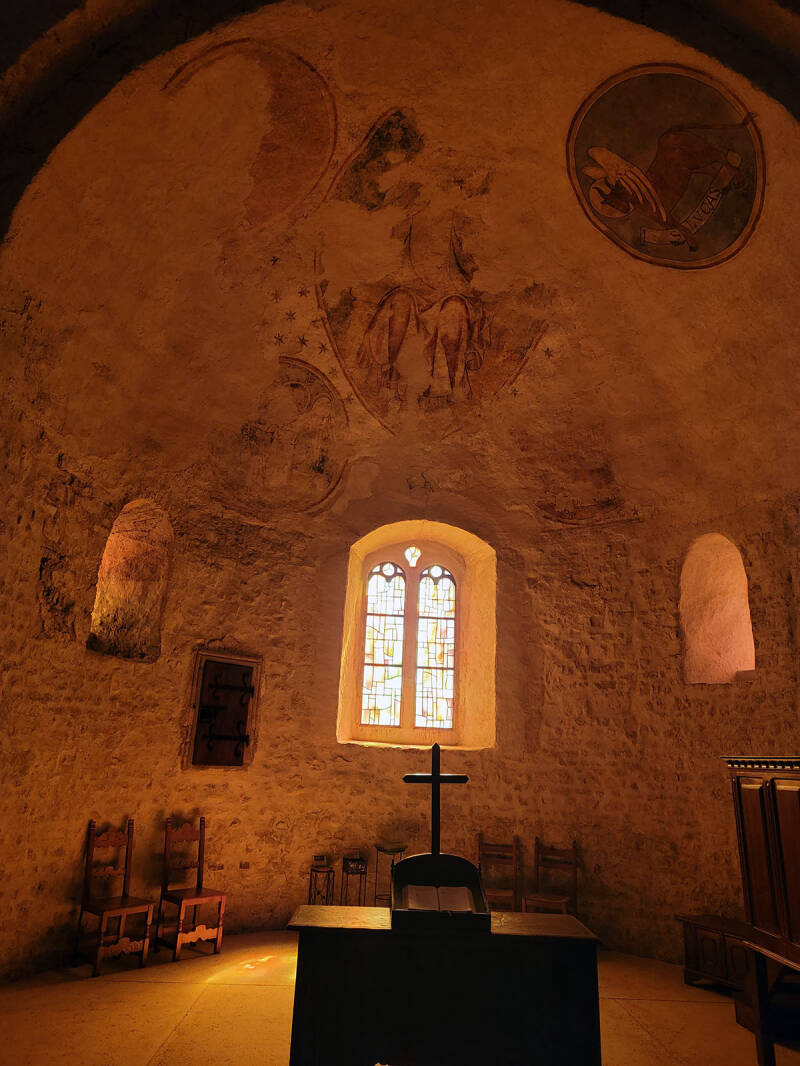
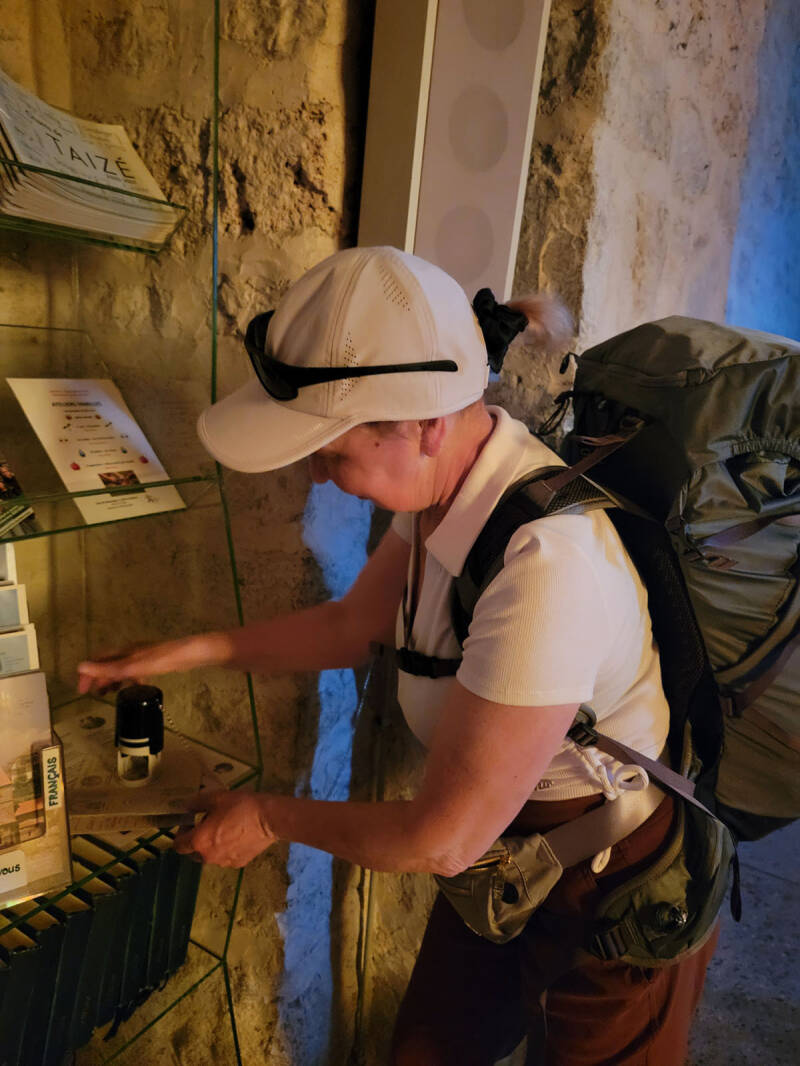
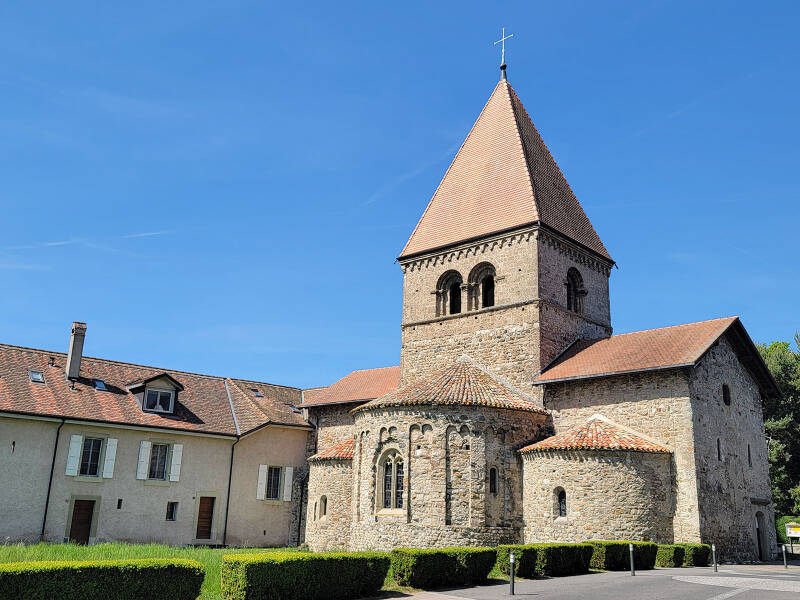
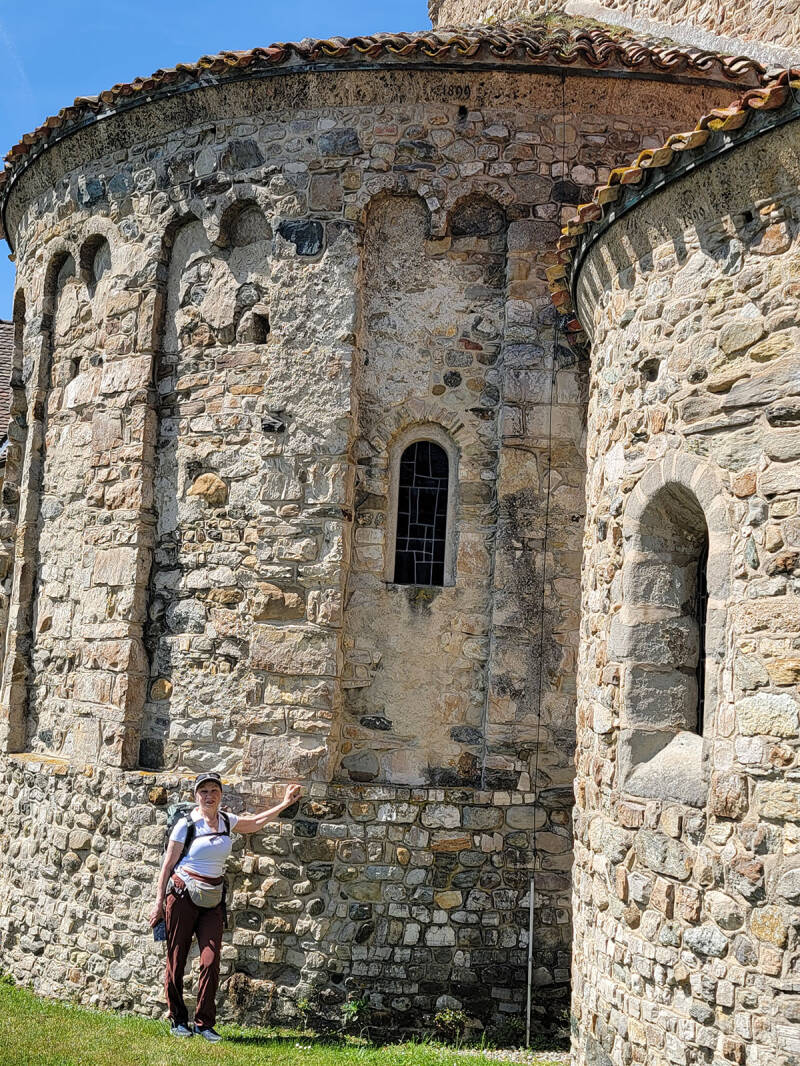
The 12th-century Church of Saint-Sulpice was unusual and striking. Inside, it felt almost like stepping into a cave with ancient, rock-like frescoes on the walls. A truly wonderful place.
We reached the town of Morges. It turned out to be larger and more charming than I had imagined while planning the route.
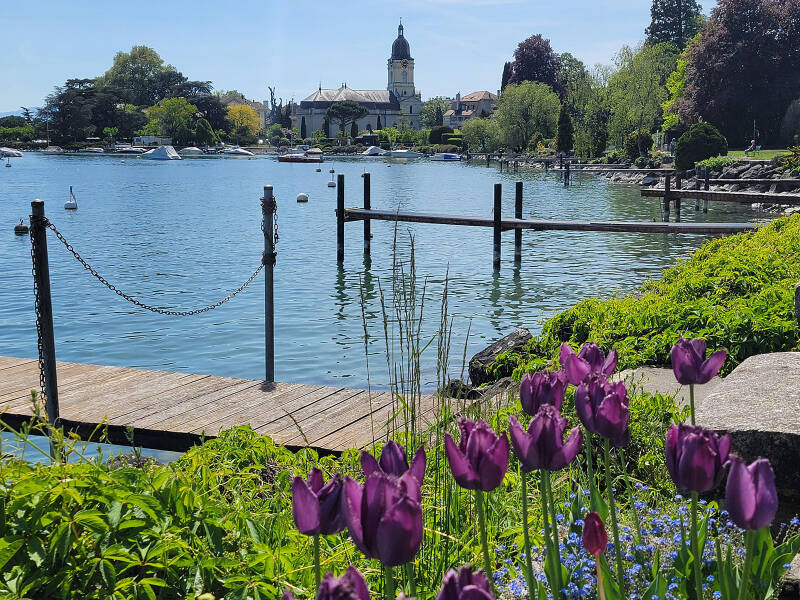
We checked into our hotel and went for a walk around the shops. Mom picked up a pair of summer trousers.
Gratitude of the day: the calm, relaxed atmosphere that gradually seeps in and makes you relax along with it.
Mood: peacefulness.
Stamps: Lausanne Tourist Office, Romanesque Church of Saint-Sulpice.
Day Eight
Another simple transition day along the Via Jacobi.
Today is the only overcast day of our entire trip. And yet we came prepared with warm jackets, large rain ponchos for ourselves and our backpacks, and waterproof shoe covers. In the end, we got just this one cloudy day, with almost no rain and barely any wind. Apparently, we are weather favorites. If only we had known in advance—we could have lightened our packs considerably.
We got our stamps at the post office.
We walked through the town down to the lakeside promenade and decided to stop by Morges Castle.
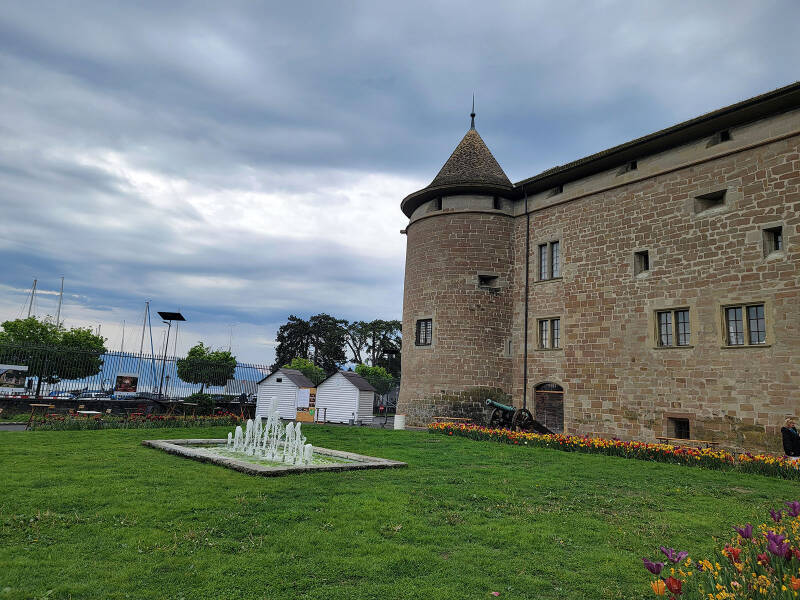
Unfortunately, there is little of the medieval castle left today. Perhaps only the covered walkways on the third level remain, but they are currently closed to visitors—apparently wasps have taken up residence there, and access has been temporarily restricted.
The rest of the castle has been turned into something like a local history museum. It’s a pleasant little museum, but nothing particularly remarkable; it could easily be skipped. It feels more like an educational outing for local schoolchildren than a major attraction.
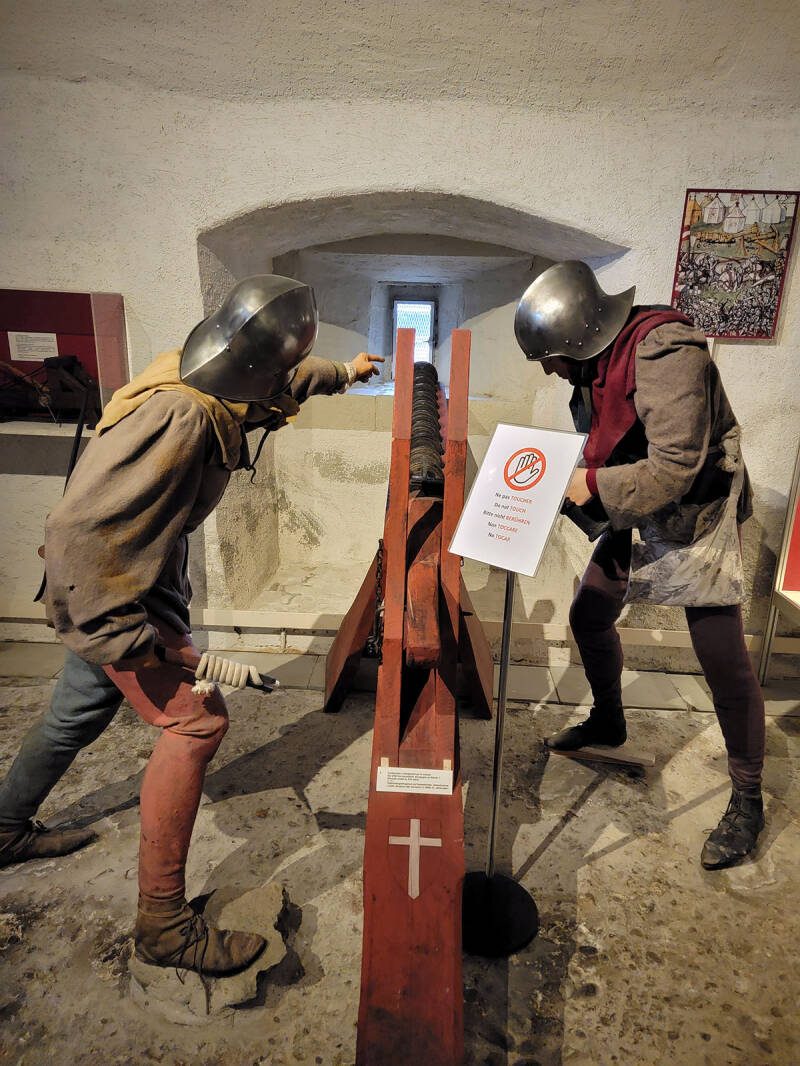
After some time walking along the lakeshore and through tulip gardens, we reached Saint-Prex, where we inexplicably proceeded to eat local desserts at a café (no one can quite explain why).
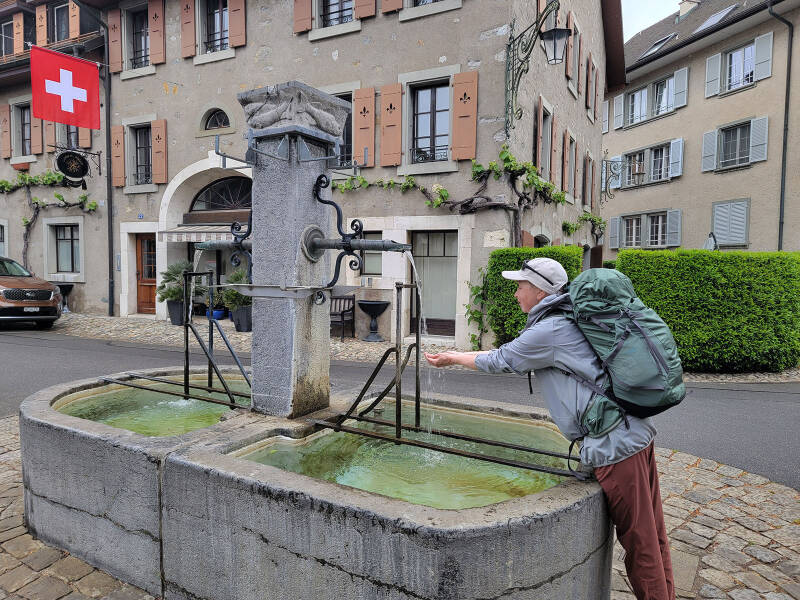
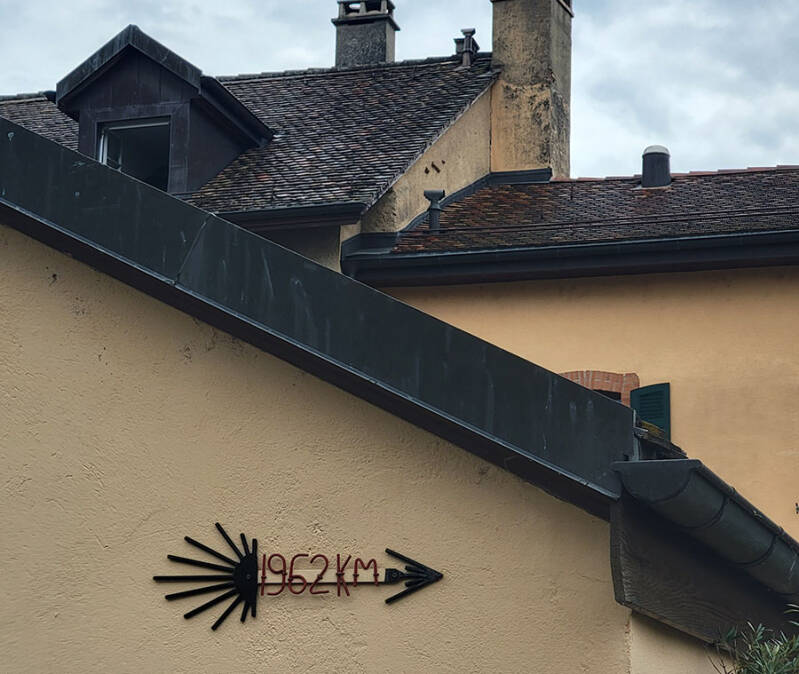
It turns out that Santiago de Compostela, our final destination somewhere in the unimaginably distant future, is still 1,962 kilometers away. Whew!
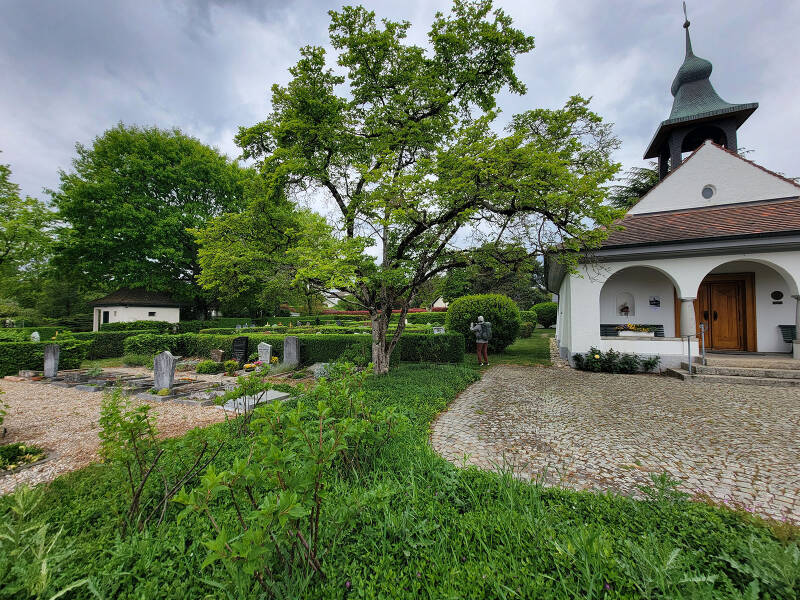
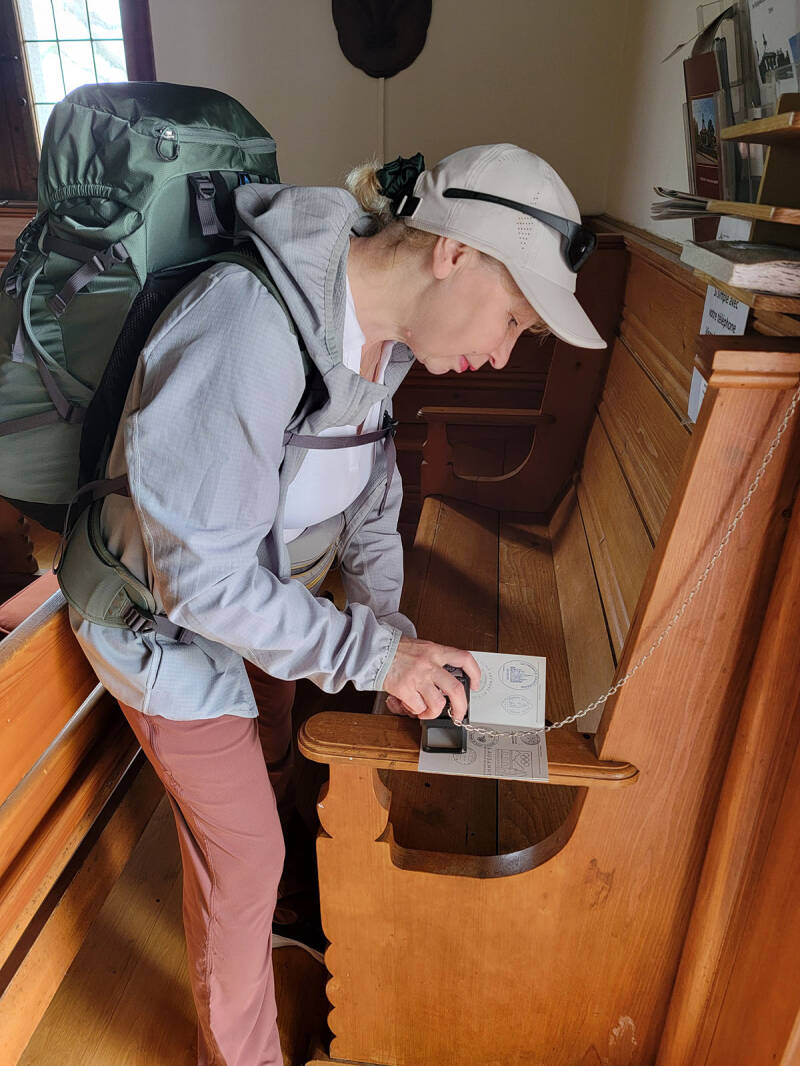
We got our Camino stamp in the town of Buchillon.
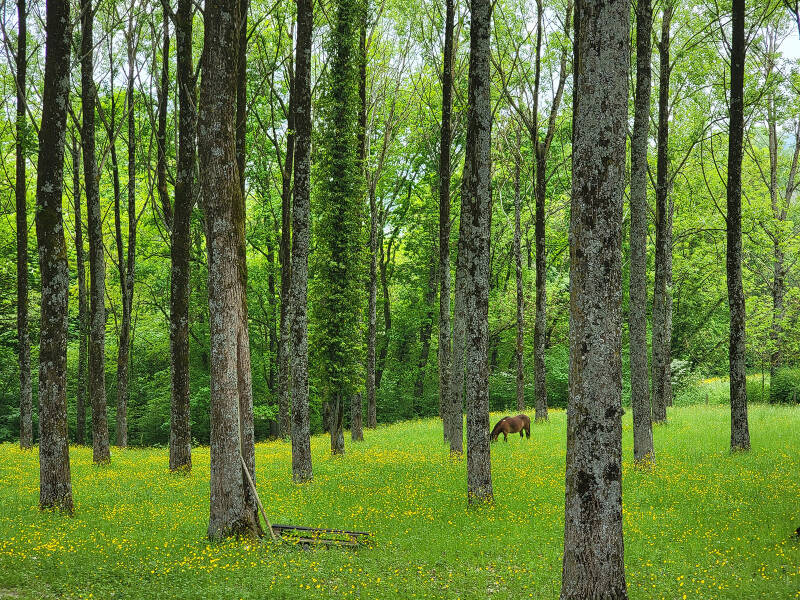
Then the pilgrim route veered away from the lake, giving way to a forest trail,

followed by pastures,
a few châteaux, and orchards.
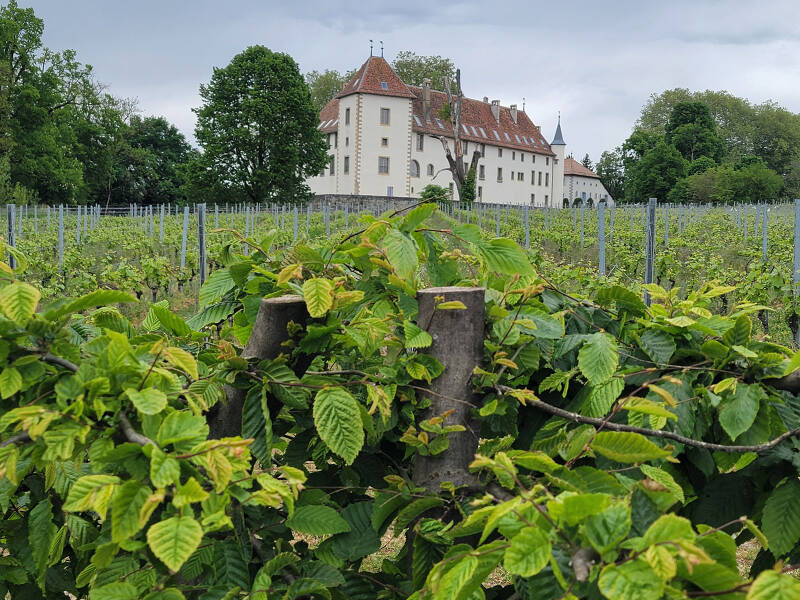
We still had to climb up to the town of Perroy.
Perroy is a lovely, compact little place. Nearly every house bears signs celebrating the vineyards and wine that have brought prosperity to the town. Even the wrought-iron gates and railings are decorated with grapevines and clusters of grapes.
What is less lovely about Perroy is that the entire town has only one grocery store—the very one I had been counting on—and it happened to be closed for renovations.
Of course, we could have walked to the neighboring village three kilometers away, but after already covering 18 kilometers over rolling hills, adding another six kilometers in the evening was not particularly appealing.
The situation was complicated by the fact that our hotel did not provide breakfast, and the room did not even have a kettle. Knowing this in advance, I had been anticipating a rather hungry evening. I would have managed, but my mother really cannot afford to lose any weight.
As it turned out, everything worked out for the best. Our hotel had only four guest rooms, all located on the upper floors. Downstairs, however, there was a large fully equipped kitchen stocked with food. If you wanted risotto, you simply dropped three francs into the piggy bank and cooked it yourself. Pasta with mushrooms? Sweets? Help yourself. There was also a kettle, along with complimentary tea, coffee, and cookies.
In short, that kitchen saved us.
To make things even better, we discovered a bakery on the next street. By then we were thoroughly tired of sweets, but they also sold salads—exactly what we needed.
Gratitude: for circumstances that somehow always seem to work out.
Mood: the peace that comes from a steady, step-by-step rhythm.
Stamps: Morges Post Office, Chapelle de Buchillon, Temple de Perroy.
Day Nine
Another day on pilgrimage.
Today we are walking to the town of Nyon. The descent toward the village of Rolle takes us through impressive wine-growing estates, with vineyards stretching across the hillsides and down toward the lake.
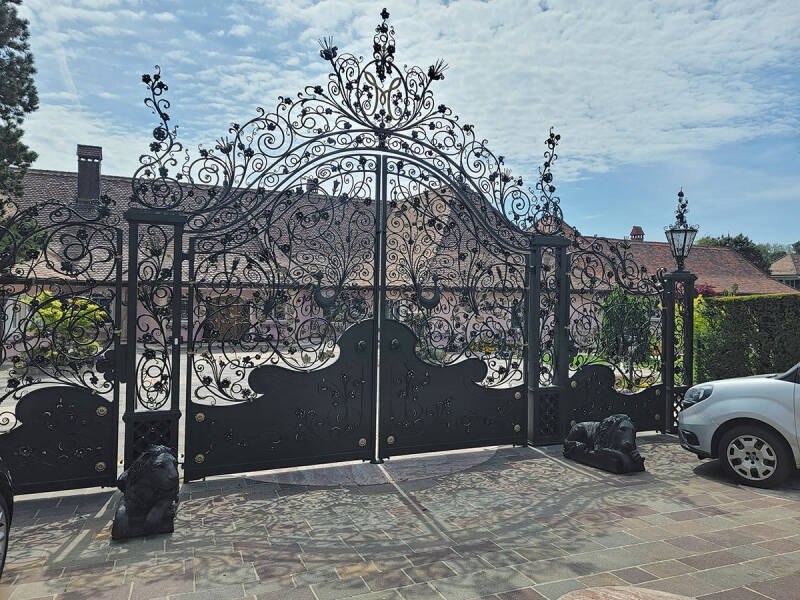
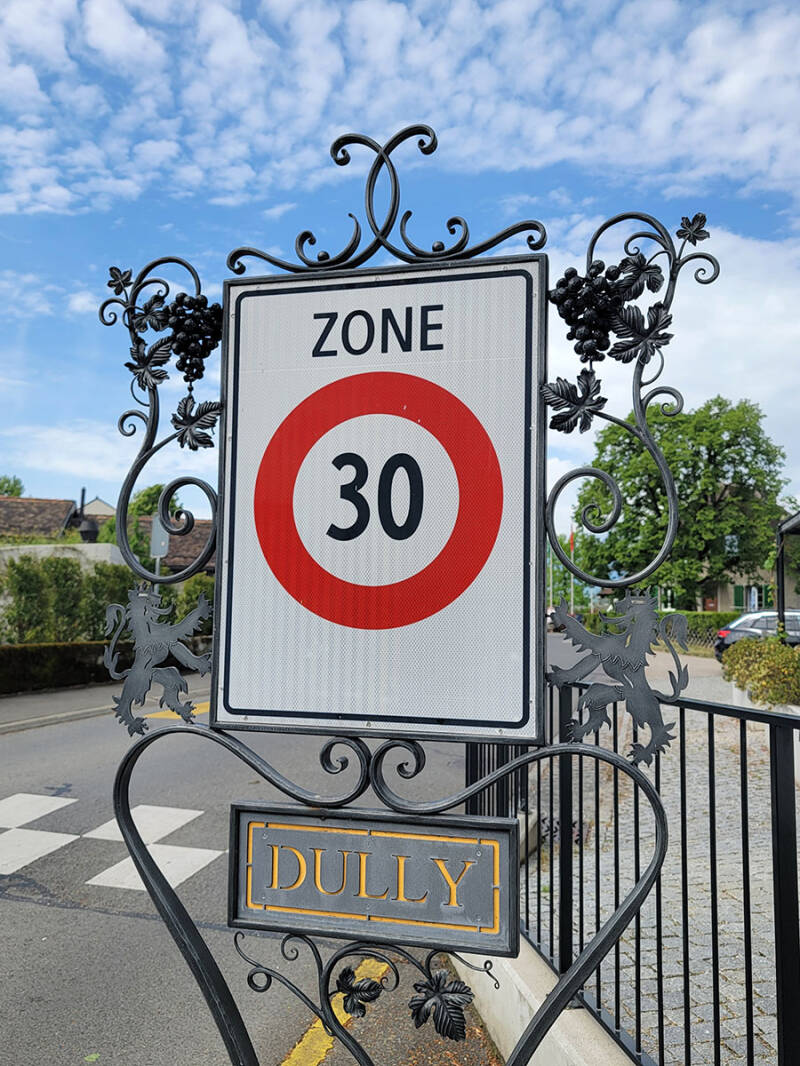
Even the road signs seem to revolve around wine.
We collect stamps in Rolle and Bursinel,
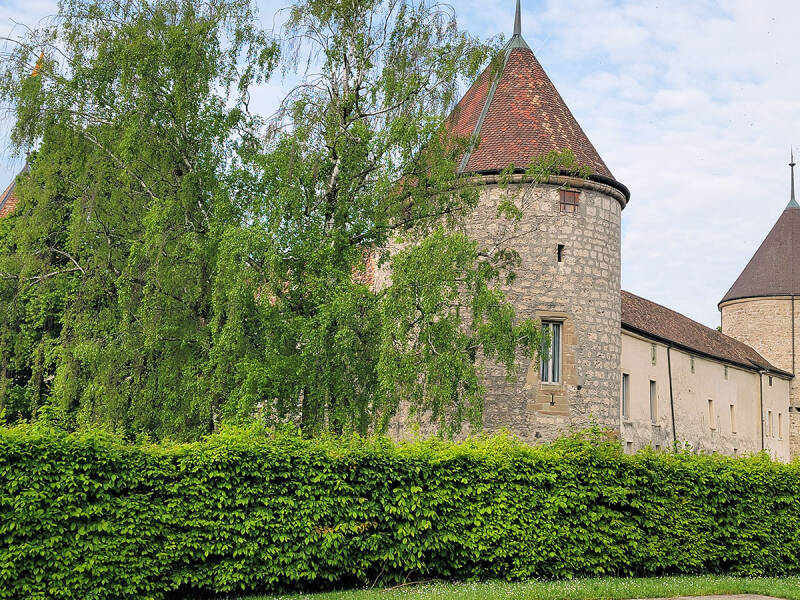
then make our way through Dully, descending toward the lake along a beautiful forest trail. By this point in the journey, all these little towns are starting to blur together in my mind—Cully, Bulle, Rolle, Dully...
Fortunately, every junction is clearly marked with pilgrim signs, so getting lost is practically impossible.
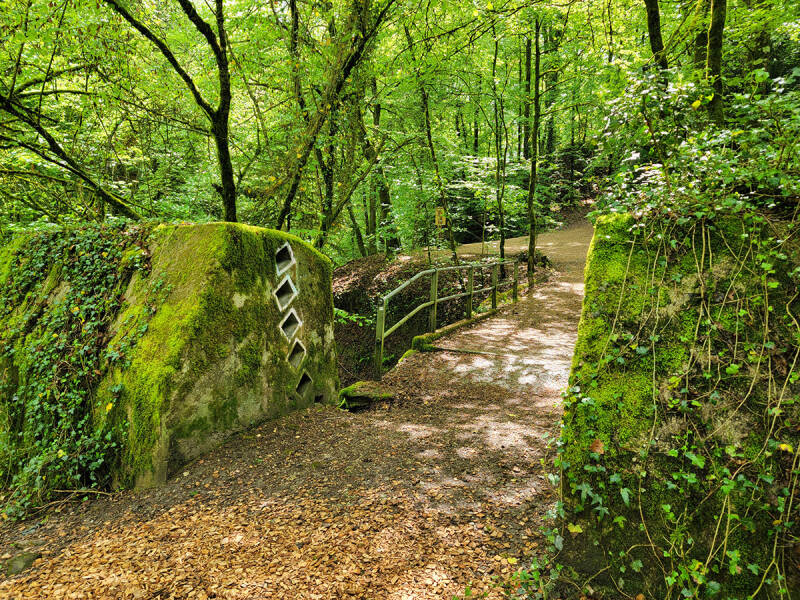
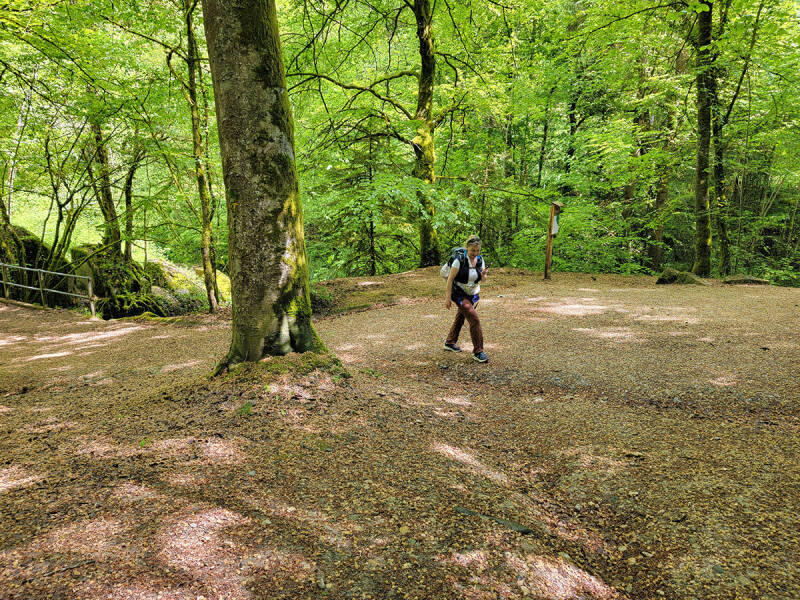
There are plenty of towns along the way, yet by lunchtime we somehow find ourselves in the middle of nowhere, surrounded by open fields. Our only hope is a gas station visible in the distance.
The gas station turns out to be unexpectedly well equipped: two restaurants, a coffee shop, a full grocery store, showers for travelers, and more. In short, we are saved.
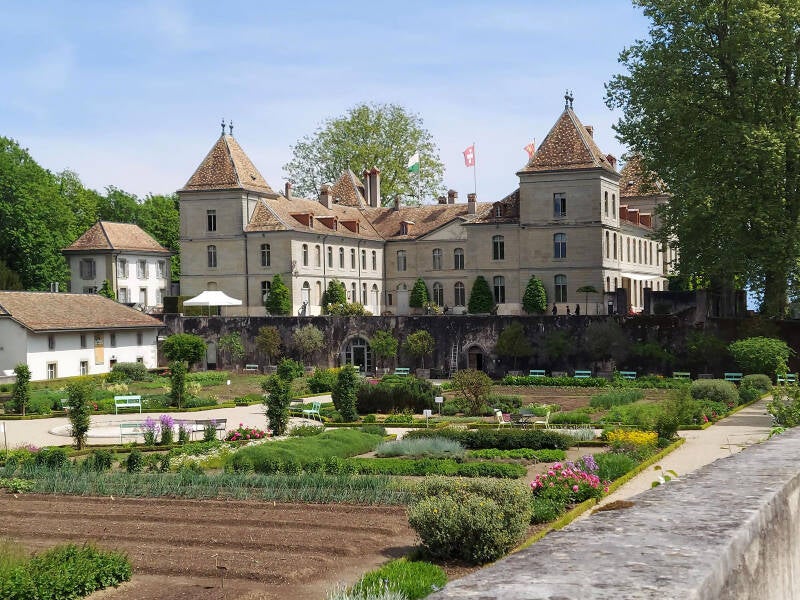
Later, we pass the beautiful Château de Prangins. We get our stamp at a nearby church before continuing on our way.
We arrived in Nyon around 5 p.m.
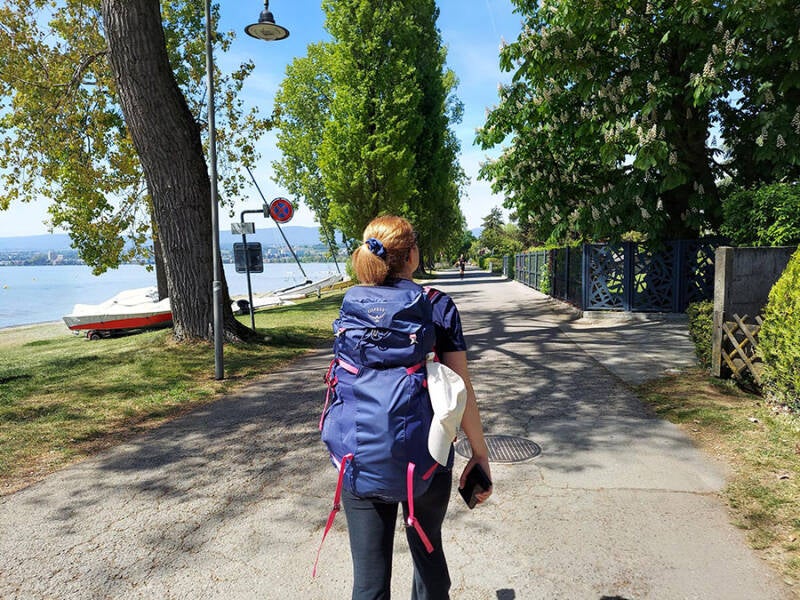
Nyon itself turned out to be quite a large town, with plenty of cafés along the waterfront and on the surrounding streets. We practically collapsed into the first one we came across—and made an excellent choice.
My mom ordered a savory buckwheat crêpe with ratatouille and an egg cooked on top. I, of course, went for the sweet option: banana, strawberries, chocolate, and whipped cream.
Well fed and thoroughly satisfied, we checked into our hotel, dropped off our bags, and headed back out to explore the town.
We are staying here for two nights. The most striking landmark is a large, beautiful white castle overlooking the upper town.
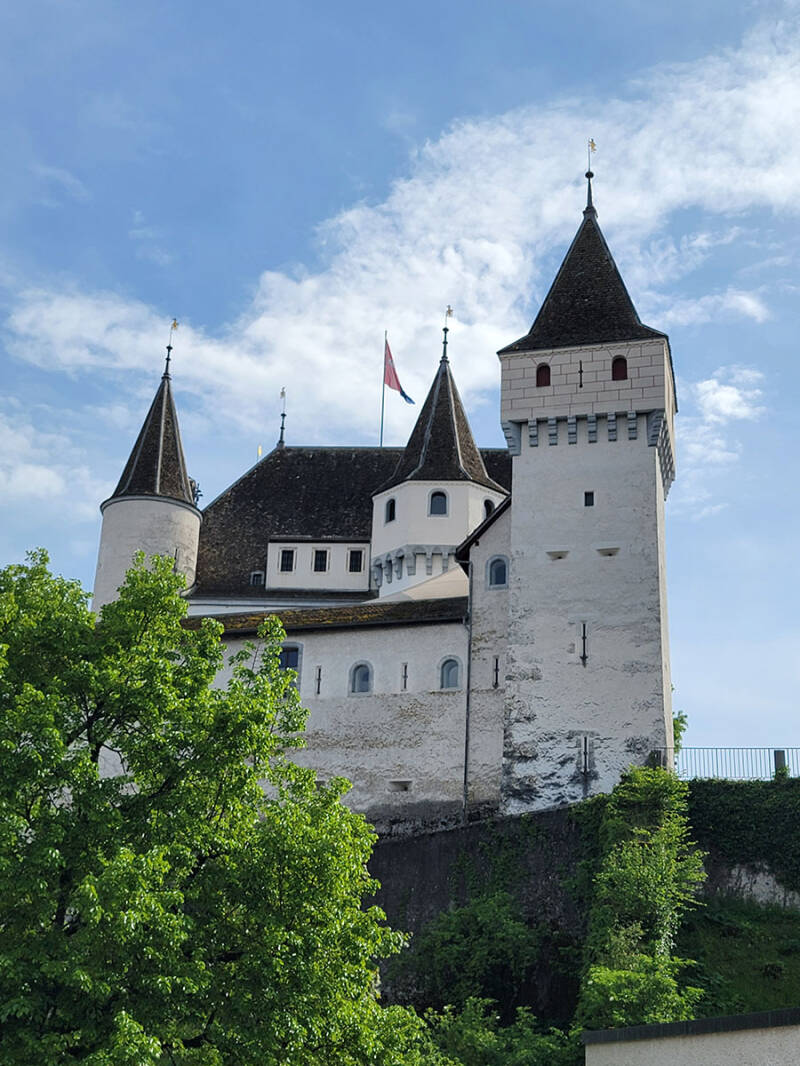
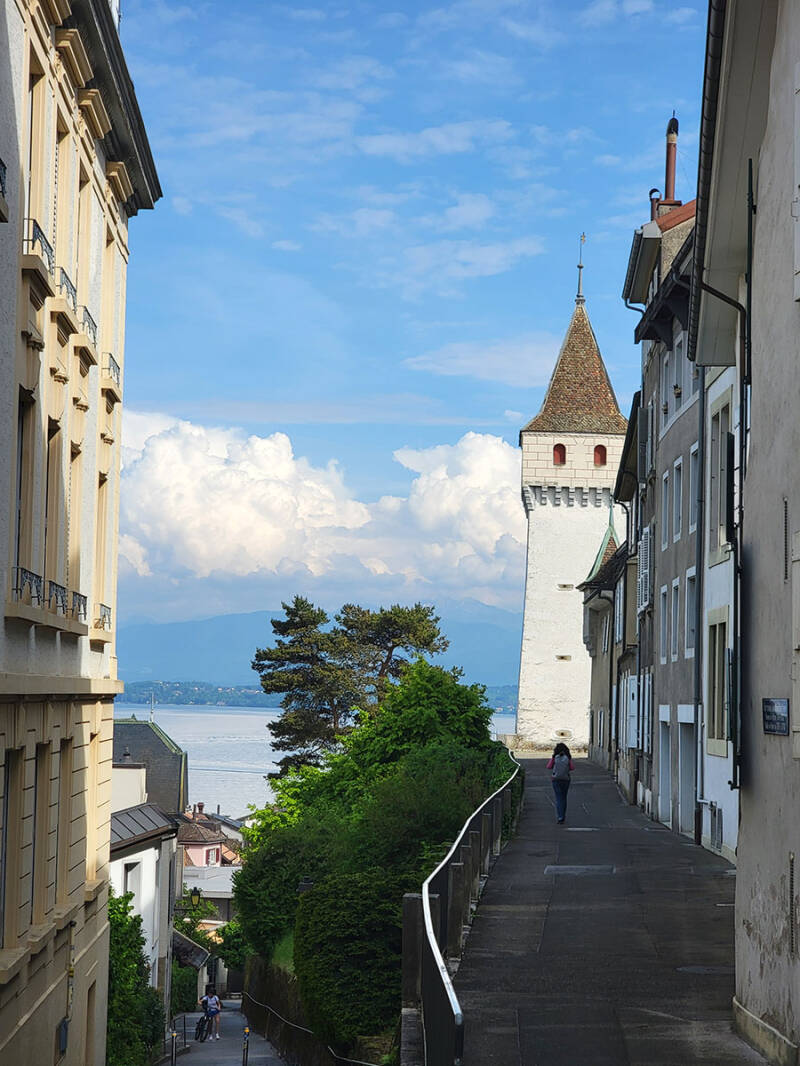
In front of it there is a square filled with tables and café seating.
In Nyon we visited three churches, but there were no pilgrim stamps in any of them, despite what the internet had promised.
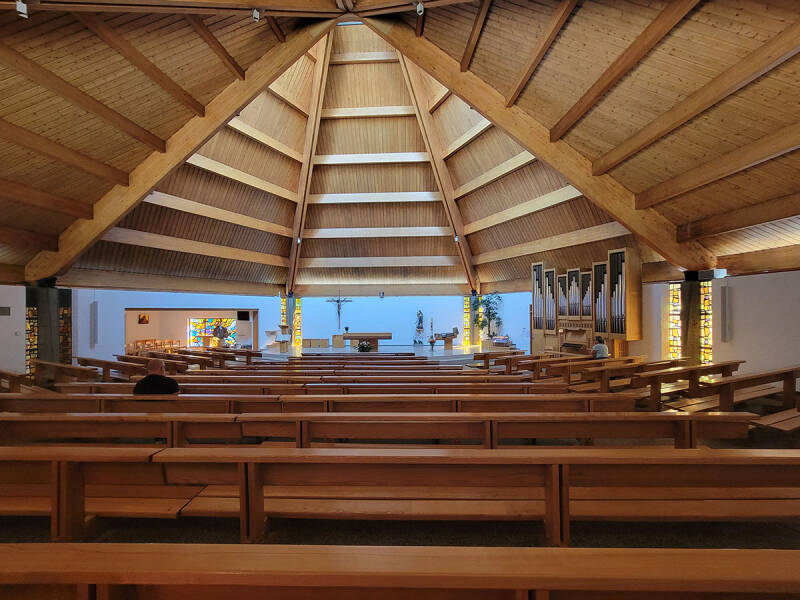
Still, we got to see the town from every angle—and it was absolutely worth it.
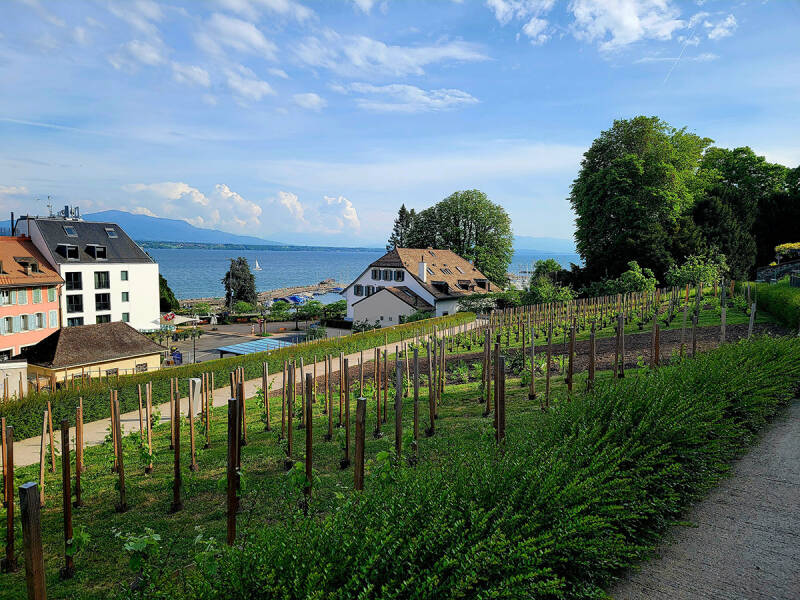
This turned out to be the longest day in terms of distance—more than 23 kilometers.
Gratitude of the day: to a Swiss gas station, quite seriously, for literally saving us from hunger.
Mood: a sense of the pilgrimage drawing to a close, along with satisfaction and joy that everything unfolded just as it should.
Stamps: Rolle church, Bursinel, Prangins.
Day Ten
In the morning, we headed to the pier. Today we are taking a small boat trip across the lake, since almost directly opposite Nyon lies the French village of Yvoire. It is so charming that I couldn’t leave it out of our plans.
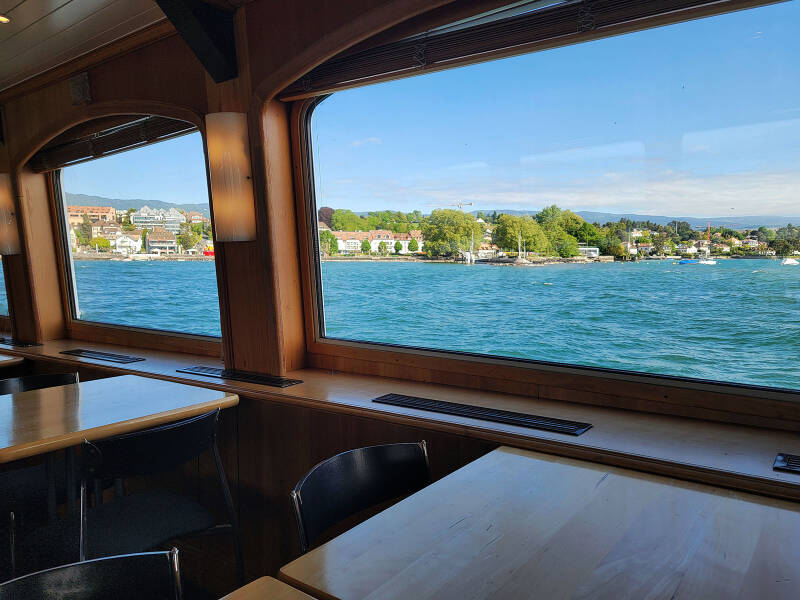
Twenty minutes later, we were in France.
Yvoire is utterly picturesque, almost toy-like in its perfection. It is one of the villages included in the list of the Most Beautiful Villages of France.
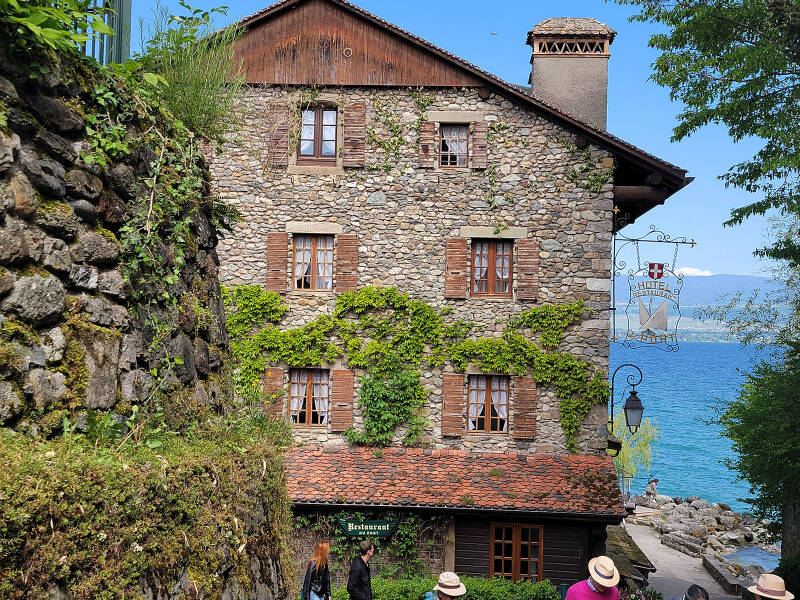
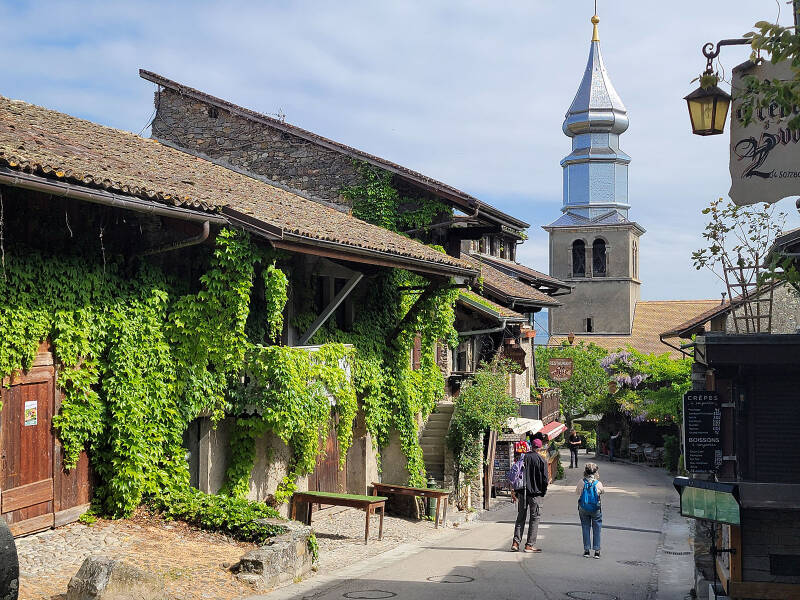
Tourists love places like this, and Yvoire is clearly thriving because of it. Naturally, every corner of the village is carefully maintained and beautifully decorated, from the first building to the last. Yet it never feels artificial or overly quaint. It is simply too old, too authentic, and too real for that.
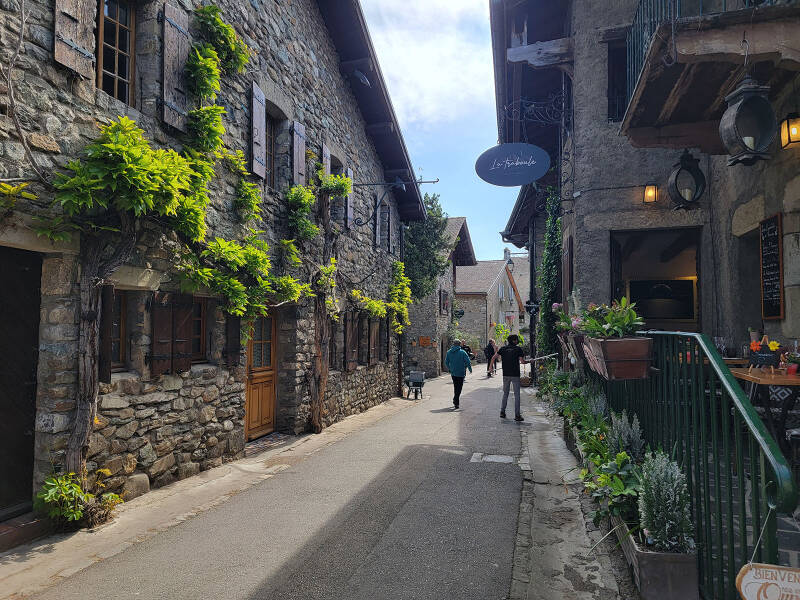
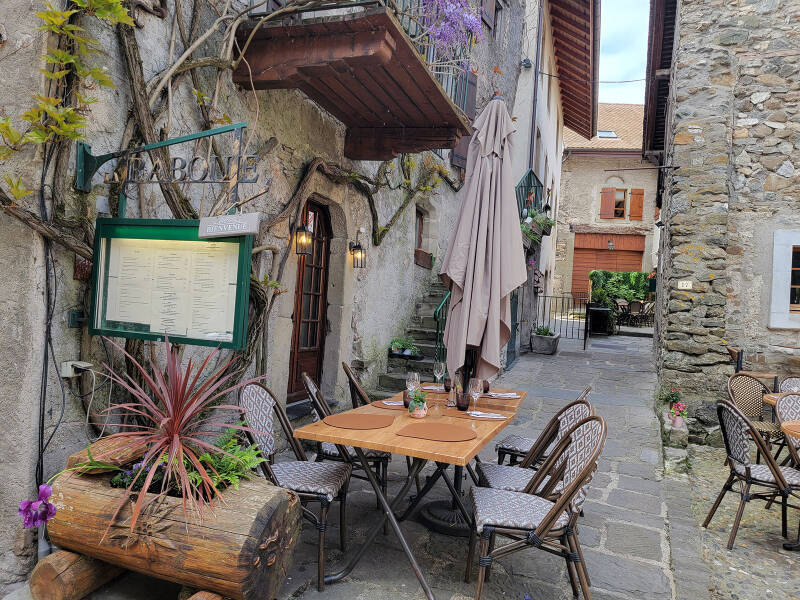
We got a bit chilled on the boat ride, so our first priority was finding a cup of hot chocolate to warm up. Only after that did we set off to wander through the village's few narrow streets.
We also visited the botanical garden, where visitors are encouraged to smell, touch, and even taste many of the plants.
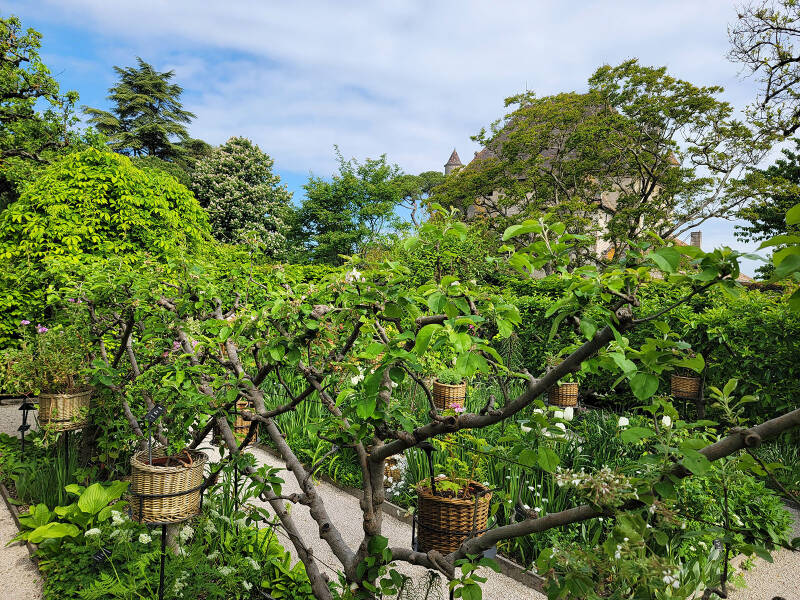
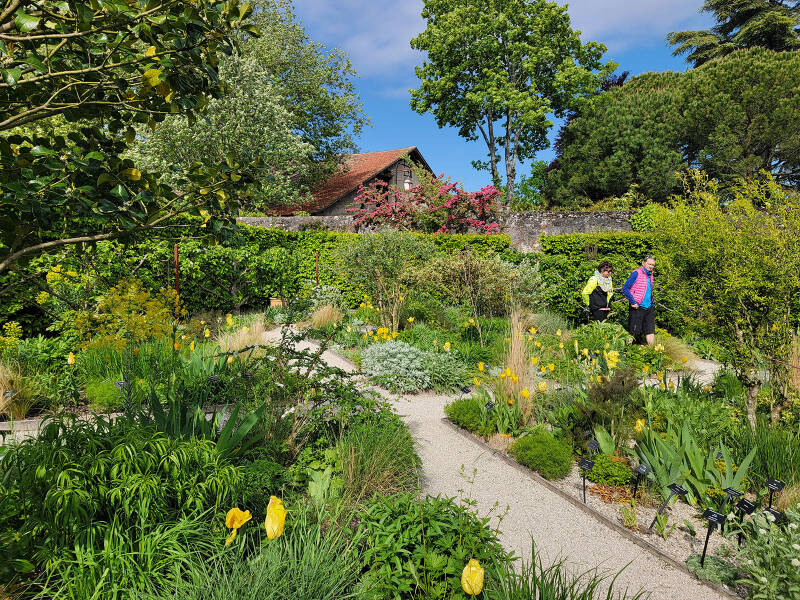

We made our way through every narrow lane the village had to offer.
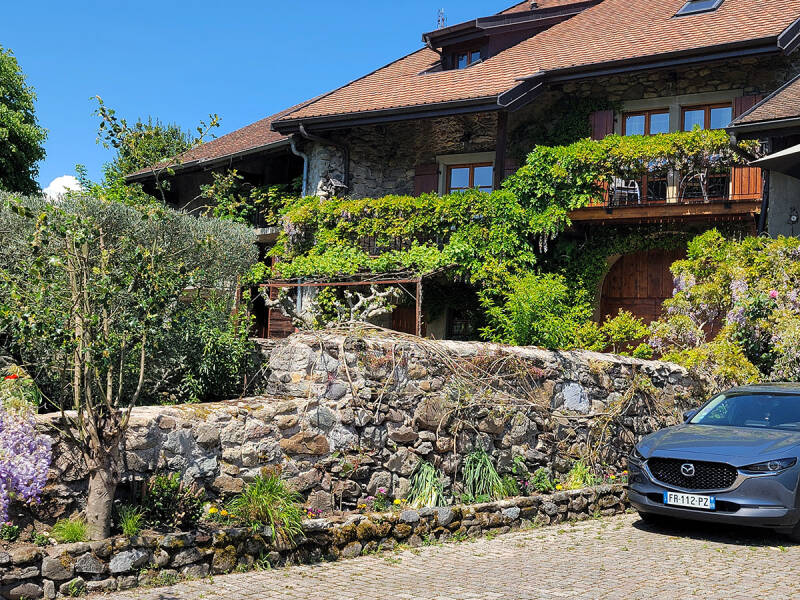
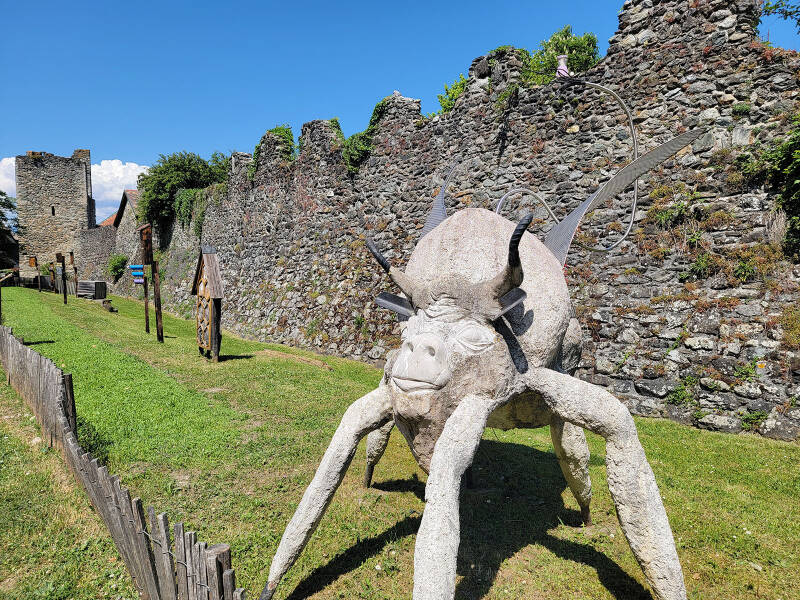
We also walked to Parc de Rovoree, just east of the village.
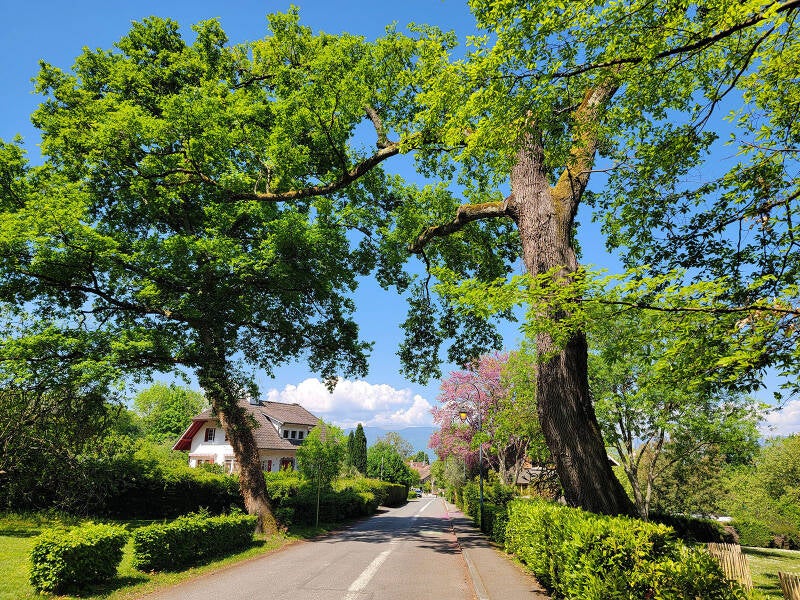
We also walked west to the village of Nernier. It may not be as postcard-perfect or fairy-tale-like as Yvoire, but it is lovely nonetheless.
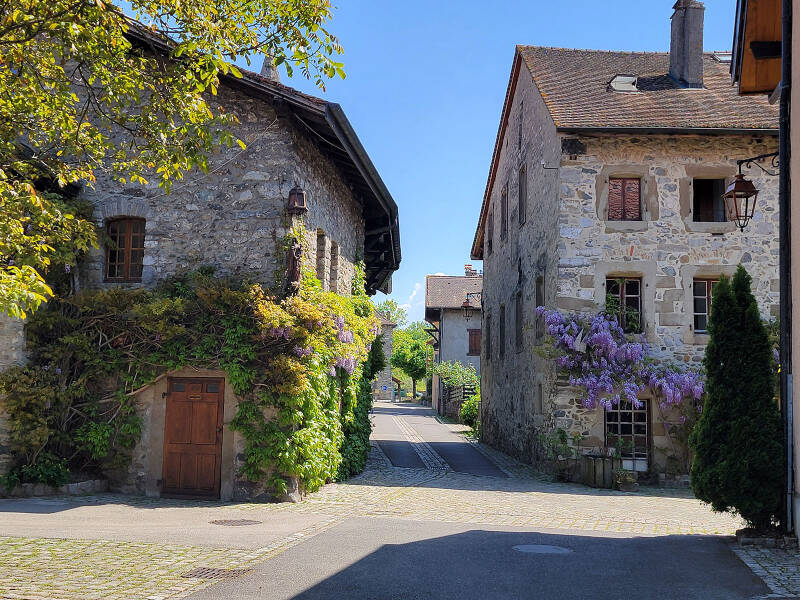
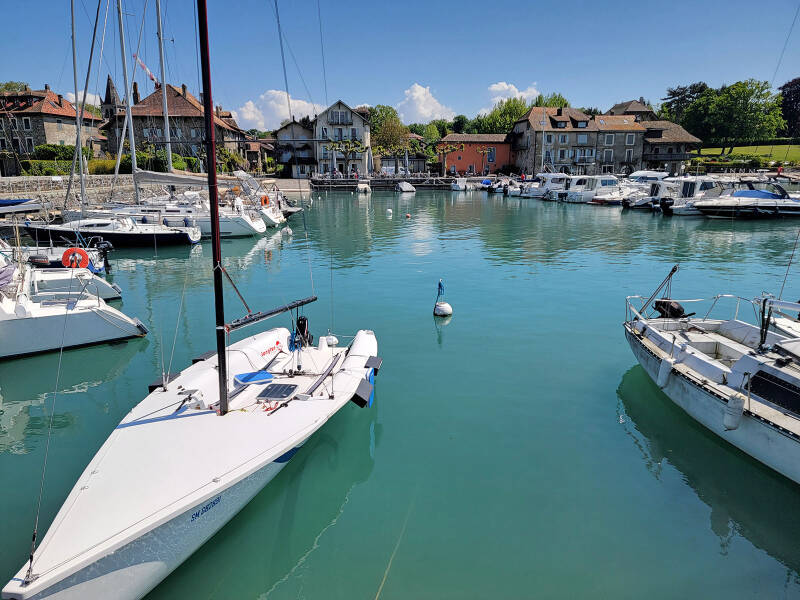
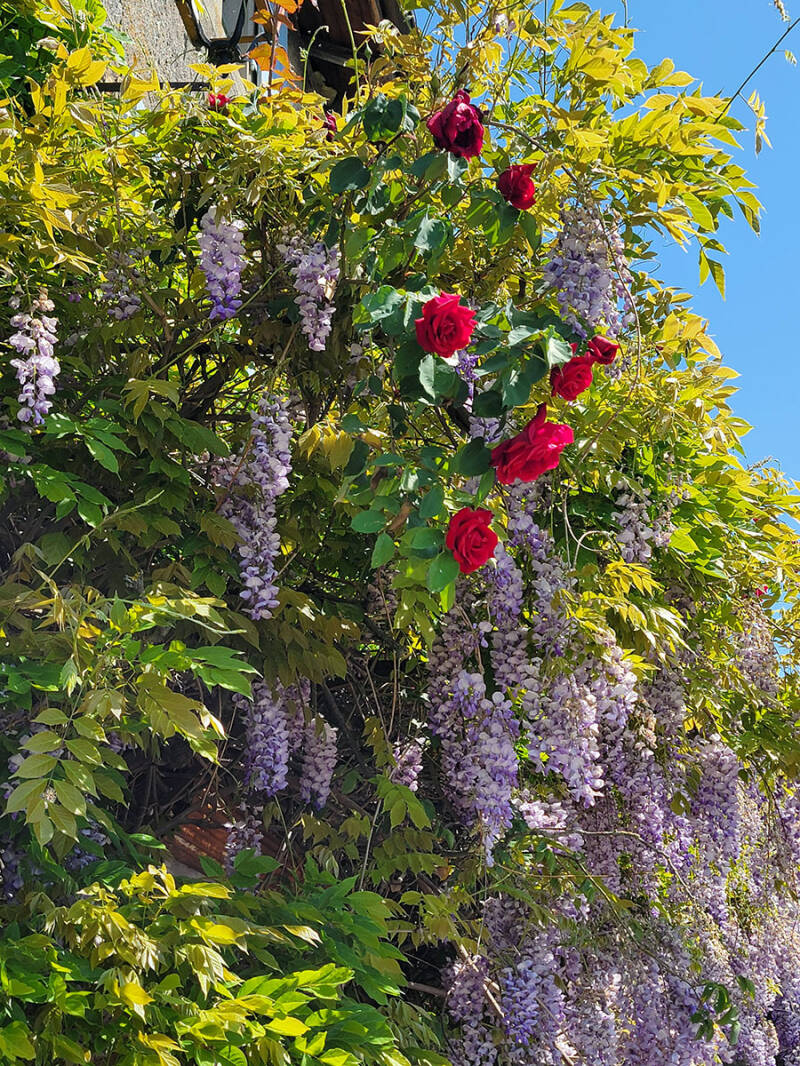
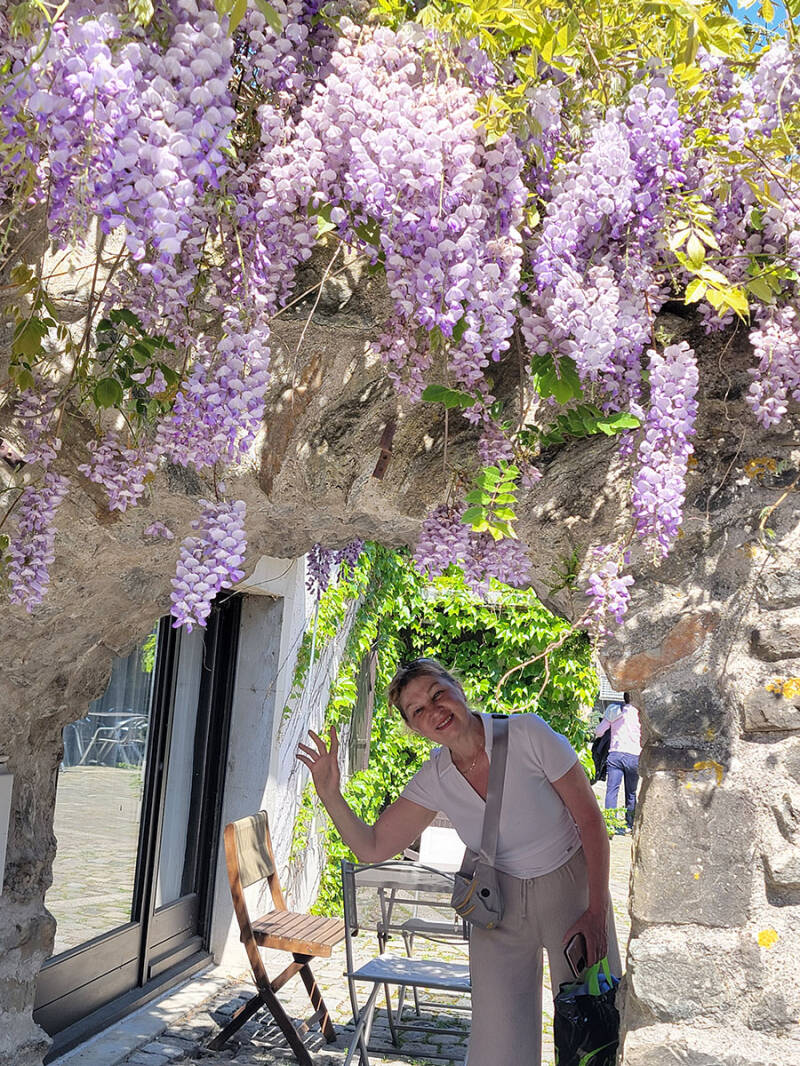
Without our backpacks, we barely noticed that we had covered 12 kilometers. Amazing how easy walking feels when you're not carrying your entire life on your back.
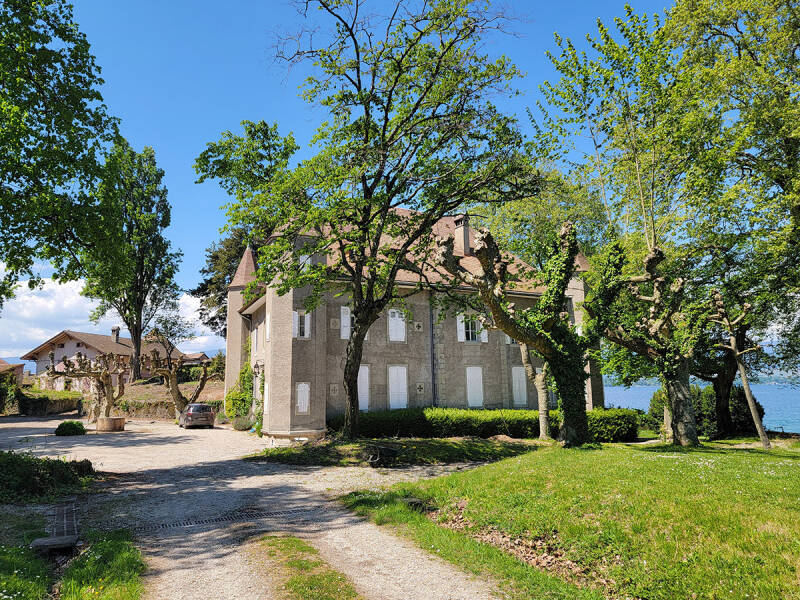
We decided to have lunch at a little restaurant called La Vieille Porte, and the food was absolutely delicious.
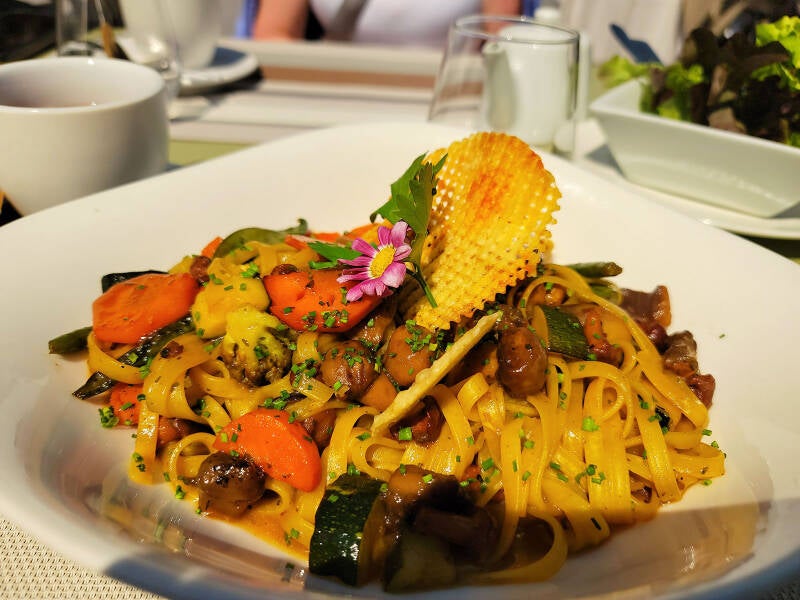
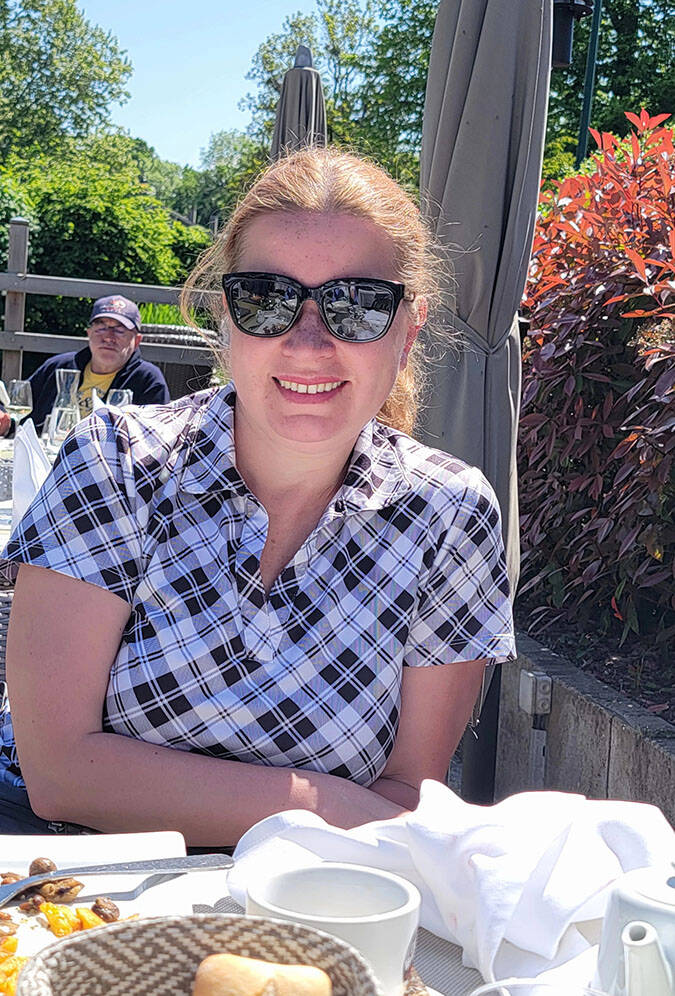
We sat there, content as can be, basking in the sunshine and enjoying the moment. It was the perfect place to celebrate the end of the pilgrimage portion of our journey.
Later, we returned to Nyon by boat. It had been a truly wonderful day.
Gratitude of the day: for life's simple pleasures—good food, good conversation, and the gentle glide of a boat across the water.
Mood: peace and harmony.
Day Eleven
Before returning to Geneva, we decided to visit one more fascinating place—another little corner of France.
Early in the morning, we boarded a train and headed to Savoy, to the town of Annecy, often called the Venice of the Alps.
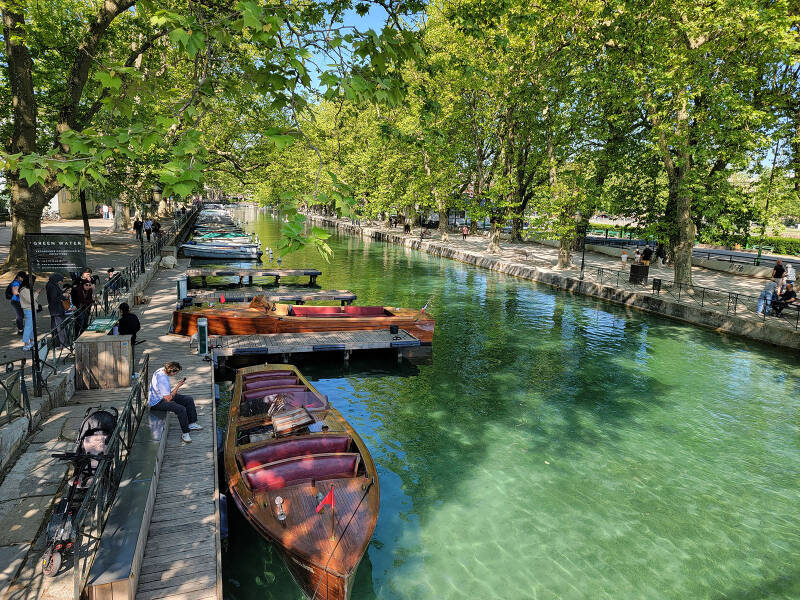
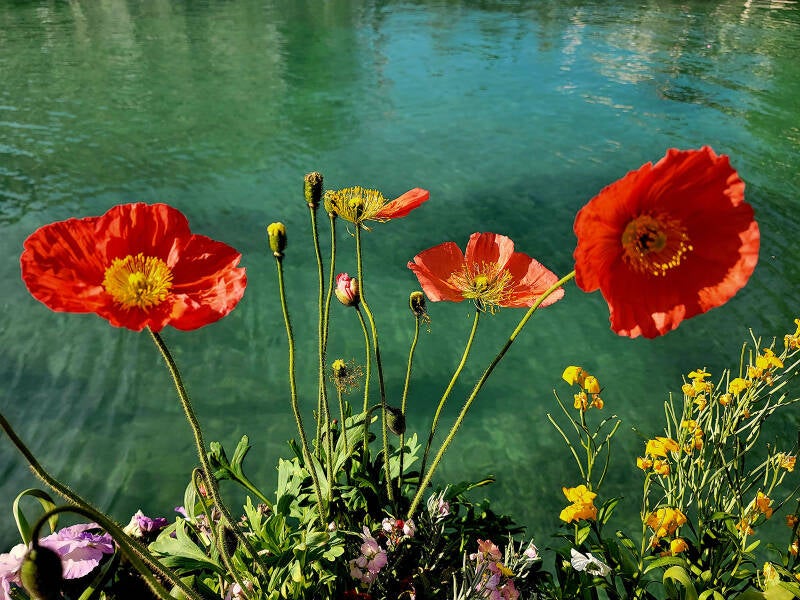
"This is definitely a place we couldn't skip," we thought.
Apparently, tens of thousands of other people reached the same conclusion that day. We encountered them all on the narrow streets of Annecy's old town.
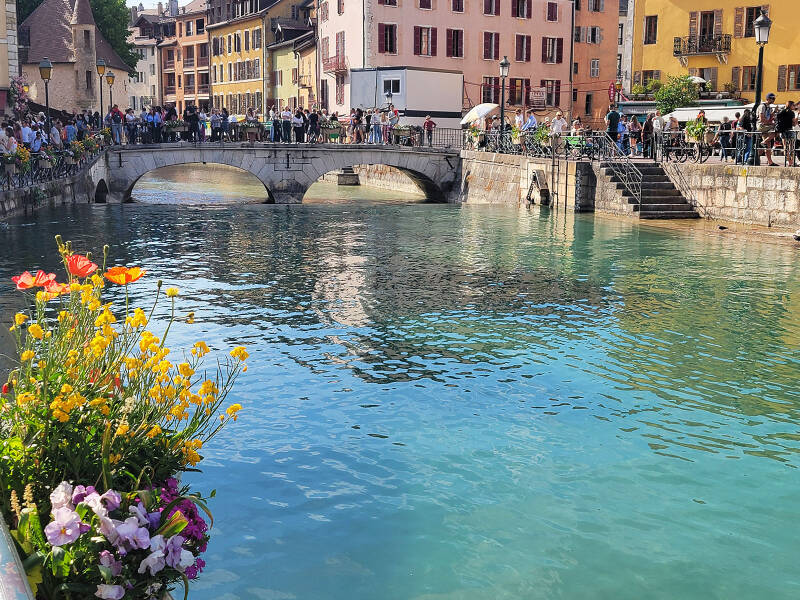
May 1 is International Workers' Day in France, a public holiday. On the streets, a group of communists were singing Bella Ciao, while teenagers everywhere were handing out and selling small bouquets of lily of the valley—a long-standing French tradition.
In France, lily of the valley is associated with spring, good luck, and love. It was a very pleasant sight.
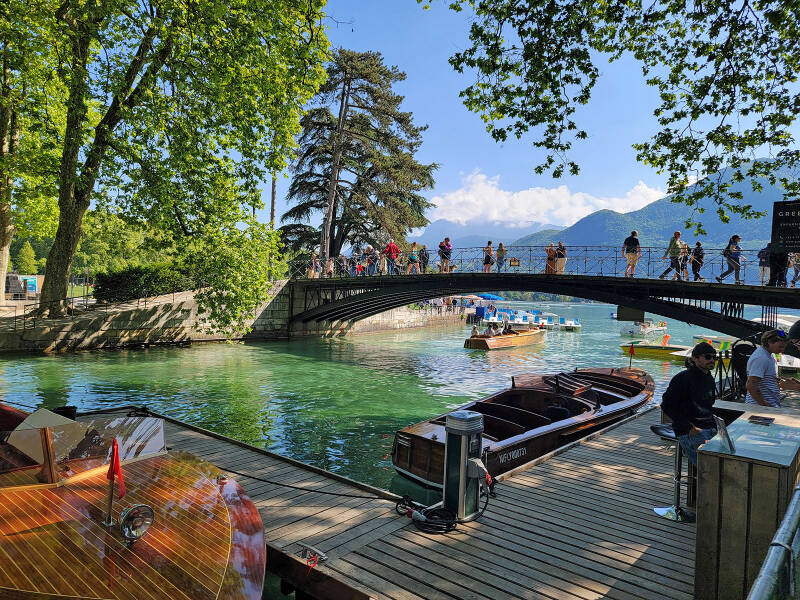
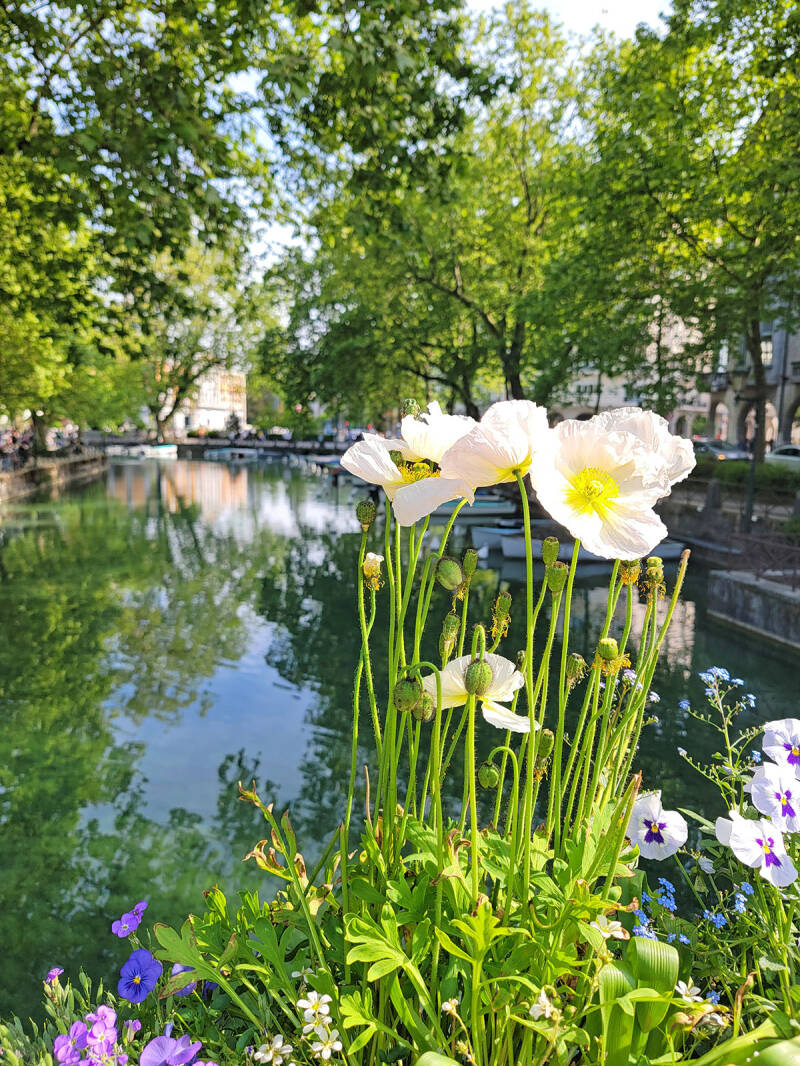
Along the canals, commercial life was in full swing, most of it centered around food. There was an almost unbelievable variety of cheeses, olives, nuts, cured meats, and prepared dishes on display.
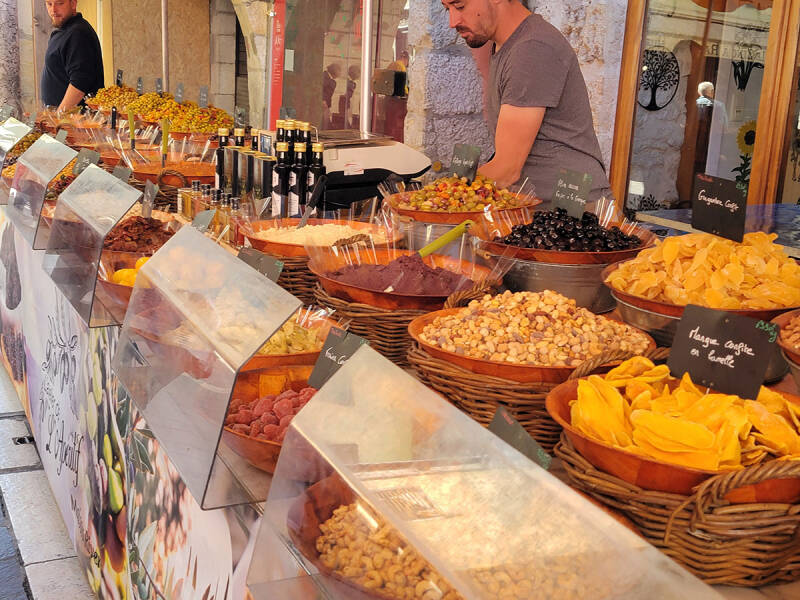
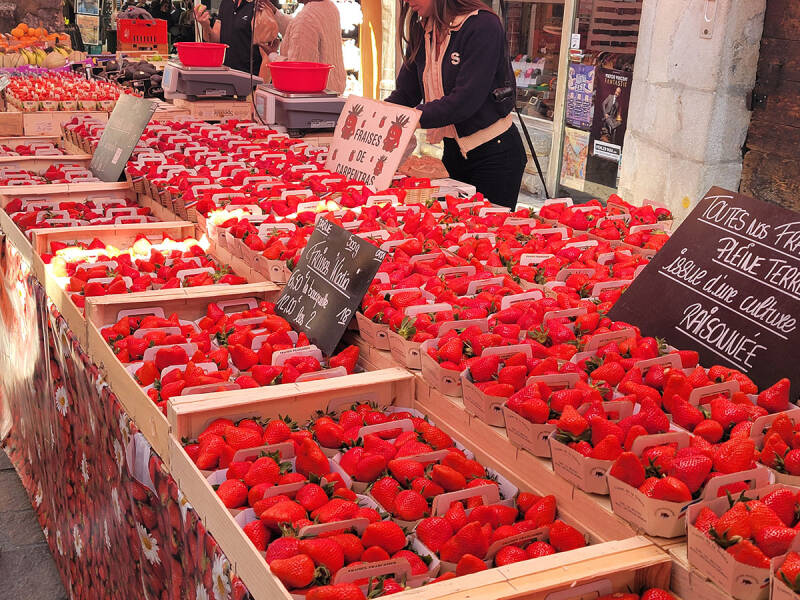
The entire old town buzzed with energy. The streets hummed with conversation, the market trade was thriving, and dozens of small restaurants tucked between the stalls were filled to the brim.
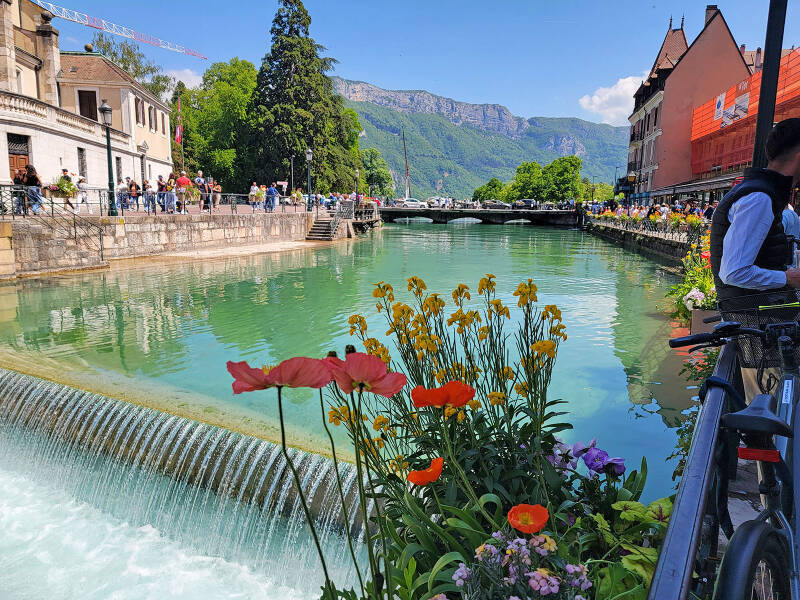
After the quiet, secluded atmosphere of Switzerland, the sheer number of people comes as a bit of a shock.
And after Switzerland's impeccably clean streets, everything else can suddenly seem a little worn and untidy. Of course, that's mostly an illusion—a kind of post-Switzerland syndrome that follows you wherever you go.
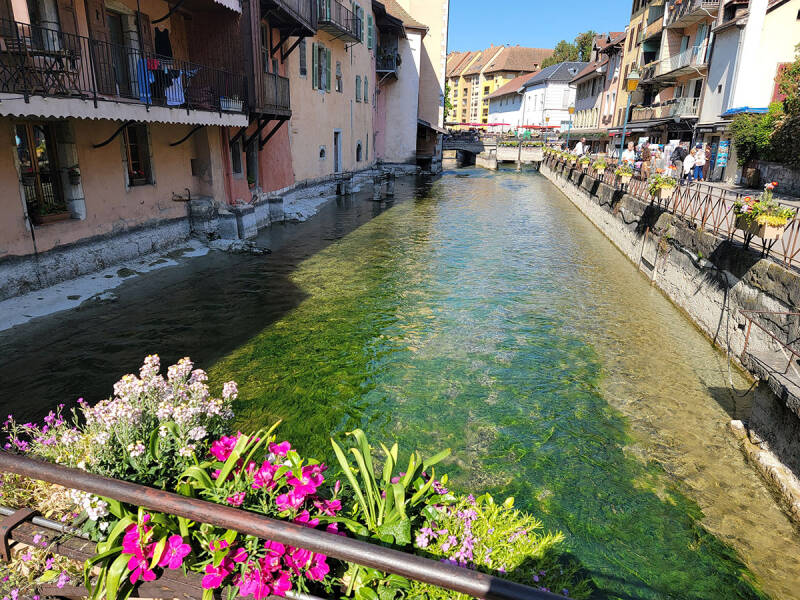
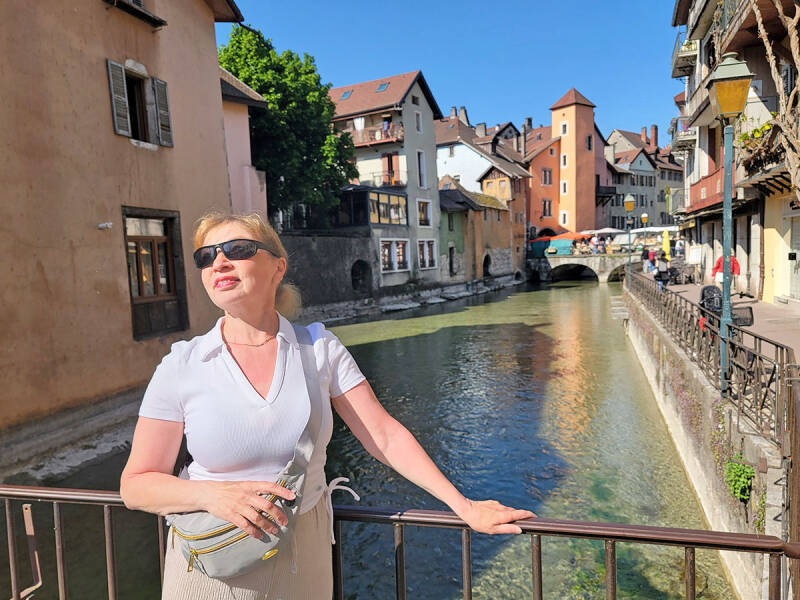
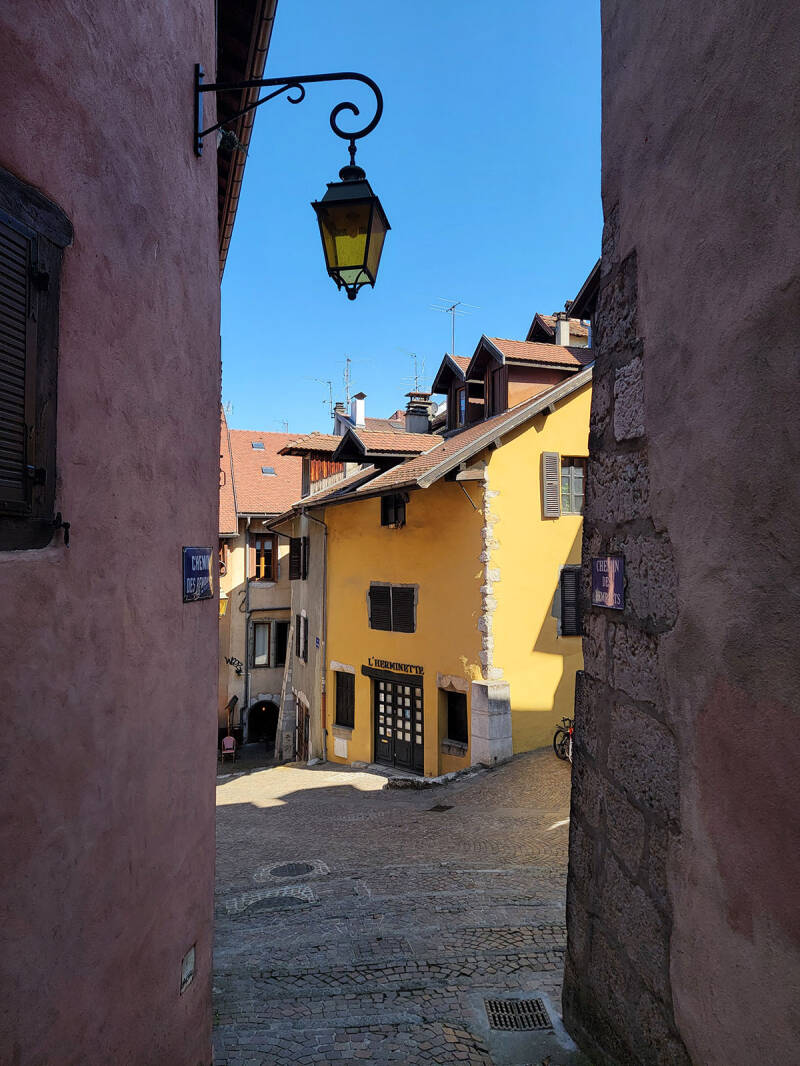
In reality, Annecy is beautiful.
And we do not love France for perfection or polish. We love it because we are steeped in its history from head to toe. To us, there is nothing more fascinating than the histories of France and England.
The atmosphere here is entirely different, as is the mentality. It is a different world from Switzerland in many ways, and that is precisely what makes it so wonderful.
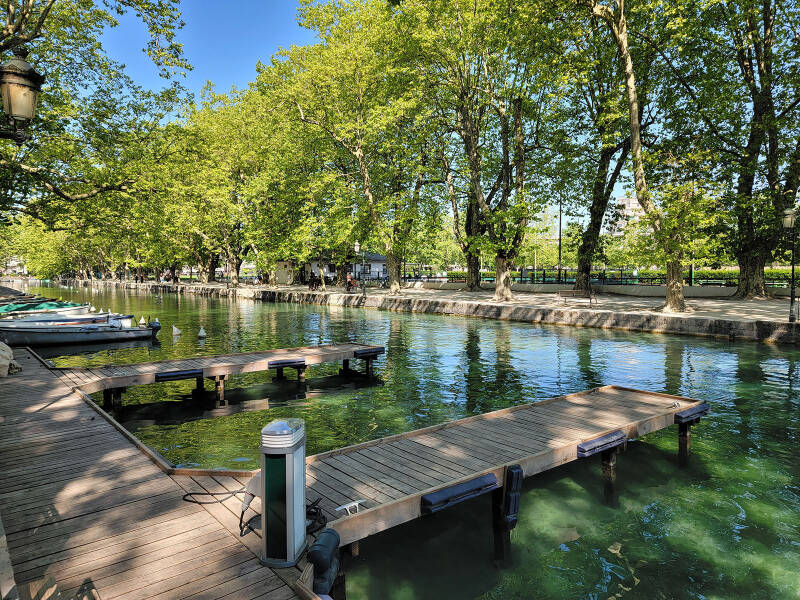
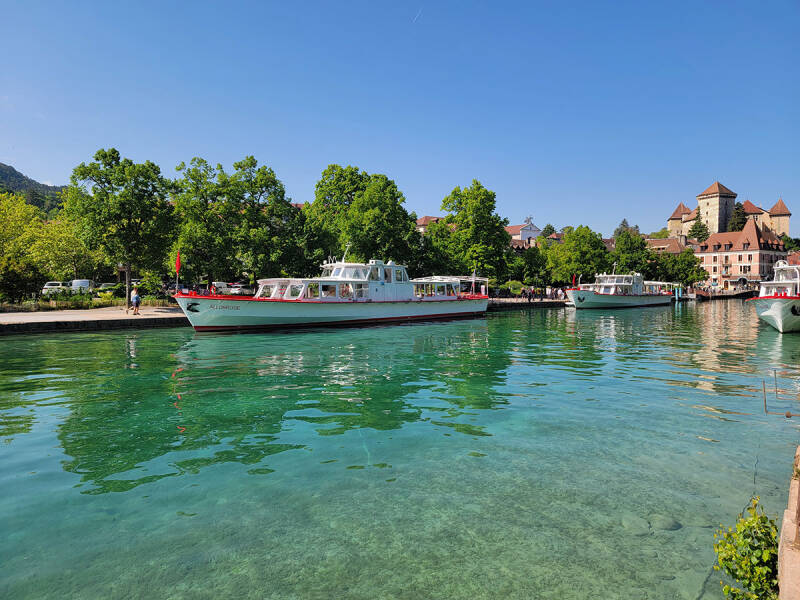
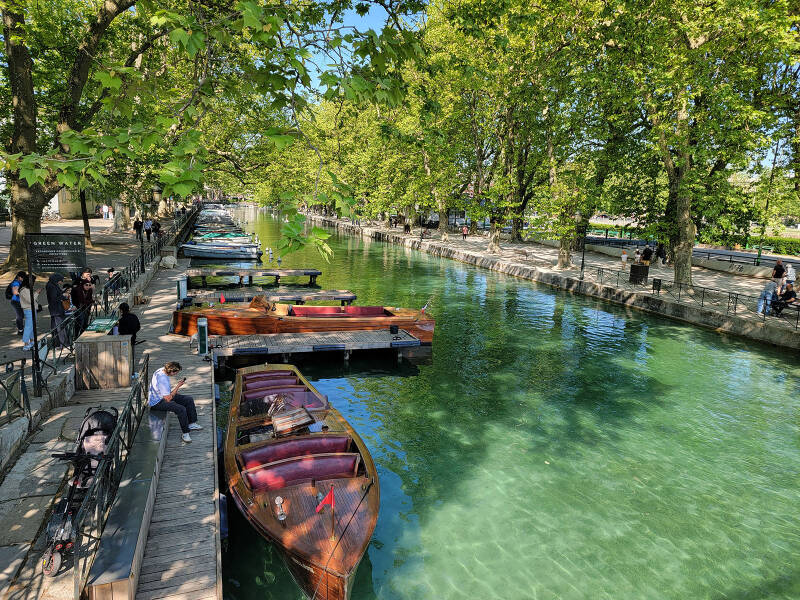
And once again: the food. My goodness, the food.
(It's worth noting that yesterday's gastronomic revelation was also in France, in Yvoire. The French simply know what they're doing when it comes to cooking.)
In Annecy, we kept things simple. We opened an AllTrails route called "Annecy City Center" and spent the day happily zigzagging our way through the town.
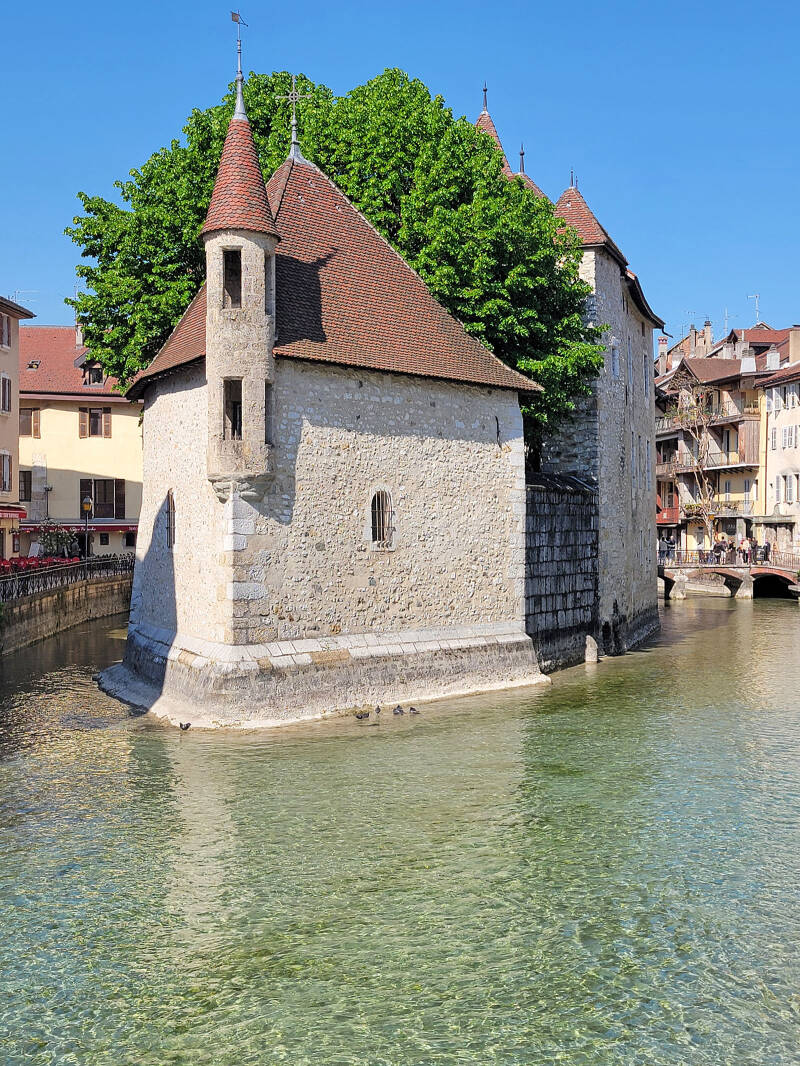
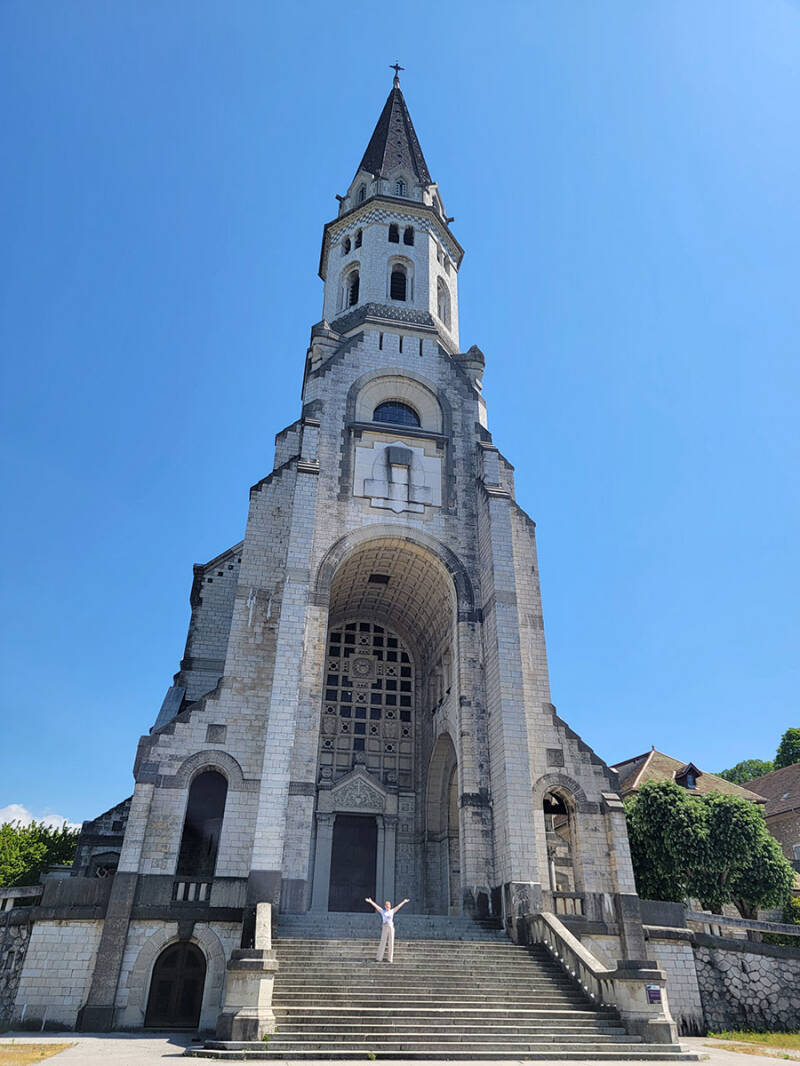
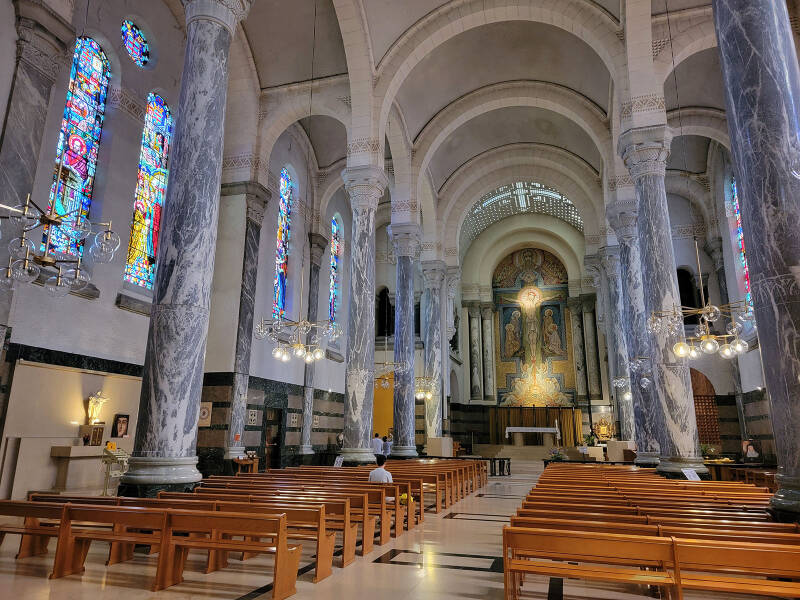
We also took the time to walk up to the Basilica of the Visitation.
Finally, we had lunch at a small restaurant a little away from the canals and the busiest tourist areas.
That night, we stayed at a hotel right in the heart of the old town.
Day Twelve
Today was the final day of our journey.
We made our way back to Geneva and spent some time strolling through the city center, enjoying the familiar streets one last time before the trip came to an end.
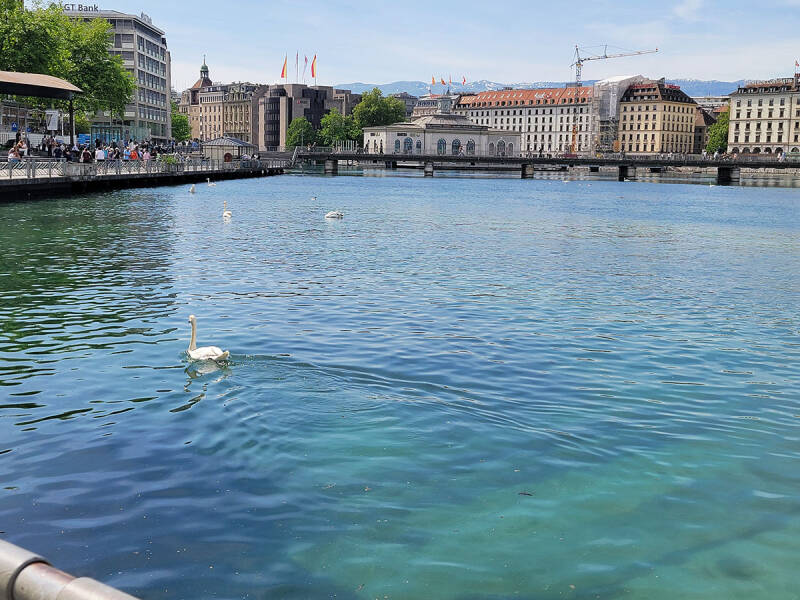
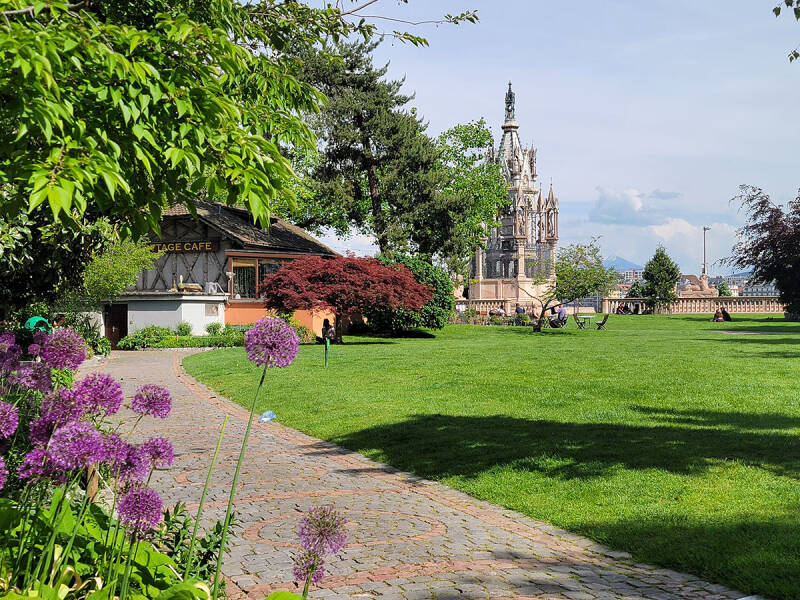
..and then headed to the airport.
And so our long walk came to an end.
According to my Fitbit, we covered about 150 kilometers across western Switzerland and a small corner of France. Of course, not all of those kilometers were part of the Via Jacobi itself—but we are independent-minded pilgrims, and there will be other Caminos in the future where there will be less time for detours.
This first experience was so successful that it almost makes me nervous about the next one. It is hard to imagine that routes in other countries could be quite as flawlessly beautiful. Then again, we love other countries for entirely different reasons.
My greatest gratitude on this journey—and in life in general—goes to the three best people in the universe:
- To my beloved Ilya, for his unwavering emotional and financial support of all my travel ideas, and for his willingness to take part personally in the more challenging Caminos that lie ahead.
- To my wonderful mother, the perfect travel companion: tireless, endlessly cheerful, optimistic, and always ready for any adventure.
- To my brilliant Arseny, whose decision to attend a European university has brought Europe closer to us for the next four years. We have every intention of making the most of that opportunity.
A few practical observations:
- April is the perfect month for a Camino in Switzerland. It is neither too hot nor too cold. Everything is green, the trails are uncrowded, and hotel prices are lower than during the winter ski season or the summer holiday season.
- Switzerland is an excellent place to try your first Camino if you are uncertain about your physical abilities or endurance. Every small town along the route has a train station, and if necessary, you can usually reach the next town—or a larger city—in about fifteen minutes. Everything is connected, and trains run remarkably often. Even when walking through forests, you never feel far from civilization.
- Switzerland is a country where you can comfortably walk alone and feel completely safe. Throughout the entire route, there was not a single moment or location that caused even the slightest concern in that regard.
- If you are planning a pilgrimage primarily as a budget hiking trip, Switzerland may not be the ideal choice. I did not come across any inexpensive albergues. Even basic accommodation is significantly more expensive than in France or Spain, and cafés are not cheap either. This was not our first visit to Switzerland, so we knew what to expect. Still, I can imagine that someone arriving directly from Spanish pilgrim hostels and communal pilgrim dinners might be quite surprised by Swiss prices.
Buen Camino!
Add comment
Comments