Tenerife
Location: Tenerife, Spain
Duration: 5 days
Type: base trip

Every morning, every day, and every evening, thousands of Scots and English people board dozens of planes and fly to the Canary Islands. History and climate have simply made it that way.
When Arseny used to say that +3°C in Scotland could feel colder than -30°C in Montana, it sounded like an exaggeration. But after visiting in January, I experienced it for myself: +3°C with rain and an icy sea wind blowing at 60–80 km/h truly leaves a lasting impression. So for the short spring break, we decided to warm ourselves up — and thaw out our favorite student as well. (Five days and six nights is certainly not much, but no point complaining.)
I probably won’t describe the trip day by day, since the vacation was short, relaxed, and filled less with sightseeing or hiking than with doing absolutely nothing and happily floating around in jacuzzi and heated pools. Still, I’d like to share a few of the most interesting places we visited, as well as the hotel where we stayed.

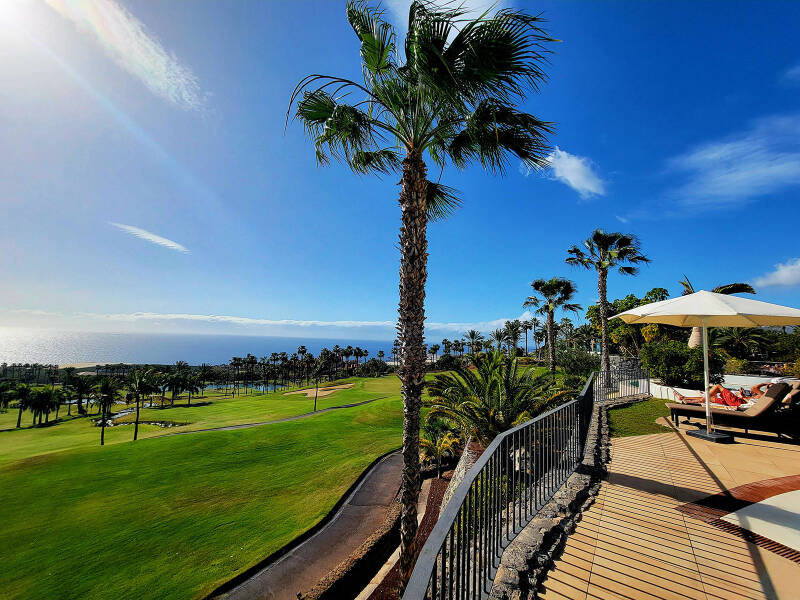
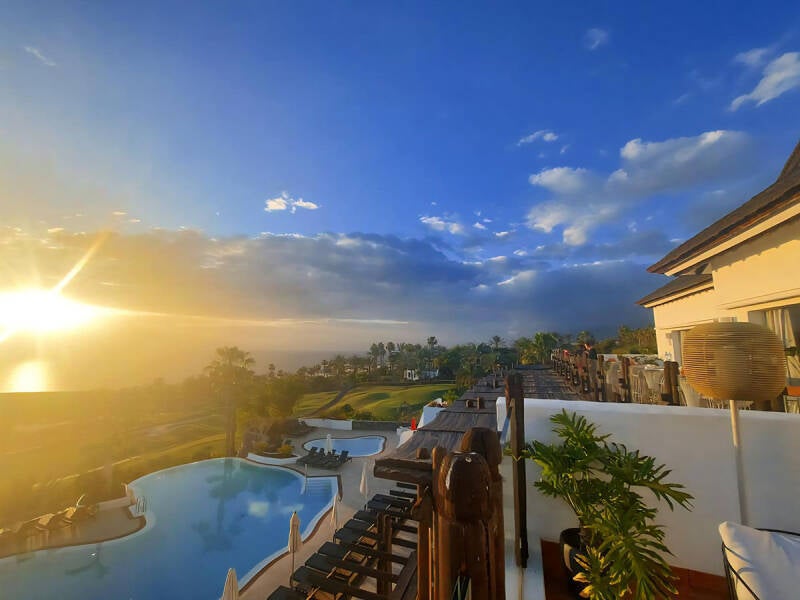
We stayed in an absolutely idyllic place overlooking the golf courses and the ocean.

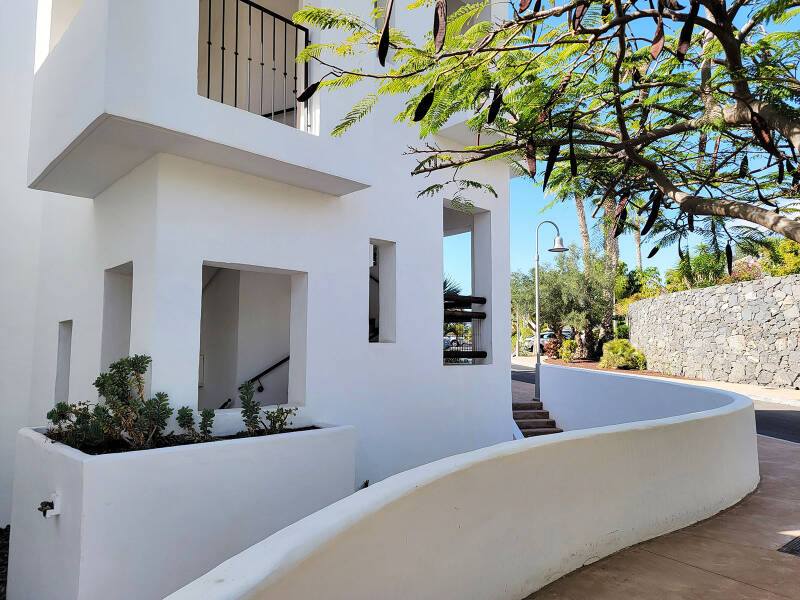
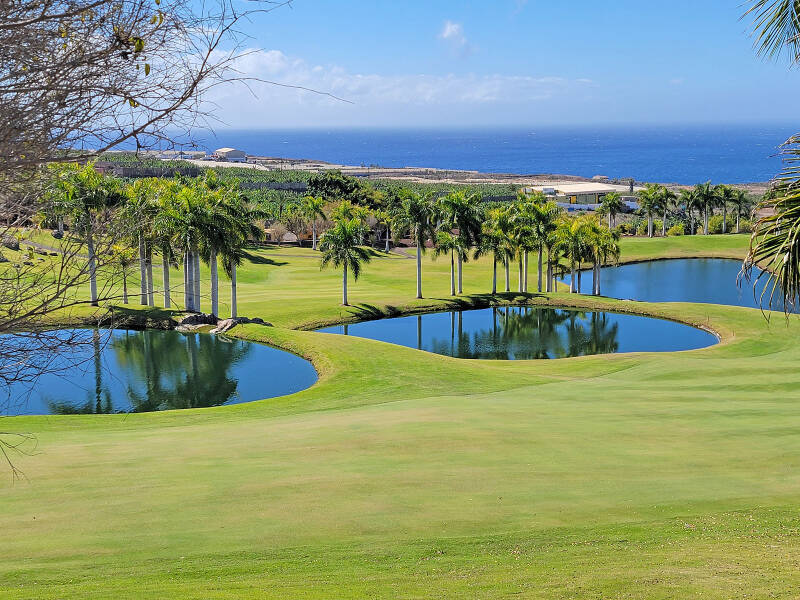
Despite being a five-star property, we stayed not in a standard hotel room, but in a vast apartment with three bedrooms, a full kitchen, and a terrace even larger than the apartment itself.

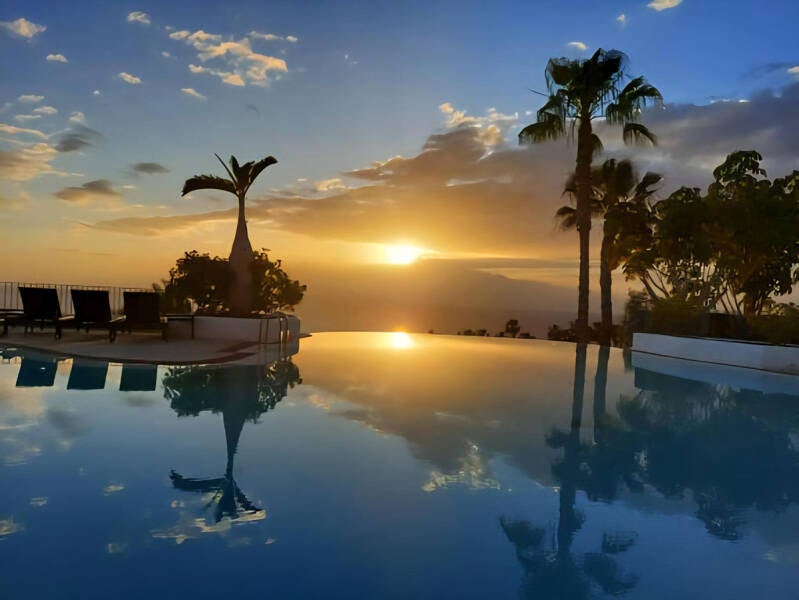
You could easily live there, but we ended up spending most evenings in the jacuzzi, watching the sunset.

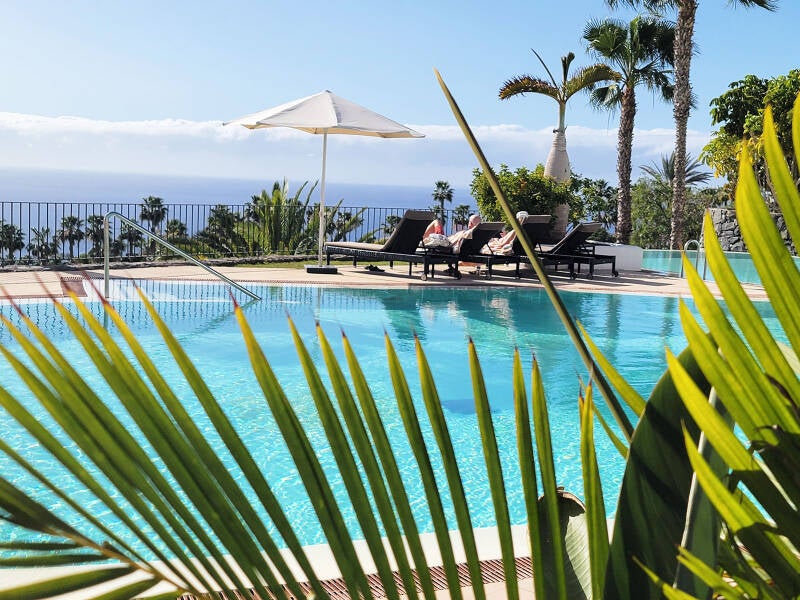
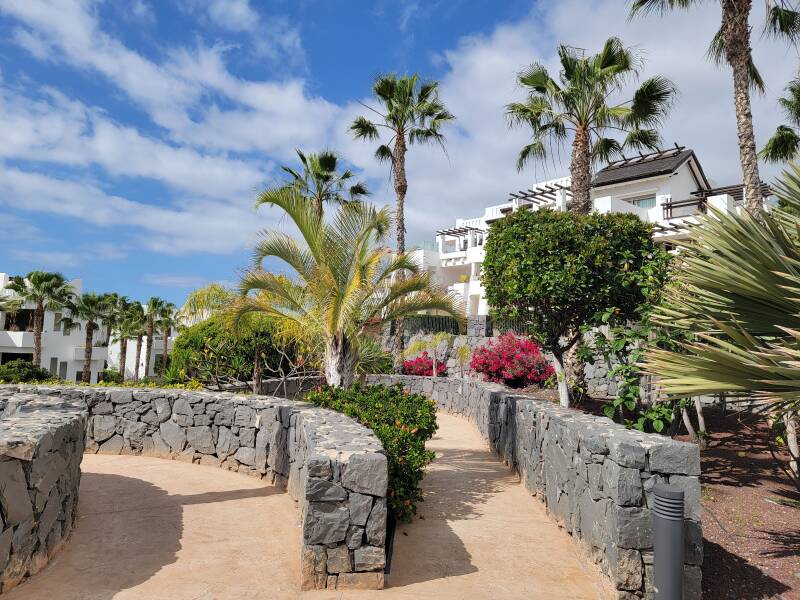
Overall, it was a fantastic place — like an Airbnb, but with excellent food and daily housekeeping. There was also a huge property with several swimming pools, and everything felt brand new, fresh, and bright.

From our house, a road led down to the sea through the golf courses, so we could easily walk to the beach and back.
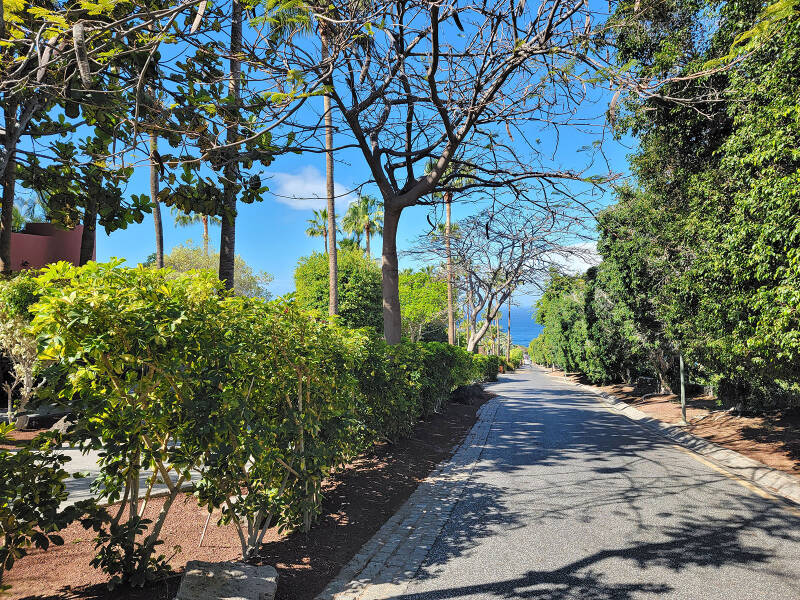
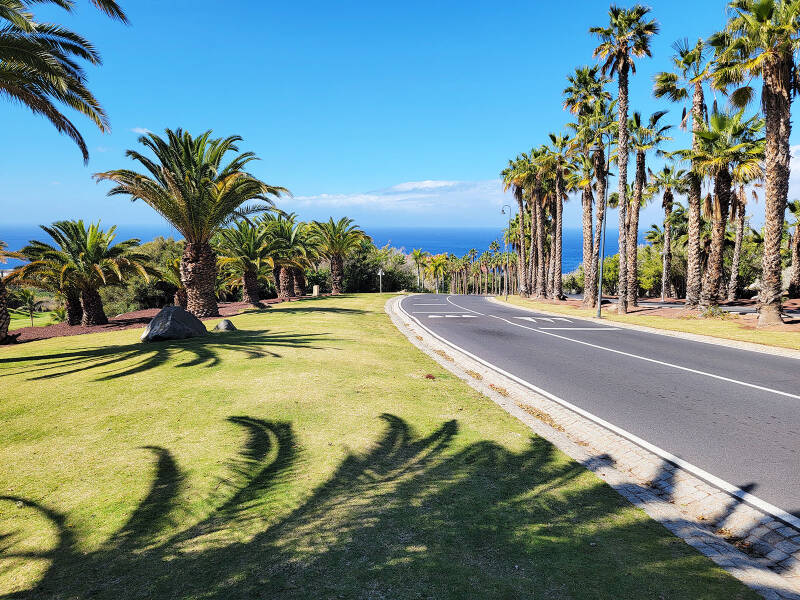
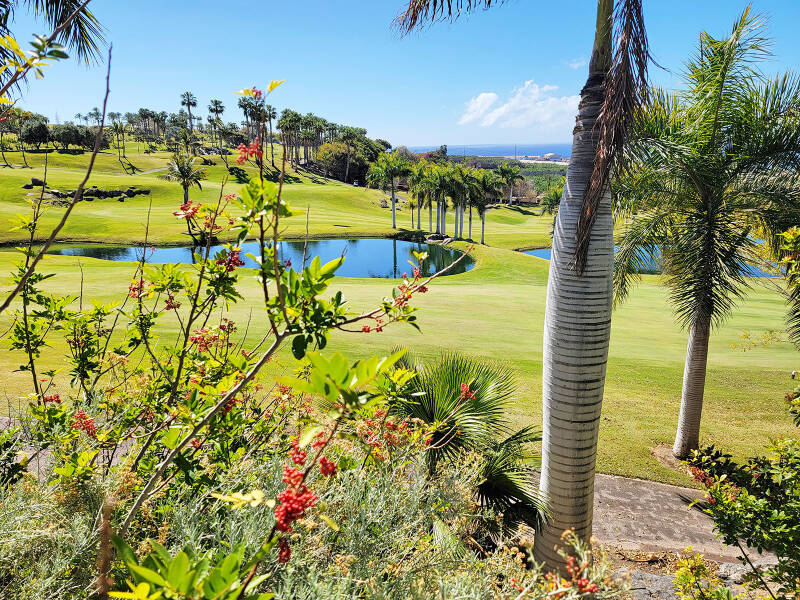

A walk from the house to the sea and a beautiful, secluded beach took about 15 minutes.


It was very fortunate that our accommodation was not in the city, far away from all the hustle and bustle and crowds. Because later, when we did visit the small towns, we realised that it wasn’t really our thing: the atmosphere of resort promenades with endless cafés, crowds of people, and buildings from different decades pressed tightly together just isn’t for us at all.
We had only palm trees, green meadows, and birdsong. Pure beauty.


However, the walk down to the sea was nothing more than a pleasant strolling route for us — we never really felt like swimming. After all, the water is still cold in March.


Overall, the walks along various trails on the island left the strongest impression. I’ll start with those:
The most beautiful trail at Montana Amarilla:


A circular trail that is best walked counterclockwise, as the first half of the route includes a fairly steep ascent, which is easier to climb up than to descend.


After gaining elevation, the path leads down toward the sea and runs along the coastline, opening up sweeping views of the endless ocean from above. A stunning trail, an amazing atmosphere, pure beauty.


Another route that impressed us was Barranco del Infierno. Here, the number of visitors is limited, so access to the trailhead is paid, and it’s better to buy tickets in advance for a convenient time slot.


There are quite a lot of people wanting to go each hour. And if everyone moved as one crowd, it would completely ruin the experience in the narrowest sections of the gorge later on. Instead, we walked spread out along the whole route and didn’t get in each other’s way.

Barranco del Infierno translates as “Hell’s Ravine,” but in reality it doesn’t look frightening — more dramatic than anything else.

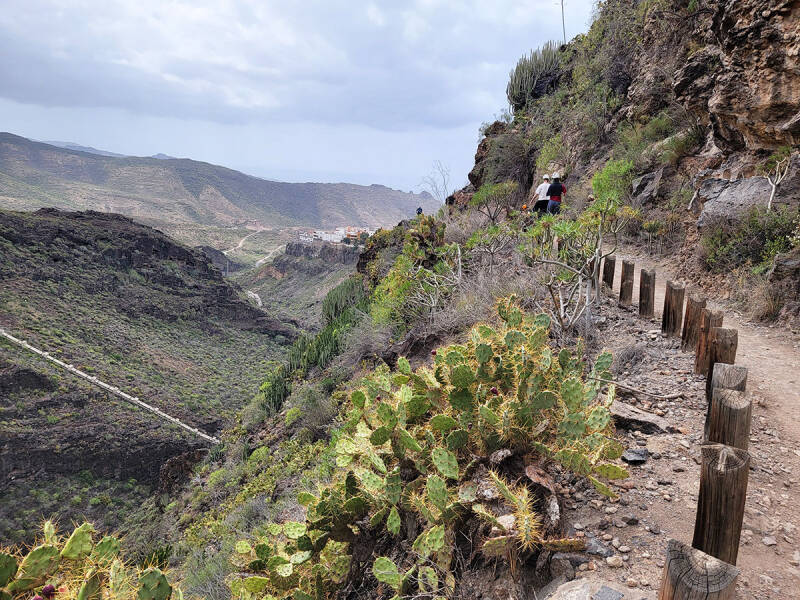
We were lucky with the weather and saw the canyon both under ominous clouds and in bright sunshine, with the blue ocean stretching out on the horizon. An astonishingly beautiful place.
The island’s indigenous people lived in this and similar ravines, as they were convenient natural shelters, with a few sources of fresh water, and the terrain and acoustics of the gorges also contributed to the development of a unique whistled language (not a system of signals, but a full language), allowing communication over distances of several kilometers.


Another trail on the western coast started directly from San Juan beach and also ran along the sea.

At the same time, it turned out to be completely different from the first coastal trail — more developed and smoother, but no less enjoyable.

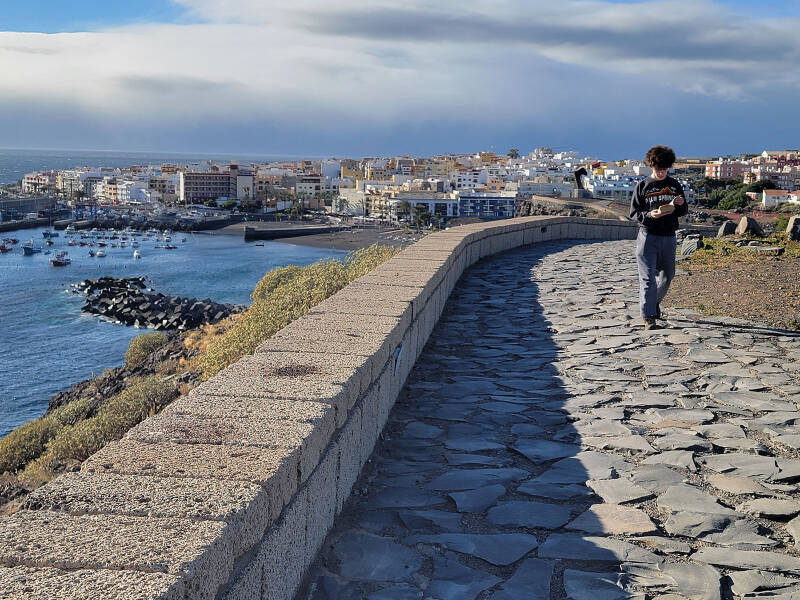
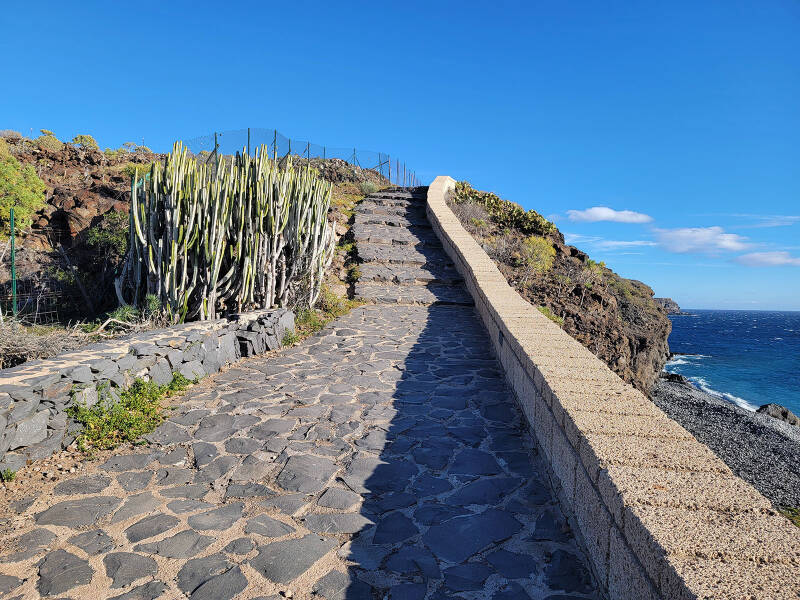
A beautiful evening route — endlessly long, tracing the rugged coastline with its black cliffs and black sand.
We only managed to see two of the planned highlights partially: Mount Teide, which we didn’t climb all the way up, as we found that the viewpoints and the cable car to the summit were closed due to extremely strong winds. We were disappointed not to see the volcano up close and instead walked around the lower viewing areas. On the bright side, we did get to see a double rainbow.


In fact, we saw rainbows every day in the Canary Islands — in that sense, they are quite similar to Hawaii.
The second place, also due to the same strong winds, we didn’t manage to explore properly either: the Masca Valley.

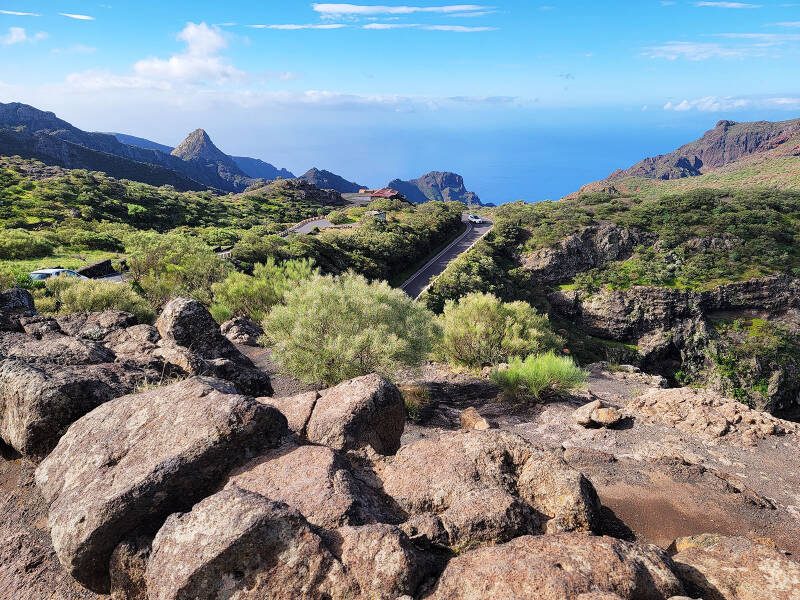
We did, of course, spend time there at all the viewpoints and admired the scenery, which reminded us a bit of Peru.

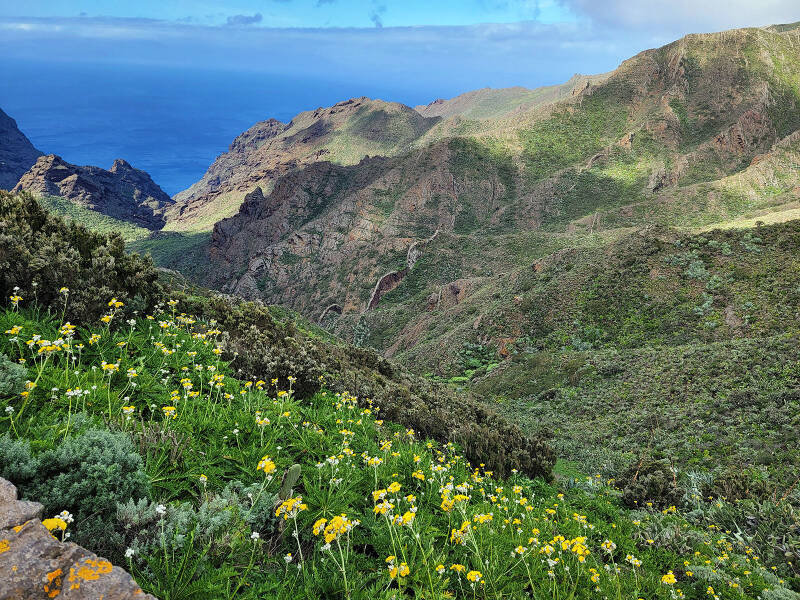
but we couldn’t set off on the long-planned trail — the wind was literally strong enough to blow us off our feet. That was really frustrating, as we would have loved to hike in such incredible scenery.


What else - We walked along the promenades in Costa Adeje and Los Cristianos.

We also saw the famous Los Gigantes cliffs.
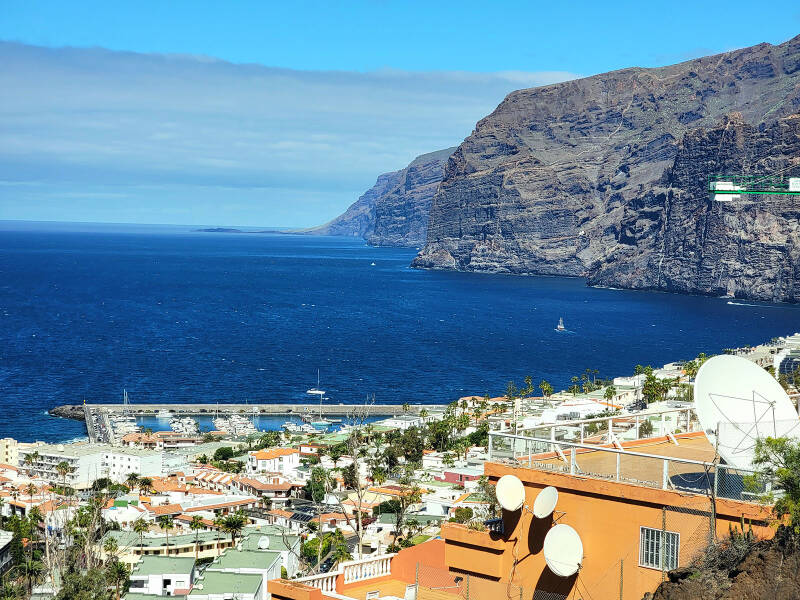
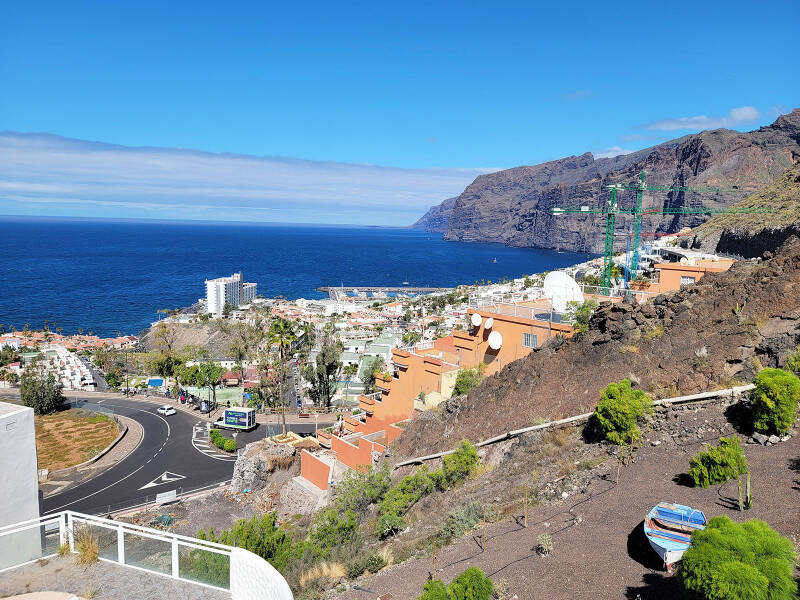
visited a couple of shopping centres and several restaurants as well — everything in Spain is delicious, especially the meat. Still, desserts are better in France.
We warmed up, relaxed, and then headed back — Arseny off to windy Scotland, and me and Ilyusha back to rainy Seattle.
When I was planning the trip, I thought of the Canaries as a kind of European Hawaii: a few warm tourist islands in the middle of the ocean, formed by volcanoes. But in reality it turned out quite different. Hawaii is humid, jungle-like, lush, and soft. The Canaries are dry, bright, blooming, full of palms and banana trees. A completely different atmosphere and a very different experience. We liked it a lot.
P.S. All the news reports had us worried about chaos at Tenerife airport due to the introduction of a new entry/exit system for non-EU citizens. We were lucky — both on arrival and departure, the entire passport control took no more than 10 minutes.
Create Your Own Website With Webador