Hello, University! Part 1
To everyone applying to university: love yourself! Respect yourself!
Take care of your physical and mental health!
Without your mental health, nothing else really matters.
Good luck!
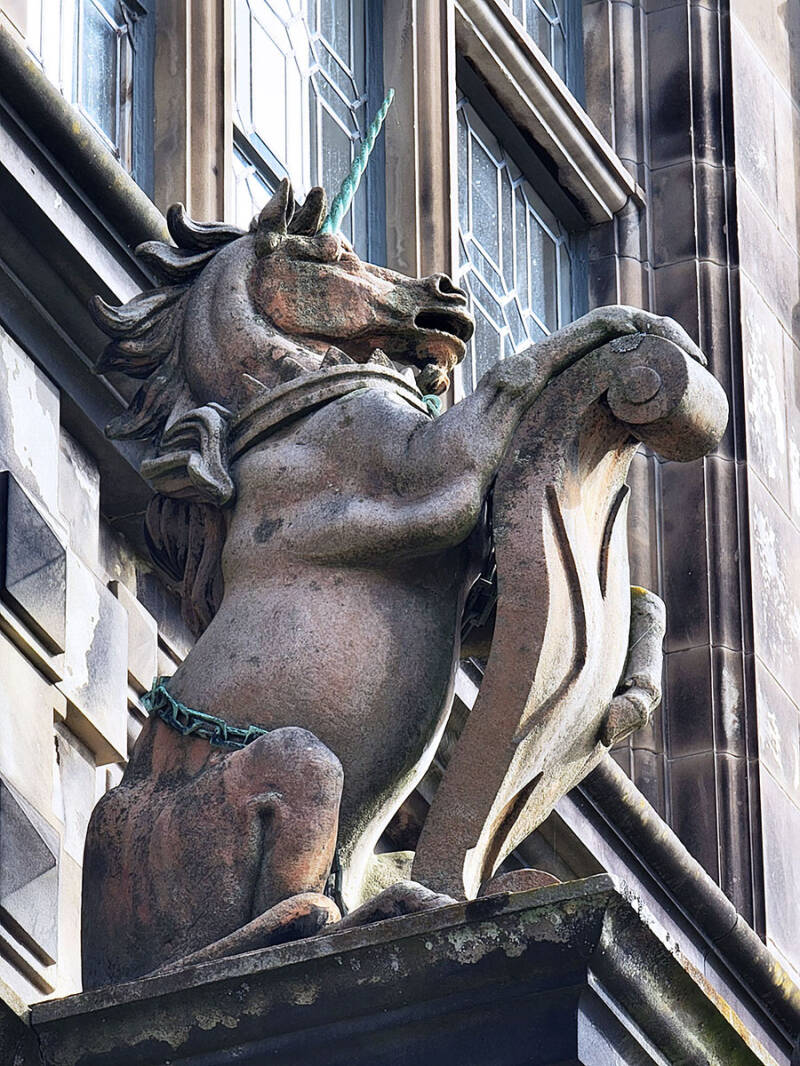
Travel usually begins with booking flights and hotels and packing suitcases. This journey, however, began several years ago and was more like a TV series, with its twists and turns, drama, romance, and—hooray! —a happy ending. The series was called “The College Application Process.” And its current, final episode is the journey to university in the most literal sense: across the ocean and all the way across the country to the edge of the world.
We decided to fly nonstop to London and then take our time driving across England to Scotland over the course of several days. Along the way, we planned to stop at a few interesting places and, at the same time, gradually adjust to the time difference before the start of the academic year.
We landed in the afternoon, picked up our rental car, and headed straight to our overnight stop: Luton Hoo. The hotel and its grounds are an attraction in their own right, so it was basically two things in one—a place to stay and a place to explore. We wouldn’t have had the energy for much more on the day we arrived anyway. Flying with giant suitcases is surprisingly exhausting when you’re not used to it. For years, we’ve traveled with carry-on luggage only, and in recent years we’ve even managed without bags at all, traveling with nothing but tiny backpacks.

The hotel itself is living history! It was built back in the 18th century.

But the hotel became famous later, when Winston Churchill gave a postwar thank-you speech here to a crowd of 100,000 people. During World War II, the grounds were also used to test the Churchill tanks. (These days, though, tiny deer roam these fields—about the size of a chubby pig on skinny legs. And they run so incredibly fast that every single shot I took came out blurry.)
Around the same time, in 1947, Princess Elizabeth spent her honeymoon here and generally loved coming back for holidays.
The magnificent staircase in the lobby has appeared in more than one movie—from Four Weddings and a Funeral to James Bond.

It’s funny that the events in Kubrick’s Eyes Wide Shut take place in New York, but Kubrick, being afraid of flying, refused to travel to the U.S. and insisted on filming the “New York mansion” right here at this hotel.

Three adults already count as a fairly large group by European standards, so in some places we had to book two rooms—one for us and one for Arseny. As a result, Arseny got the coziest little room, complete with its own internal staircase and a tiny balcony.
And Ilya and I really lucked out—we were apparently given what used to be the owner’s bedroom, with the only huge terrace overlooking the gardens and fountain.

Well, hello, jet lag.
Day One
In the morning, we went for a walk through the hotel gardens.

The estate’s old stables have been converted into a spa with a swimming pool.

And breakfast—actually a very good one—was served right here:

We packed up and headed north, but instead of taking the highways, we followed our “favorite” English country roads, winding through the pastoral countryside toward Derbyshire.
Our destination was Haddon Hall, one of the oldest houses in England.

The Domesday Book also records that William Peverel, a Norman knight and possibly an illegitimate son of William the Conqueror, owned the Haddon estate in 1086.

The family of its current owners has owned the estate since the 15th century. Apparently, they still occasionally live in one part of the house while another section is open to visitors. Although, judging by the layout, it’s not entirely clear where exactly the private living quarters are.

The house has an incredible atmosphere, which, of course, hasn’t escaped the attention of filmmakers. Interestingly, the estate has played the role of the dark and mysterious Thornfield Hall in no fewer than three different adaptations of Jane Eyre.

And indeed, its age, long narrow corridors with Gothic windows, spiral staircases, enormous stone fireplaces, towers, and, above all, its location on a remote hill far from any towns make it absolutely perfect for the role.
Of course, parts of the estate have been rebuilt and renovated over the centuries, but some sections have remained much as they were 900 years ago—dating all the way back to the time of King John, also known as John Lackland.

And that’s what makes it so cool. Haddon isn’t a mighty fortress-castle like Windsor, but simply a country estate that has survived for centuries. And it has managed to preserve its atmosphere.

While we were wandering around the estate, a harpist was sitting in one of the rooms, playing medieval melodies. Needless to say, it made the experience feel even more immersive, as if we had been transported back to that era.

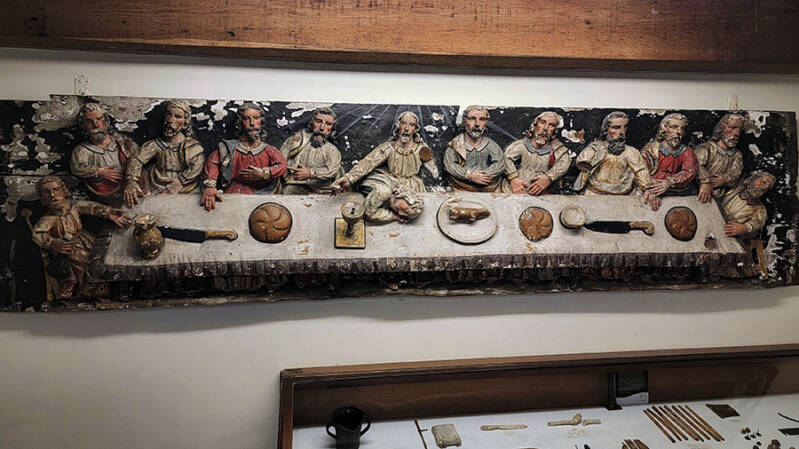
Mary Magdalene—oops, John—actually lay down here. How cute:
Just before the trip, I had been happily devouring Jane Eyre and, in fact, all three Brontë sisters. Arseny was reading them as part of his school curriculum. Unlike me, he’s not a huge fan of their work, but I suppose the Brontës naturally have a more female audience, so perhaps that’s only to be expected.
We had lunch right there at the estate—lamb stew—and then headed on, passing through the absolutely adorable town of Bakewell on our way to our next overnight stop.
Historic hotels are all very well, of course. But they’re best enjoyed in moderation. This time we checked into an ordinary modern Airbnb house, where we could wash our airplane clothes, cook dinner, relax in the backyard, and stop worrying about having to mix hot and cold water from two separate taps. Comfort and modern conveniences are ultimately more our thing—and, let’s be honest, it was cheaper too.
Day Two
We left Derbyshire behind and moved on to West Yorkshire, but we didn’t leave the Brontë sisters behind. Quite the opposite—we decided to pay them a visit in person. As we drove, every bend in the road revealed yet another view of rolling hills and windswept moorland.
—So this is Wuthering Heights! Oh, no, wait—this looks even more like it!
And, of course, the weather did its part too. The dramatic skies and intermittent rain were absolutely perfect for Wuthering Heights.
The little town of Haworth, as is so often the case in England, seems to have been frozen in the 19th century.

Even the small cars seemed so out of place and unnecessary there that we quickly parked off to the side and set off on foot along the narrow cobbled streets.
It’s easy to see how the literary legacy of the three Brontë sisters turned their former home, now a museum, into the main tourist attraction in Haworth. The town itself is atmospheric, of course, but it’s also gray, stone-built, small, and almost perpetually overcast. It would never attract the crowds of tourists that now fill its restaurants, cafés, and little shops if it weren’t for the Brontës.
On the other hand, perhaps a town with exactly this kind of gloomy spirit was the perfect place for such literature to be born. Just as, for example, great works of literature by Dostoevsky could only have been born in St. Petersburg. Existence may not always determine consciousness, but it certainly has a way of influencing literature.
Arseny, by the way, was convinced that in September there would be exactly three elderly tourists there. Well, not quite. There were huge crowds of people of all ages. The Brontës are, after all, a significant part of England’s literary heritage, whether you like it or not.
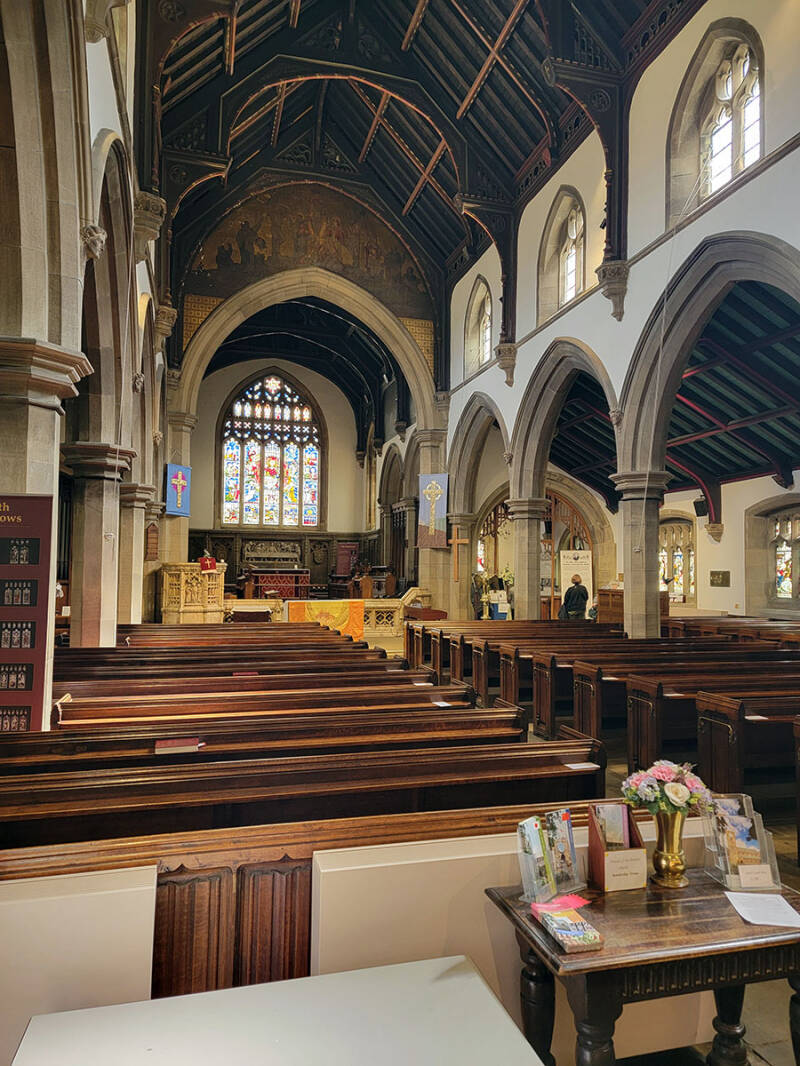
Every building in the town is notable for its connection to the Brontë family: here’s the church where their father was a clergyman,
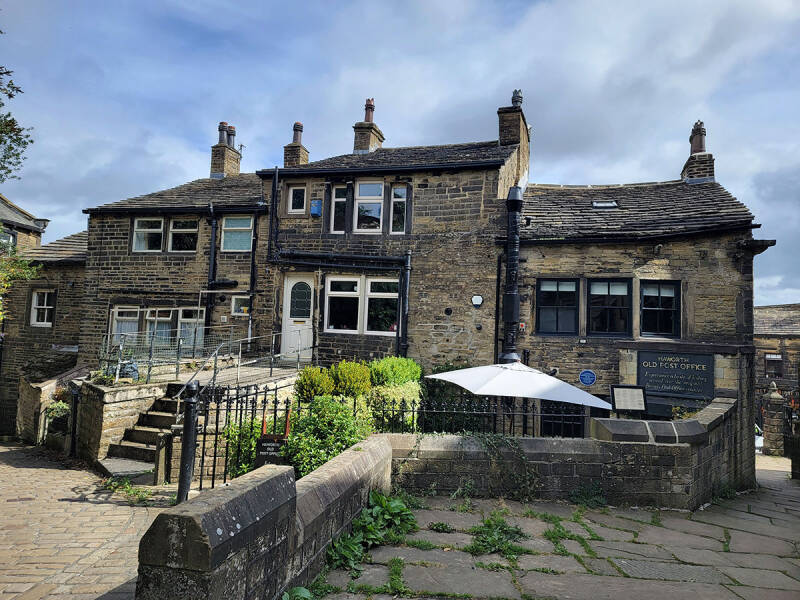
Here’s the post office where they sent their novels to publishers, and here’s the very desk they used—which you can use too. And over there is the school where they studied.
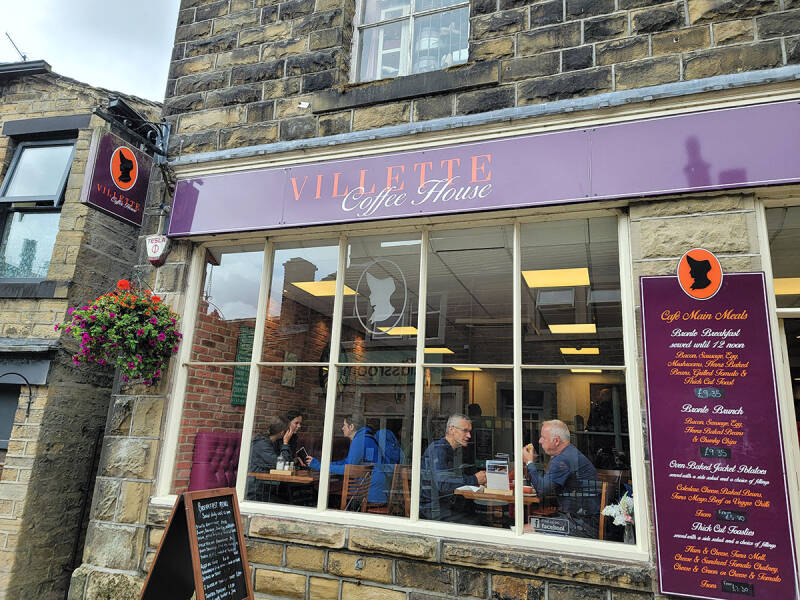
Restaurants named after the novels (funny—I had just finished reading Villette, and here I was, standing right there!)
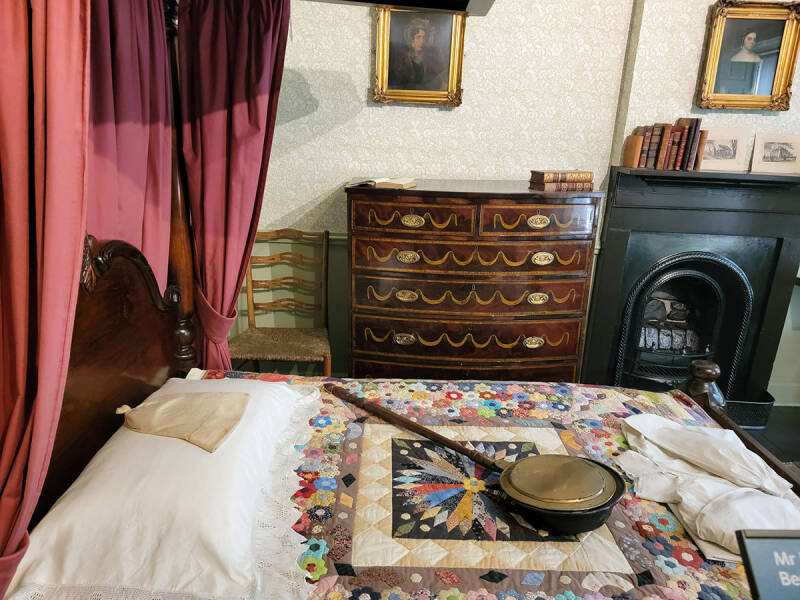
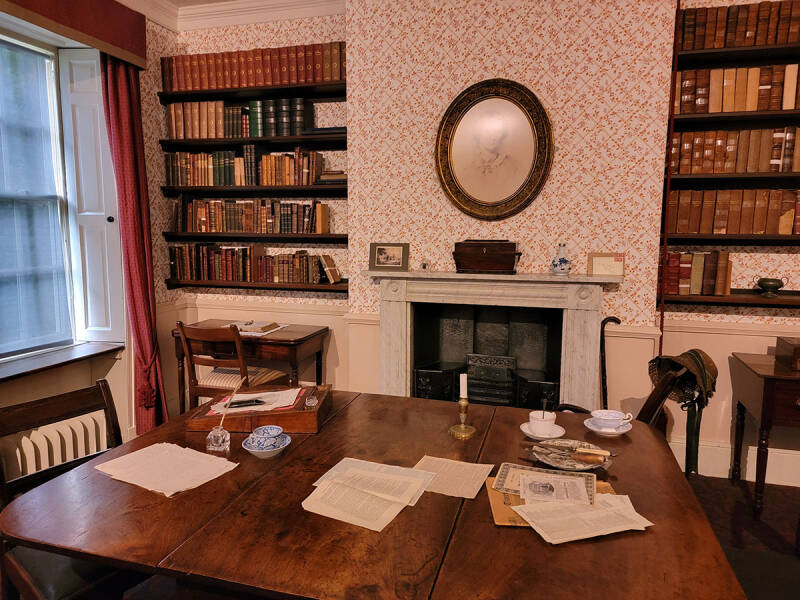
The Brontë parsonage is quite modest, with tiny little rooms. The sisters’ and their father’s rooms are neat and tidy.
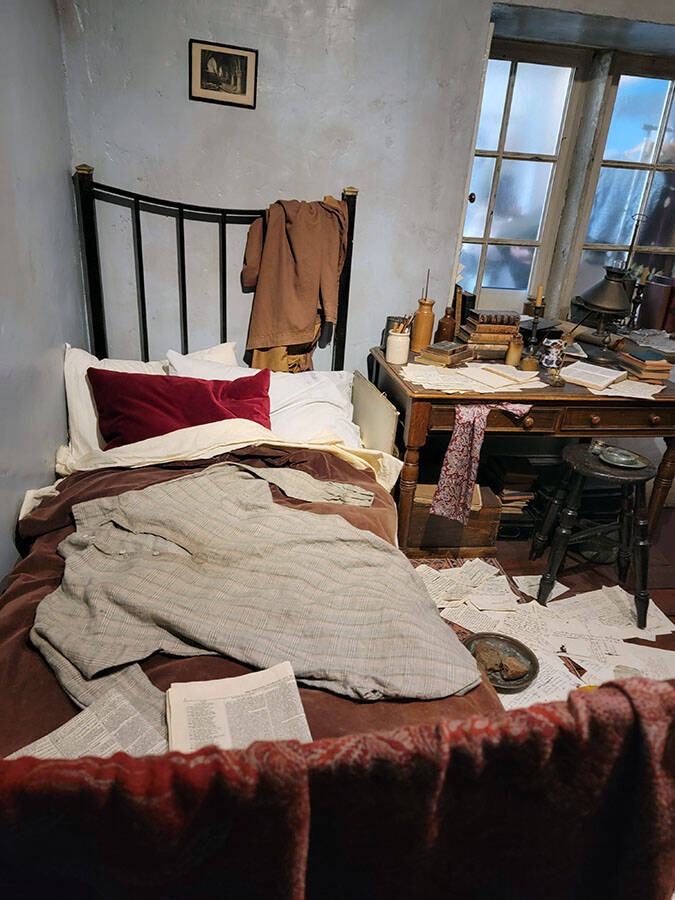
Their alcoholic brother’s room, on the other hand, is cluttered and depressing, littered with empty bottles and wine-stained poetry manuscripts scattered across the floor.
As is well known, they all wrote at the same time
and lived short lives. There were originally five daughters, but only three survived to adulthood—and all three turned out to be gifted writers. Their mother died shortly after the birth of their sixth child. And their unfortunate father outlived all six of his children. None of the children had any descendants. Tuberculosis ravaged 19th-century England mercilessly.
I’ve been reading Charlotte and Emily since childhood, but I only discovered Anne Brontë’s work fairly recently—and fell in love with it immediately. Especially The Tenant of Wildfell Hall. It affected me much more strongly than Wuthering Heights. Her experience of living with a brother like that probably played a role. As so often happens, he was the family favorite—the one everyone pinned their hopes on, the one expected to have a brilliant future as a poet and artist. But things turned out very differently. While his sisters were publishing books in large numbers, he spent most of his time using opium and alcohol and gambling away his money.
After walking around the town and visiting the museum, we had lunch at one of the local restaurants and continued on to the town of Knaresborough.
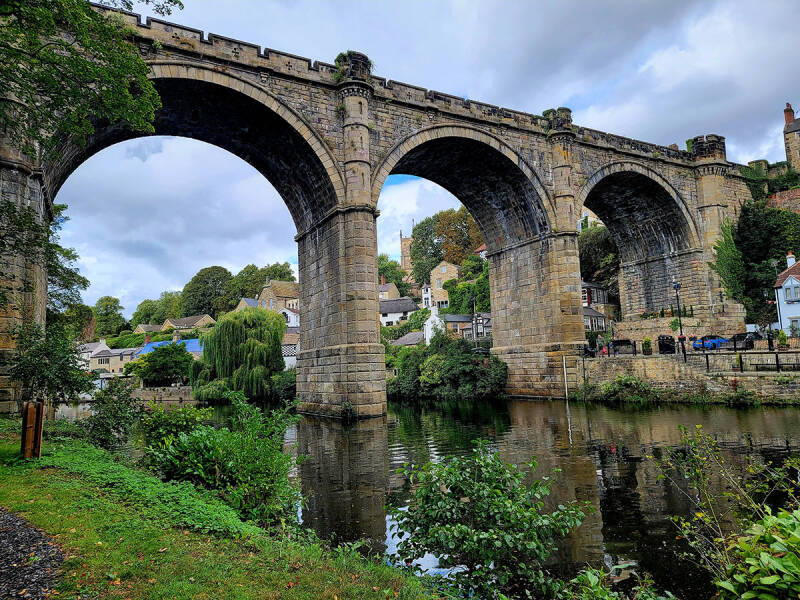
We were less interested in the town itself, although it’s very picturesque, and more in its famous cave, where a prophetess lived during the reign of Henry VIII.
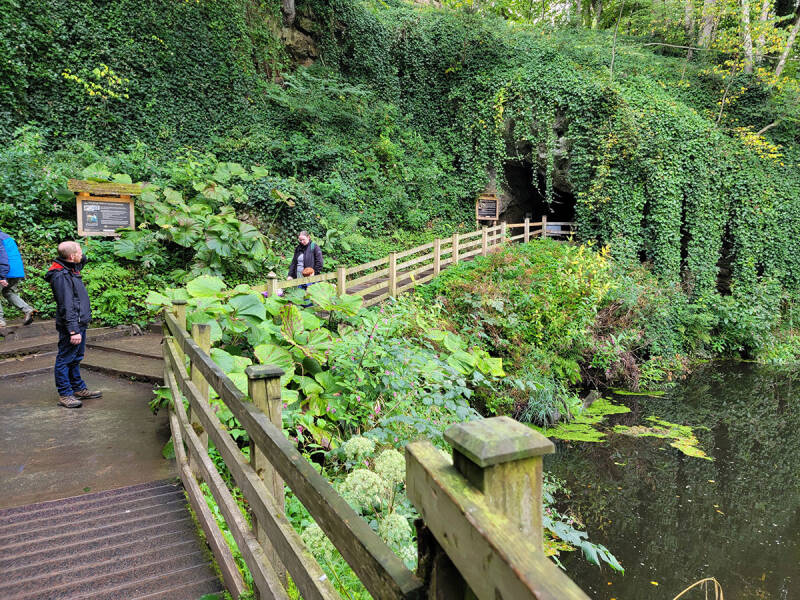
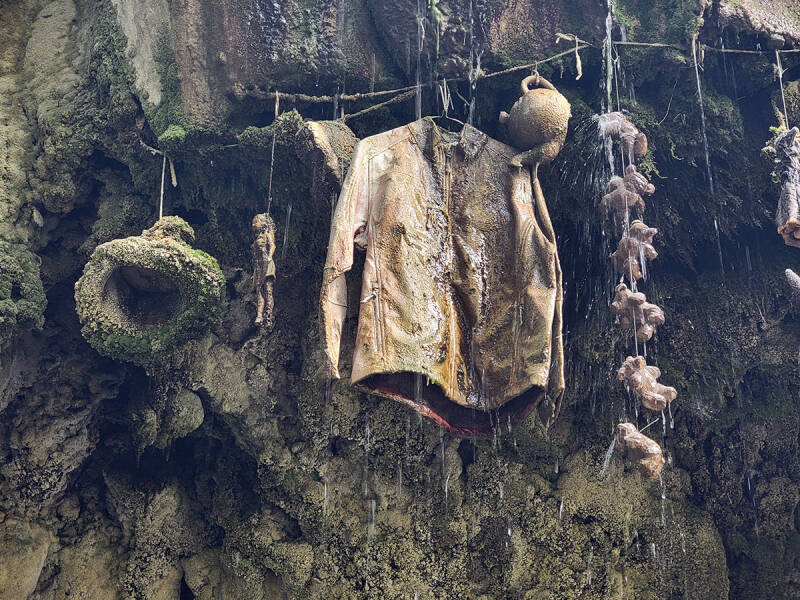
The cave is located next to an unusual spring. What makes the spring unique is that objects placed in its waters become petrified fairly quickly. Today, of course, we understand that it’s all due to the composition of the water, which is rich in calcium carbonate and various mineral salts. But our ancestors believed the water was magical.
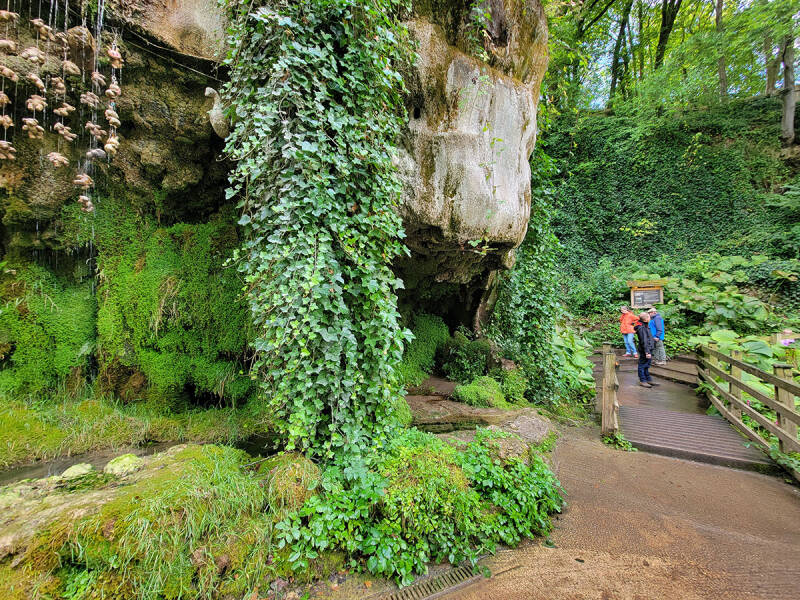
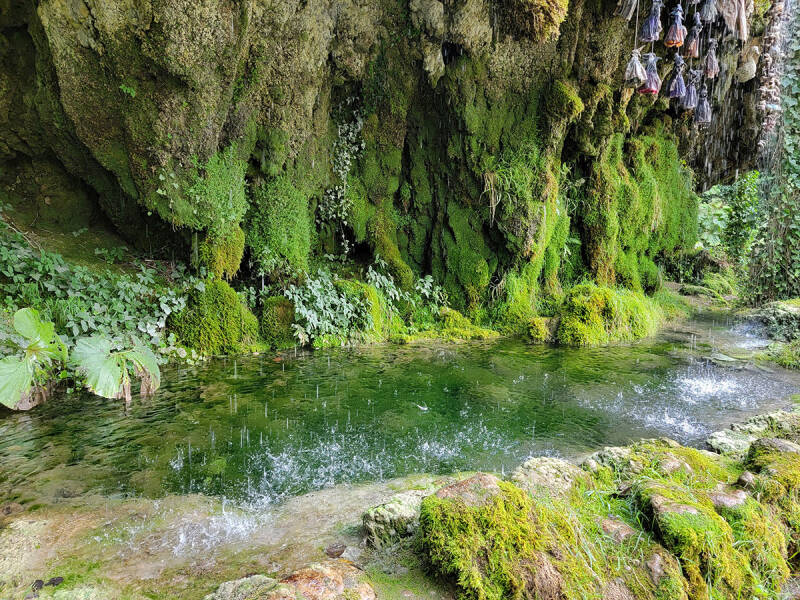
Ursula was born and lived here in the cave—a hunchback with a crooked, hooked nose who supposedly predicted the Great Fire of London in 1666 and described a future with carriages that had no horses. She is also credited with prophecies concerning Henry VIII and his wives. And, apparently, she predicted that the end of the world would come when the bridge in Knaresborough collapsed. (It has actually collapsed twice since then, but they repaired it both times, so, shhh… that doesn’t count.)
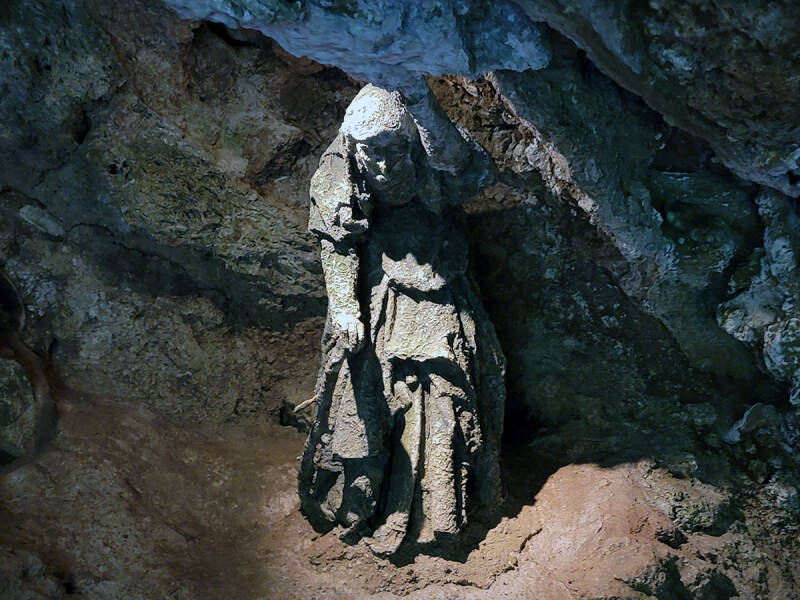
Another interesting detail: when Henry VIII learned about the witch of Knaresborough, he sent his men to her to ask about the future. One of them was Henry Grey, the father of Lady Jane Grey. She told him that she saw his head mounted on a pike in York. And that’s exactly what happened—many years later, Henry Grey was executed on the orders of Bloody Mary, and his head was displayed on a pike for all to see.
I thought we’d take a look at the spring, with its abundance of petrified shirts, toys, and socks hanging above it, and then head straight on
It turned out that the path to the cave runs through a large woodland park with a truly unique atmosphere—
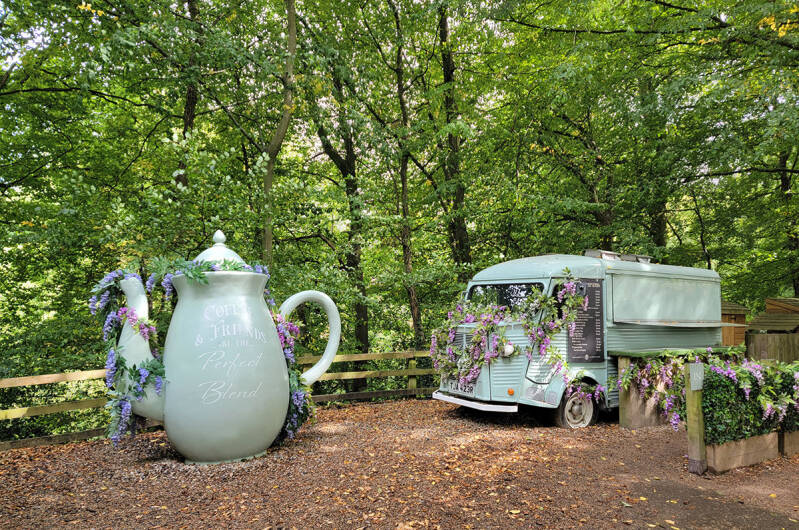
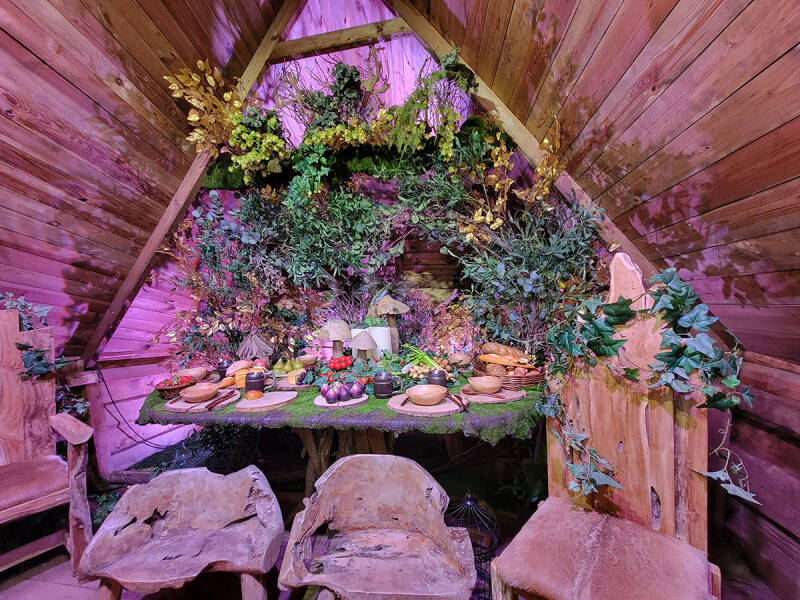
somewhere between hipster and druidic—with flowers, mushrooms, fairies, and all sorts of other magical touches.
Along the way, we came across felled tree trunks covered in hundreds of coins.
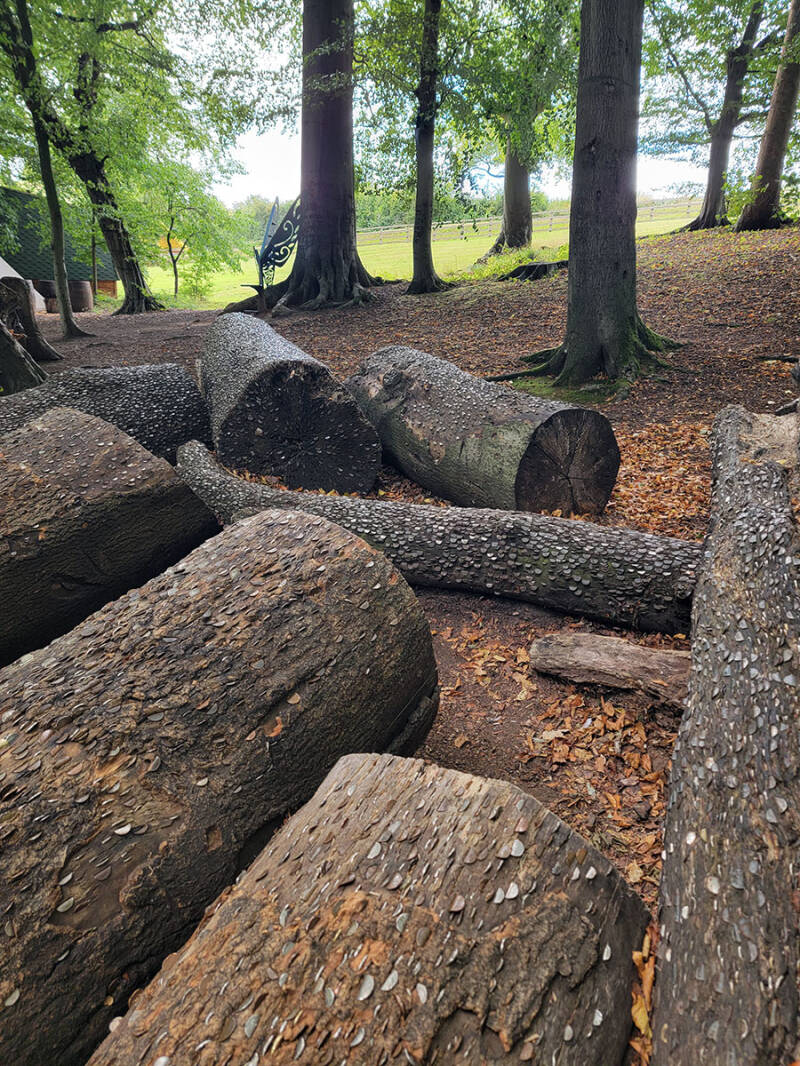
According to an old pagan belief, a coin hammered into a tree trunk will take away illness and bad luck. Since this Celtic tradition dates back long before Ursula’s time, the trees themselves have now become something of a historical treasure, with coins from different countries and different eras embedded in them.
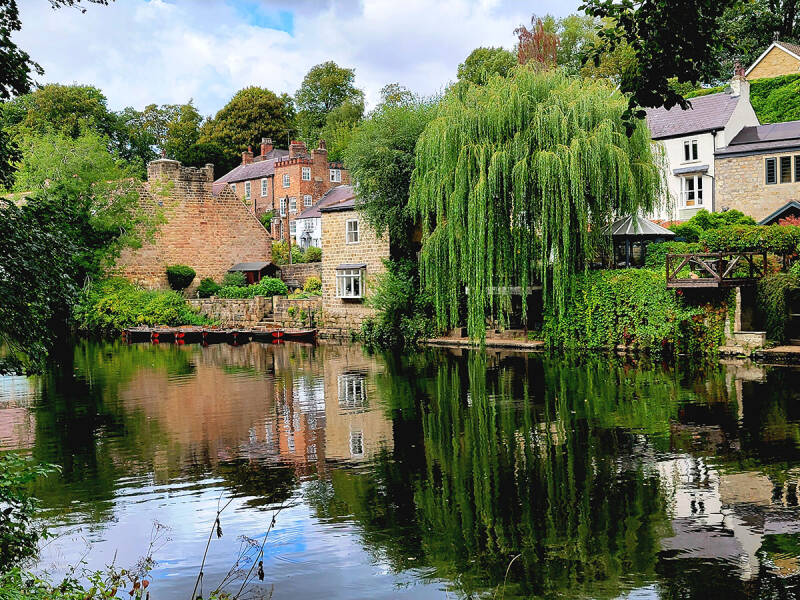
After wandering through the park and admiring its wonderful viaduct, we headed on, crossing the bridge and passing the “End of the World” pub, on our way to York.
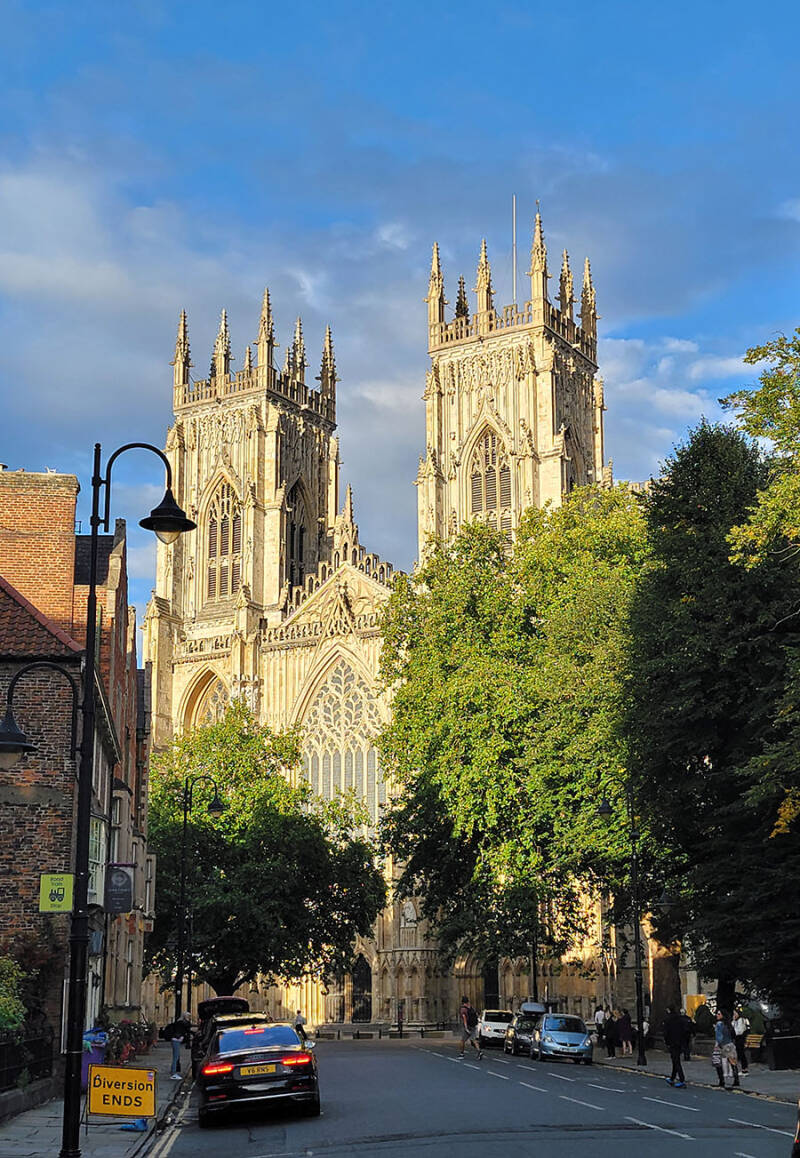
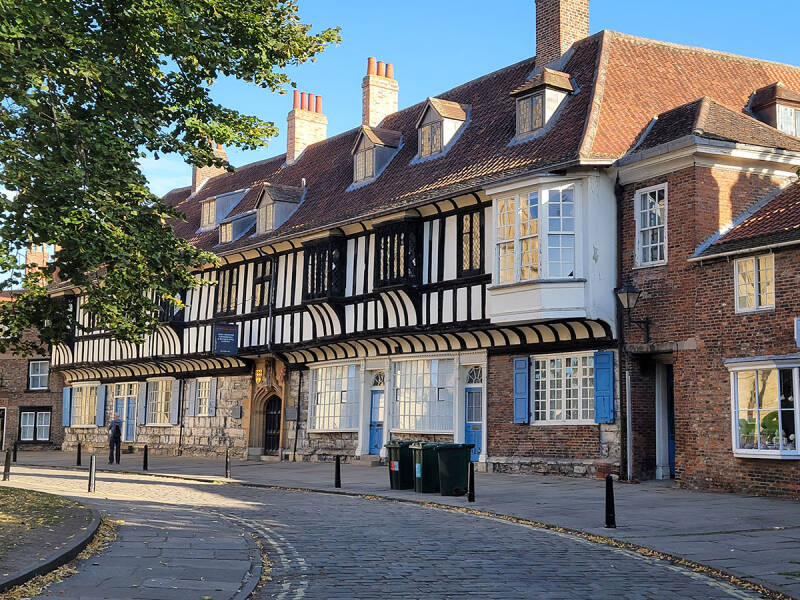
In York, we checked into a hotel right in the city center, near its famous cathedral. It was already closed to visitors, but it treated us to a wonderful 40-minute bell concert, although I have no idea what the occasion was. We listened to it without even having to step outside.
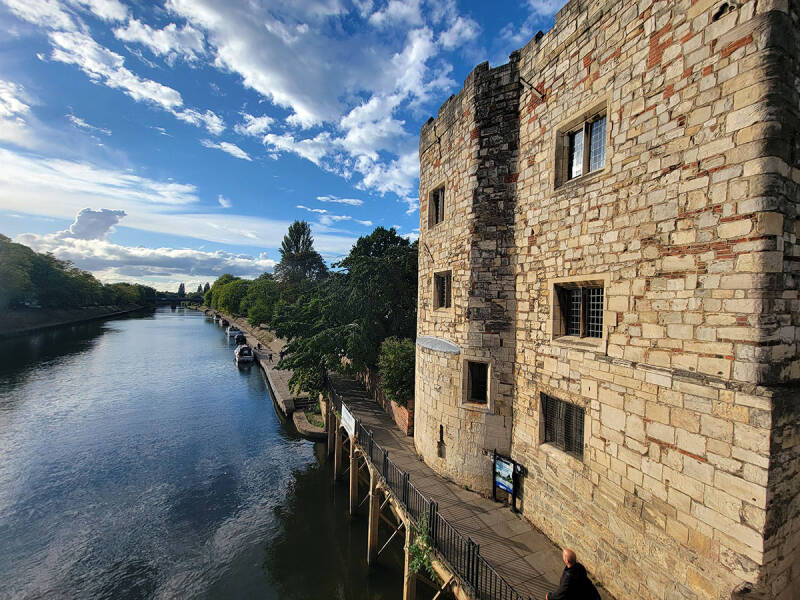
But toward evening, we decided to take a little walk along York’s famous city walls.
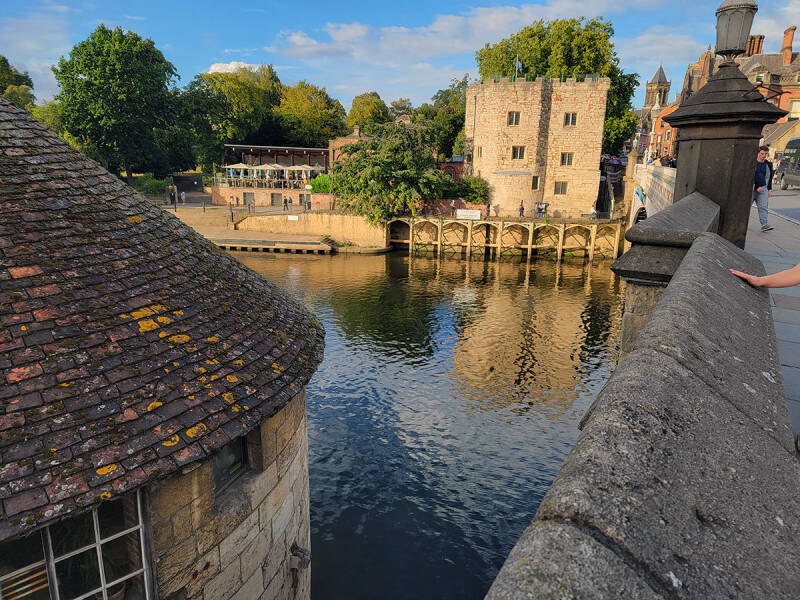
This magnificent wall, originally built by the Romans, probably ought to conjure up images of military events—the Wars of the Roses, for example. York was, after all, a stronghold of the House of York, while the Lancasters—Lannisters, sorry!—periodically captured the city.

The walls also provided reliable protection against Scottish raids. After all, York has always been the Capital of the North.
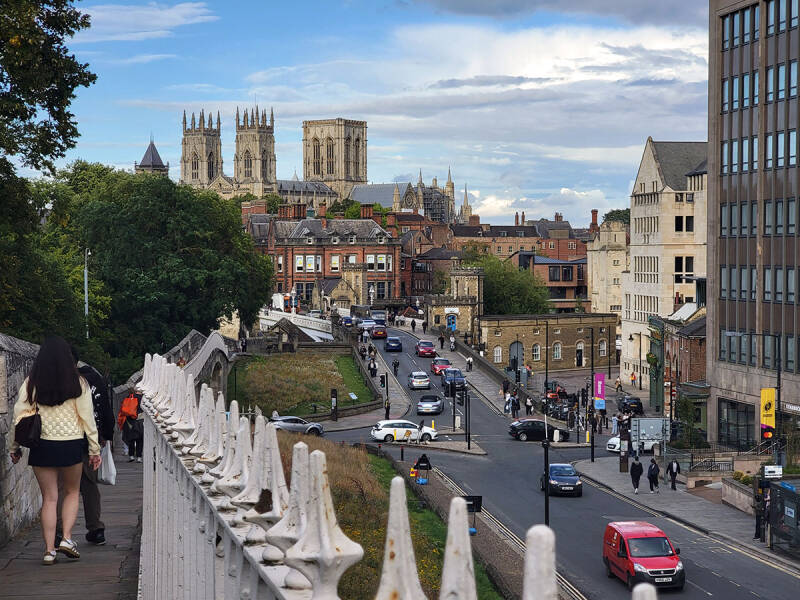
But I had only recently been reading Wilkie Collins, so the associations in my head were slightly distorted. I immediately thought of Margaret, the heroine of his novel No Name, who, after running away from her sister, came to York and wandered along these very walls alone, plotting her revenge and planning how to reclaim her inheritance. It was here, too, that she met Captain Wragge.
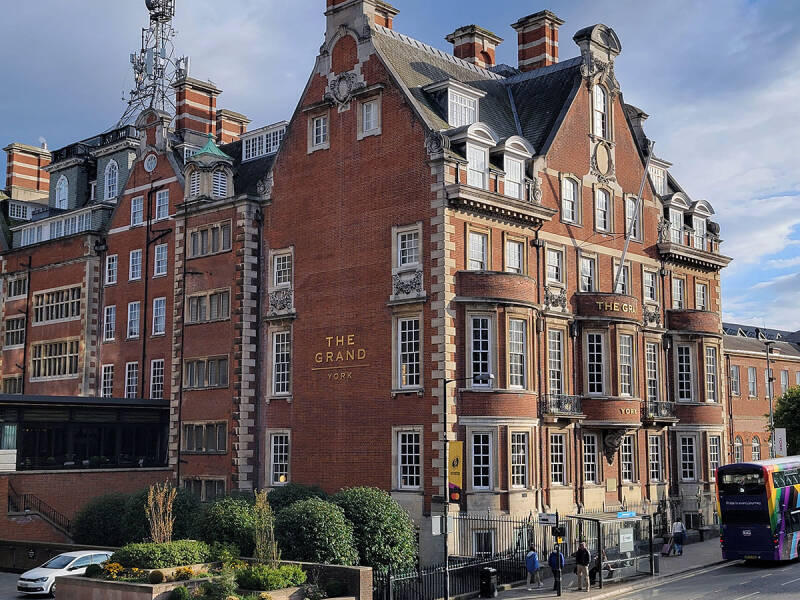
The wall turned out to be quite long and fun to walk along. We got so carried away—and so exhausted—that we never made it to the Shambles, which, of course, is a genuine crime. Oh well. Nothing we can do about it now.
Day Three
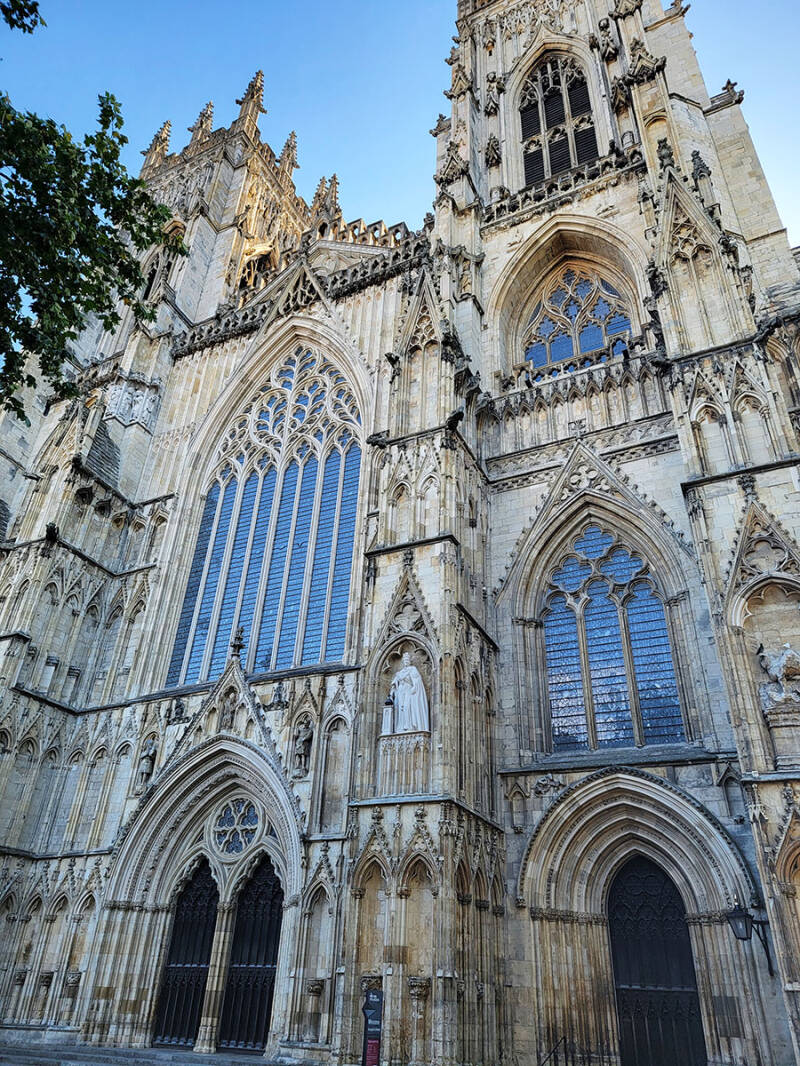
The cathedral was open in the morning, so we went to see it inside and out. It’s enormous and magnificent, with so much history and so much quintessentially English spirit!
Here are the famous Five Sisters—the largest surviving collection of medieval stained glass in England, dating back to around 1250.
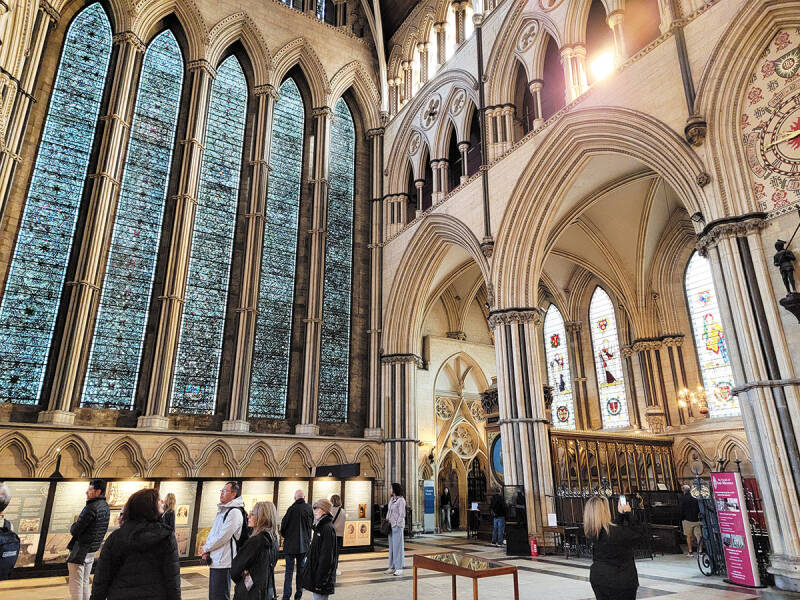
Interestingly, when World War II began, the English were very concerned that Hitler might bomb York because of its importance as a transportation hub, so they decided to hide the stained glass. The windows were dismantled into hundreds of small panels, carefully numbered, and transported to little villages for safekeeping. After the war, they were reassembled and returned to their original places.
These stained-glass windows were actually quite lucky compared with many others that didn’t survive the reign of Henry VIII. During the Reformation, many stained-glass windows were destroyed or whitewashed over because they were considered idolatrous, while these particular windows were spared because they were deemed educational.
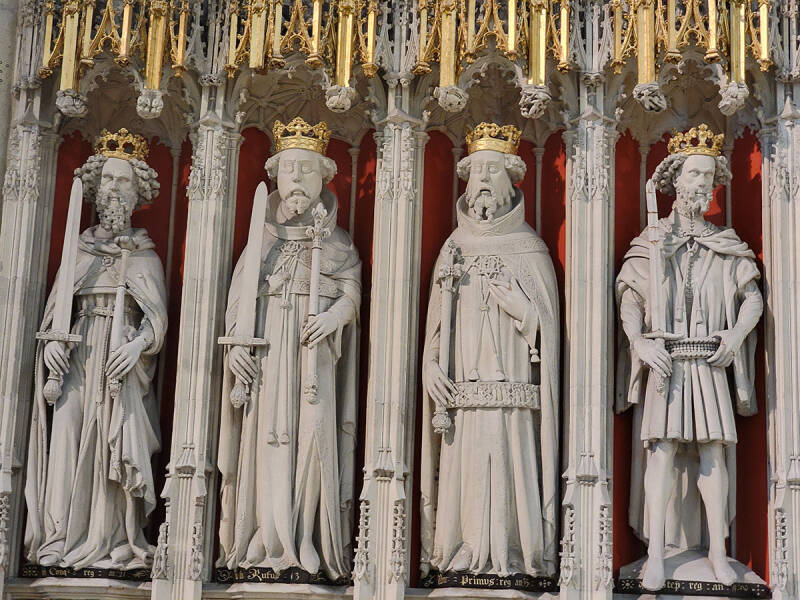
The 15 carved statues of kings were less fortunate. The Puritans smashed them and mutilated their faces because they considered the figures to be idols. It wasn’t until the 19th century that they could finally be restored.
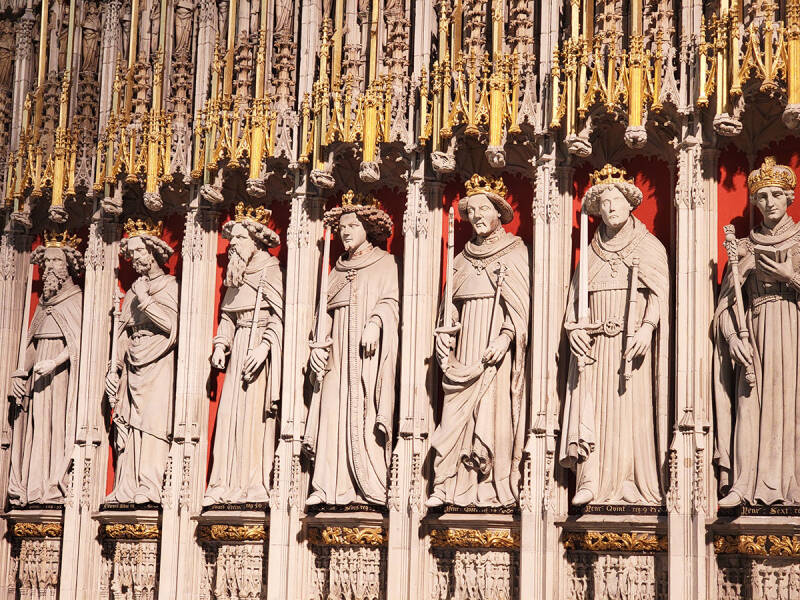
These earliest kings look somewhat different—they’re not just rulers, but genuine legendary heroes of English history.
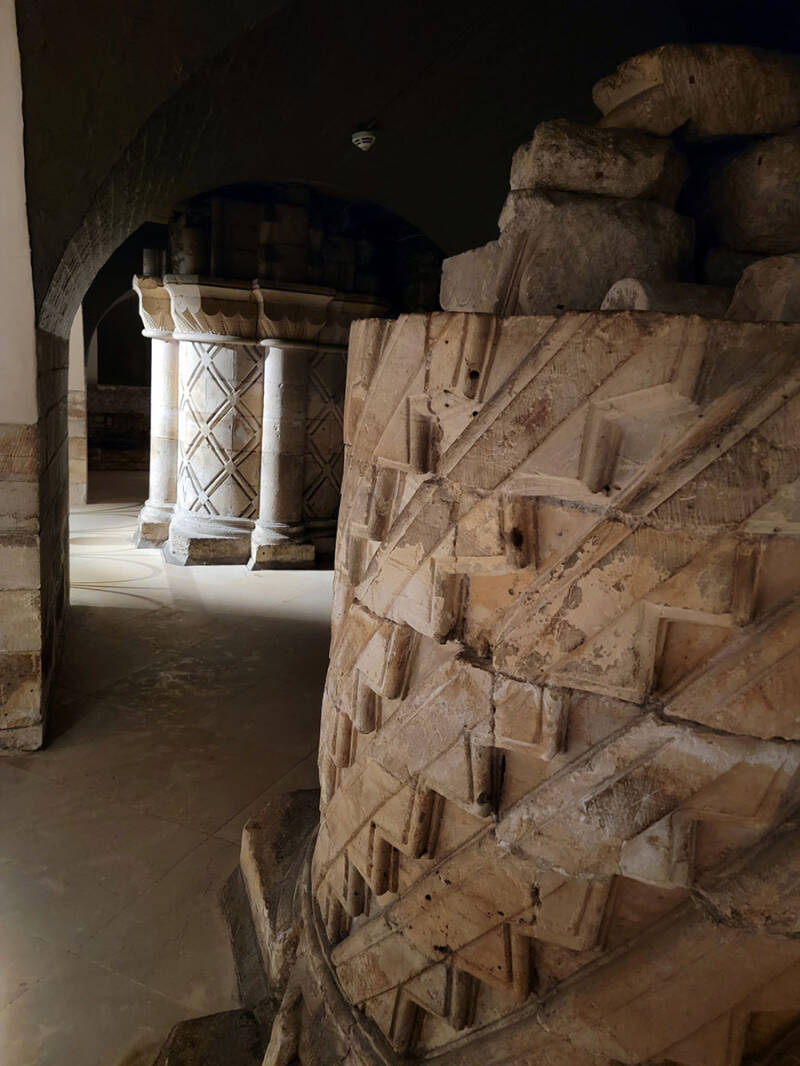
And these columns in the crypt are older than all the stained glass—and even older than many of the walls above. They date back to the 1060s–1080s, to the time of William the Conqueror.
But the coolest thing of all is that this is where Constantine the Great was proclaimed Roman Emperor in AD 306.
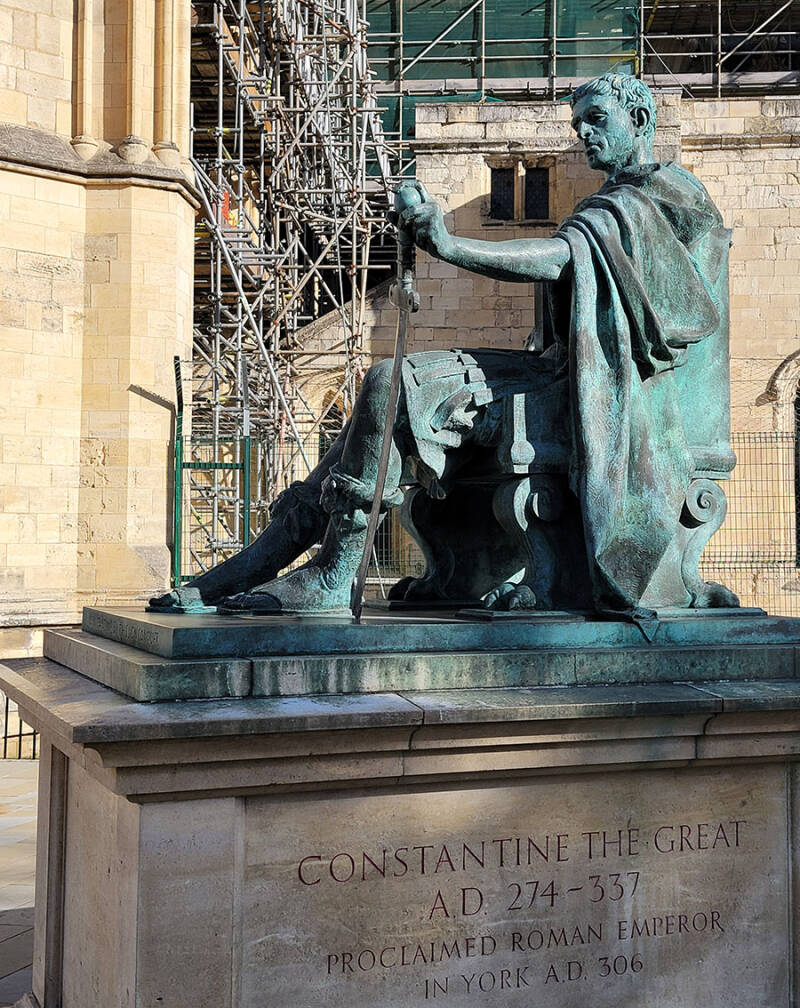
The thing is, in 306, the site of the cathedral was occupied by a Roman fortress, the city of York was still called Eboracum, and Constantine himself wasn’t even a Christian yet. At that point, he still worshipped Sol Invictus, the Unconquered Sun. It was only later, in 312, that he converted to Christianity; in 325 he convened the Council of Nicaea, which would shape the face of the Church for centuries to come; and he himself wasn’t baptized until he was on his deathbed in 337.
Needless to say, Christianity had barely had time to take firm root in distant, northern York before the Romans left Britain. The region then went through a couple of dark centuries of upheaval, during which Christian institutions weakened and older local religious traditions continued to play an important role. Much of the Roman-era written culture was also lost or greatly diminished.
And when I told you on my previous trip that St. Regulus had brought the relics of St. Andrew to Scotland in the 4th century, that was, of course, probably a 12th-century legend created to give the monastery greater prestige. In reality, 4th-century Scotland was home to the Picts and their pagan cults. People had heard of Christianity, but certainly not everyone had. (And I’ll tell you later who had.)
Still, that legend turned St Andrews into a major pilgrimage center for centuries, rather like Santiago de Compostela—well, “for centuries” meaning until the Scottish Reformation.
Even today, you occasionally come across signs for pilgrims who once traveled here to venerate the relics of St. Andrew. (Although I suspect these are modern signs commemorating the old pilgrimage route.)
And the story of the relics of St. James is a whole separate story for another trip. 😊
Above the entrance, you can also see a relatively recent addition to the cathedral—a two-meter-tall statue of Queen Elizabeth II. It was created by a local sculptor and completed in August 2022, just a month before the Queen’s death. Elizabeth lived long enough to see and approve the designs, but never the finished statue. She was supposed to come in person in November, but by then it was her son who had to make the visit.
There she is—the light-haired figure against the darker background:
Well, the cathedral is magnificent, but my heart still belongs to Dublin’s cathedral, even if it isn’t as grand.
We continued northeast toward the sea. Today’s destination was a place I had dreamed of seeing for a very long time—and one that exceeded all our expectations.
Whitby!
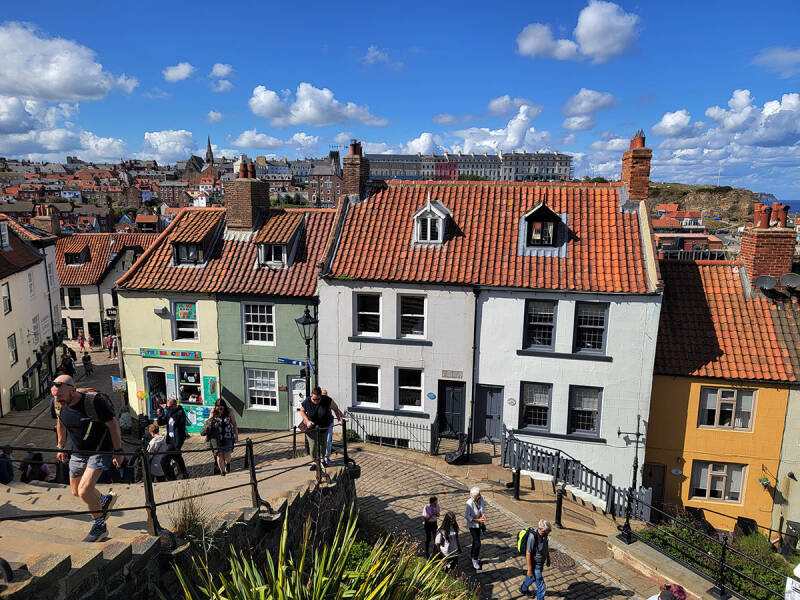
The most breathtaking England is England by the sea.
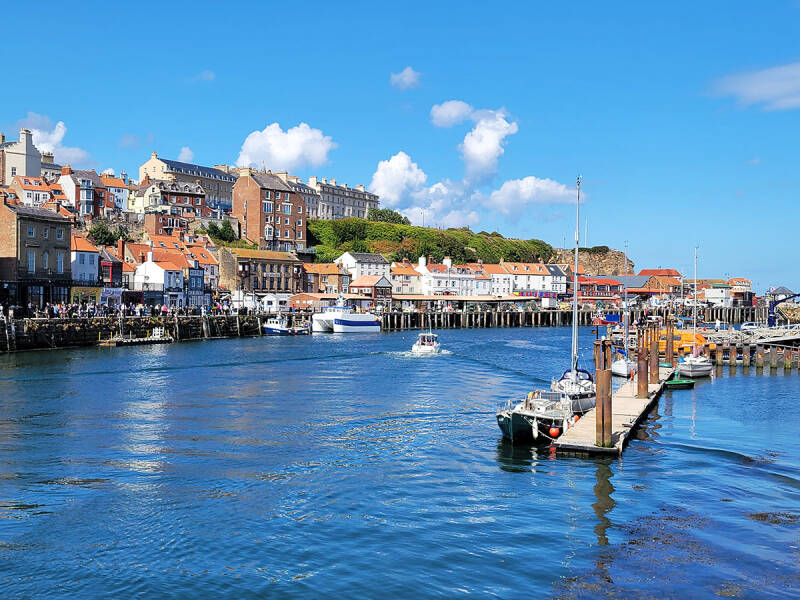
There’s always something especially striking about the coast—the combination of stark natural beauty and history, the unique character of these places. And how wonderful that from now on our route would take us north along the coast, with just a couple of little detours. The sea, the cliffs, and the old streets would be part of our everyday scenery.
Whitby is both a fishing town and a seaside resort.
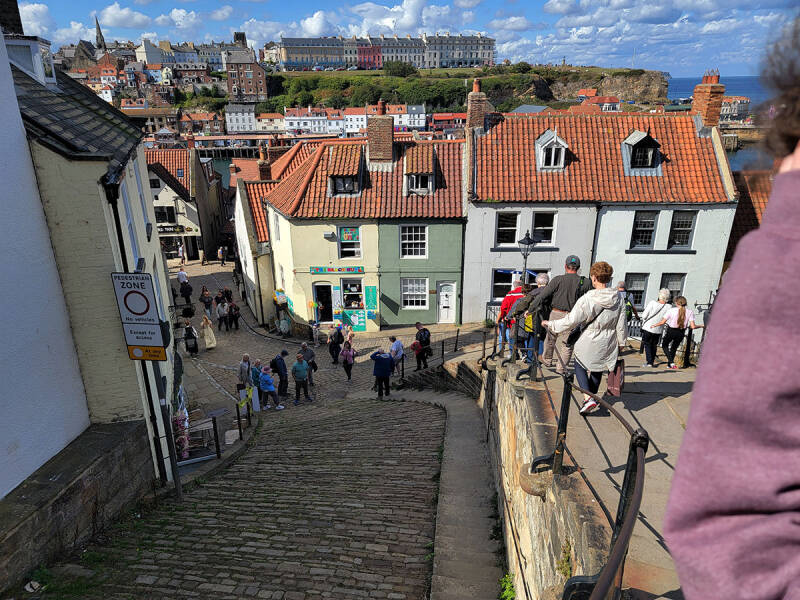
For me, Whitby is three books. After all, everyone has their own associations.
The first, of course, is Bram Stoker’s Dracula. When Count Dracula arrives in Whitby aboard a Russian schooner, he takes the form of a dog and climbs these very steps:
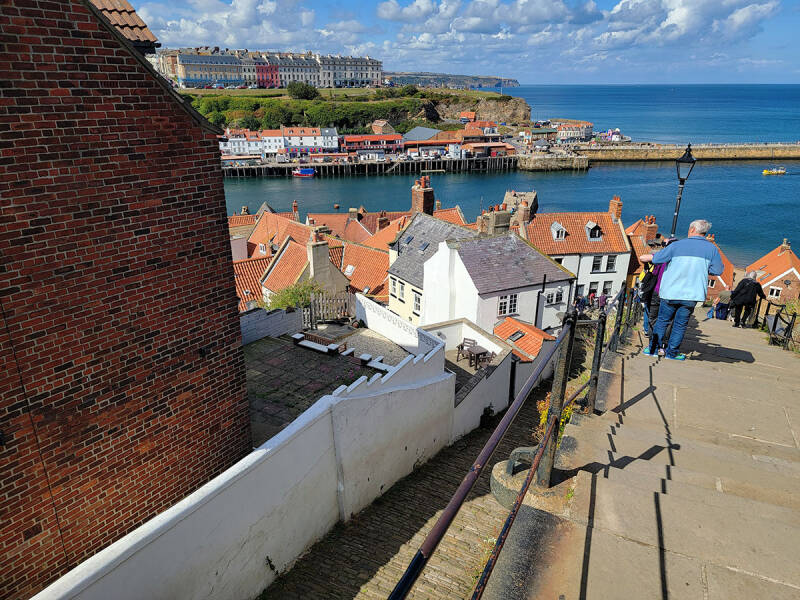
up to the cemetery.
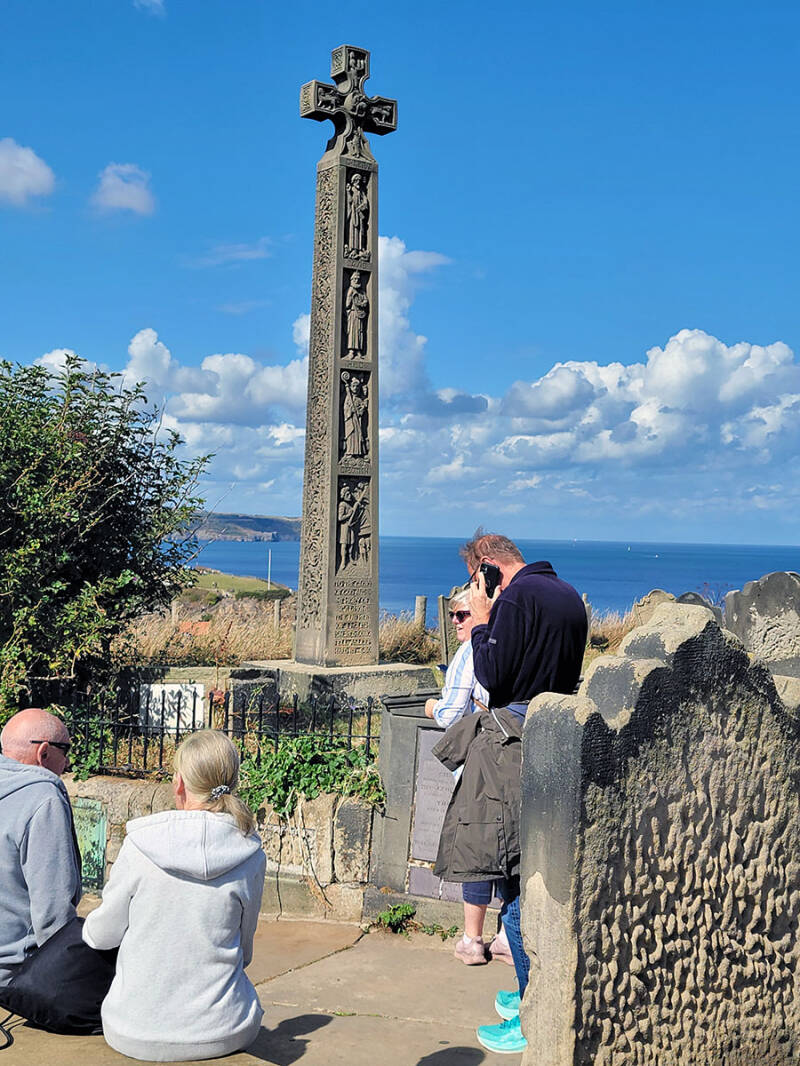
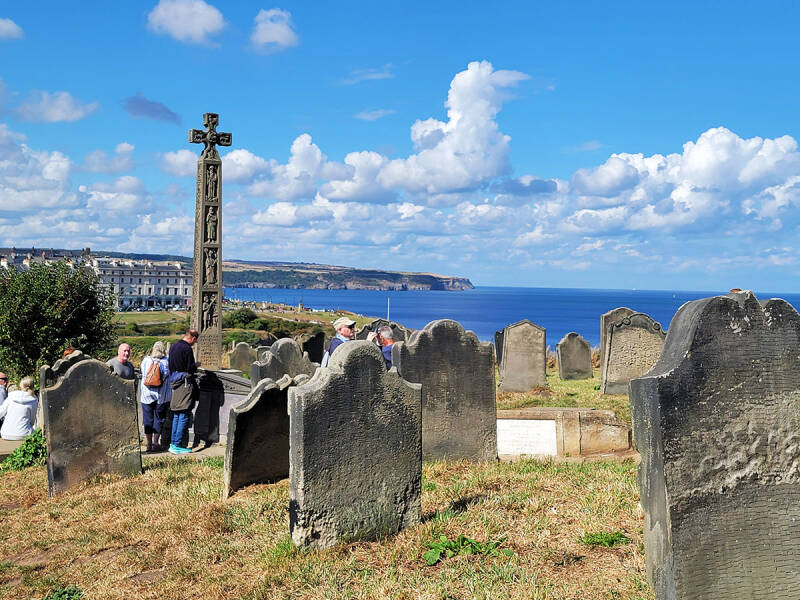
Here, in the cemetery, he would drink the blood of his victims at night. We’re walking around in broad daylight, surrounded by crowds of tourists, but even so, once you imagine what this place must look like under a full moon, it really does send chills down your spine.
Today, these steps leading up to the cemetery are known as Dracula’s 199 Steps.
The second book is Sylvia’s Lovers by Elizabeth Gaskell. Gaskell was a wonderful woman who may have been friends with Brontë, Harriet Beecher Stowe, and other sentimental female novelists, but she herself wrote excellent, not particularly “feminine,” serious works that explored life in English towns in the 18th and 19th centuries against the backdrop of the rise of capitalism, colonial wars, and all the rest.
In Sylvia’s Lovers, she gives such a vivid picture of the lives of ordinary fishermen and tradespeople in Whitby. The town was a center of the whaling industry until almost all the whales were hunted to extinction. Even today, some of the most beautiful historic houses here are the homes of former whaling-ship owners. They’re built of red brick, with carved doorways and large windows—a symbol of wealth in the 18th century.
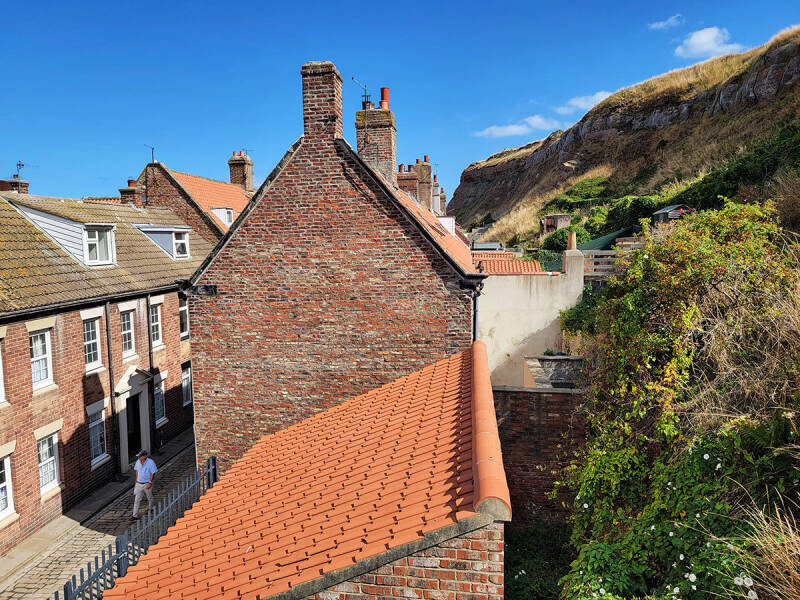
And the third book is Wilkie Collins’s famous The Moonstone. Whitby itself is never mentioned by name, but Collins’s descriptions of the North Yorkshire landscape give the reader a sense that the events take place somewhere around here.
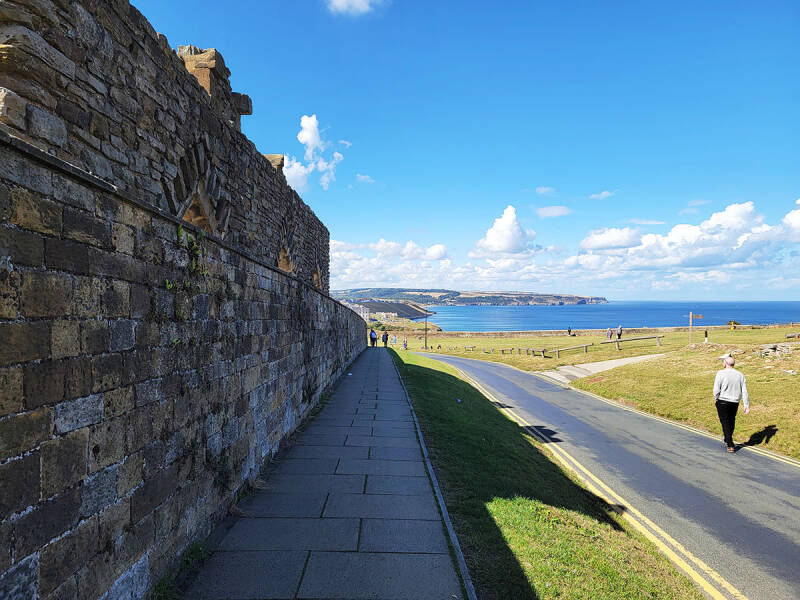
Hence my association with the local cliffs and the dangerous quicksands.
If you park right at the top, by the ruins of the abbey,
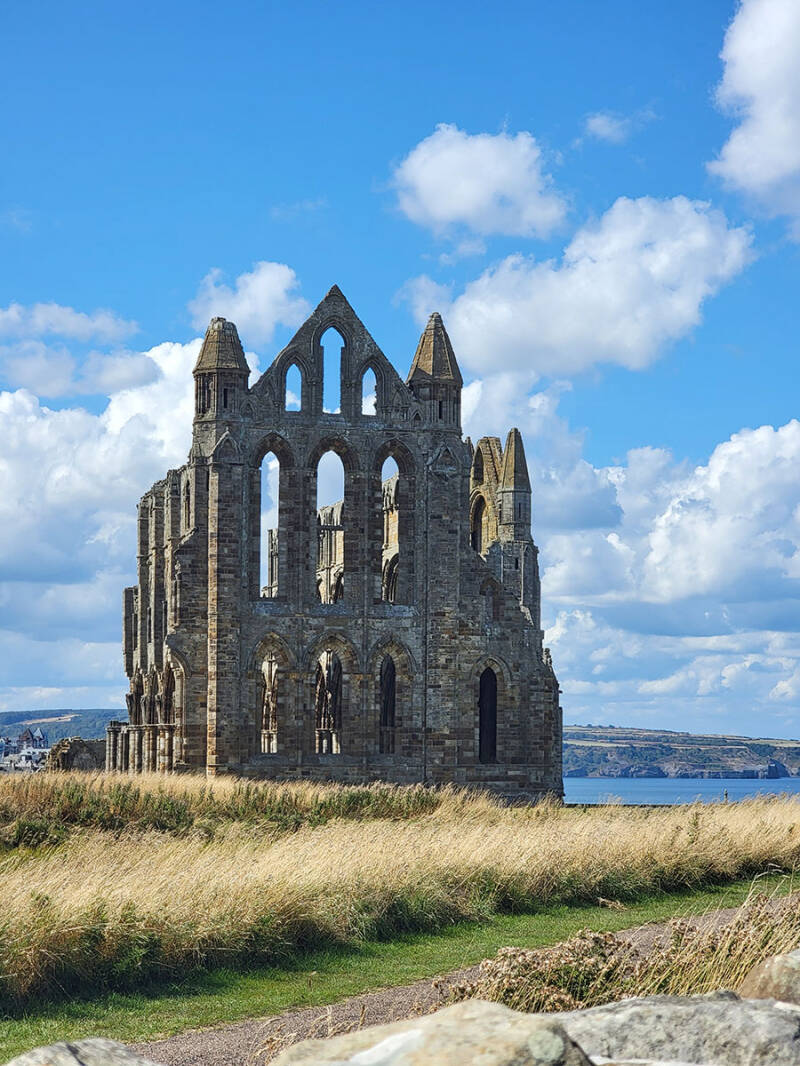
you can take a beautiful circular route that lets you admire the town from every angle, cross the swing bridge to the other side of town, have lunch somewhere in the harbor, and return by a different route.
That’s exactly what we did.
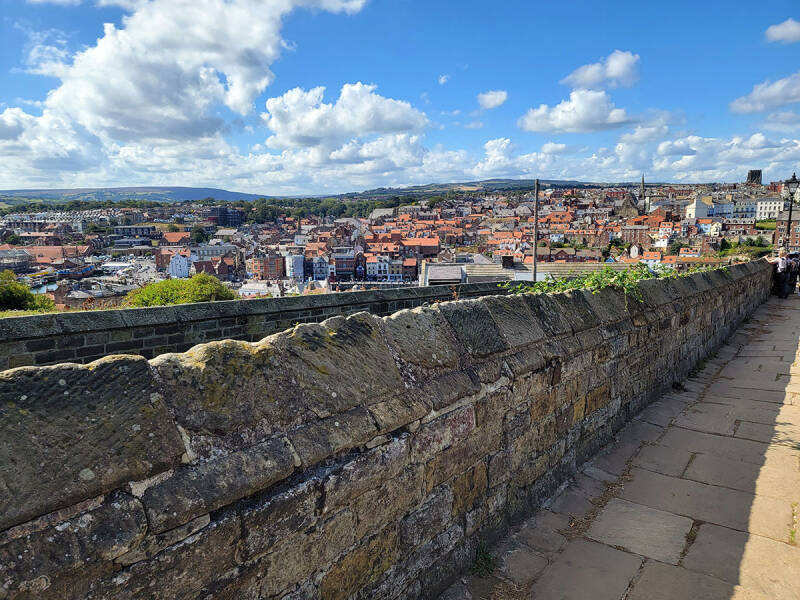
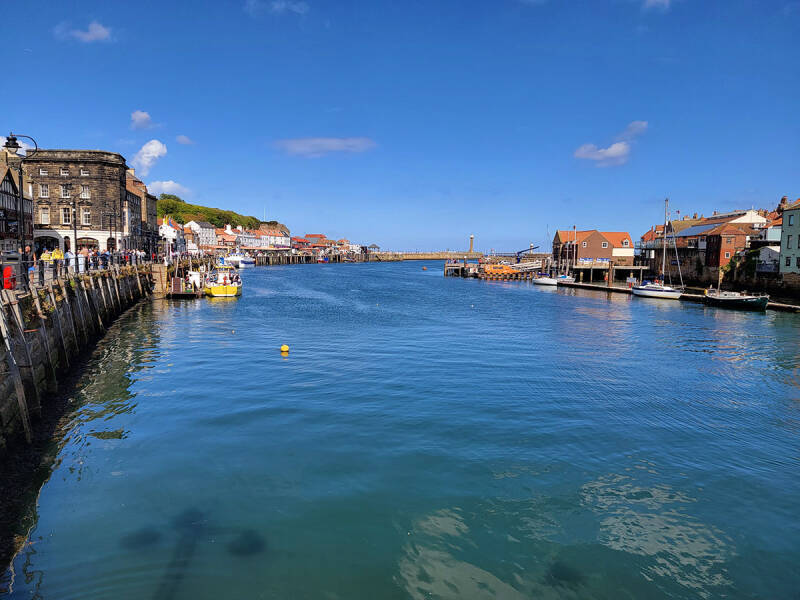
A magnificent town, wonderful restaurants serving local seafood, and perfect weather!
Although, as it turned out, the perfect weather was about to bid us farewell for a while. By the time we reached Durham, we had arrived to the sound of rain tapping against the windows.
Day Four
Arseny was hoping he wouldn’t like Durham very much. All because he had been accepted to Durham University.
This one, right here:
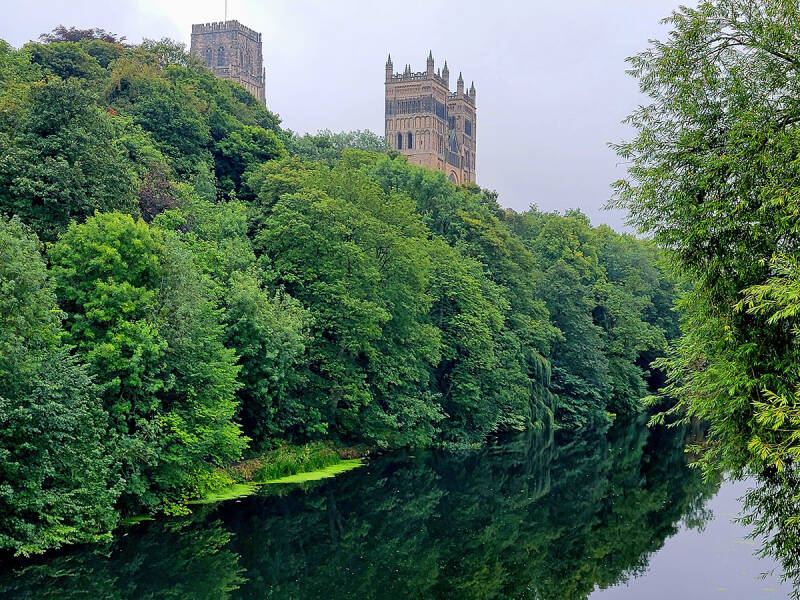
The university application system in England works somewhat differently from the one in the U.S. You can apply to only five universities, and after receiving offers, you have to narrow them down to two choices: one first choice and one backup.
Since the University of St Andrews was Arseny’s first choice, and he had received an unconditional offer, all the other universities automatically fell away. And although Arseny never doubted his decision, we thought that if Durham and its university turned out to be really impressive, it might be a little sad.
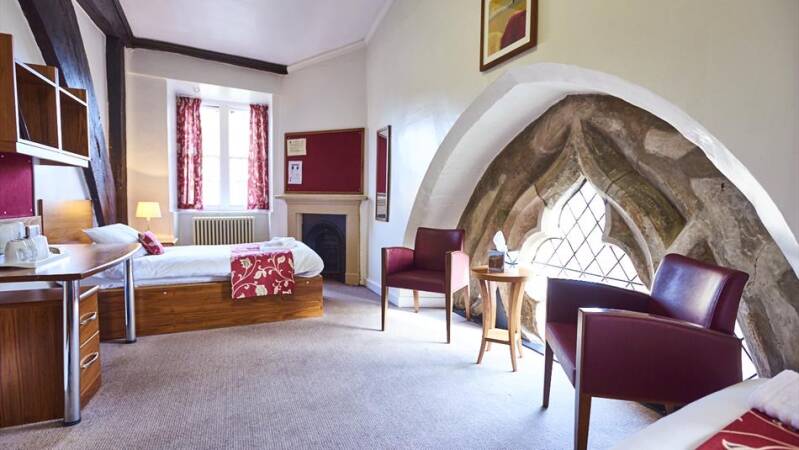
And there was a good chance of that. It’s not for nothing that parts of Harry Potter were filmed here. For example, we knew that some of the university accommodation rooms looked like this:
https://www.thisisdurham.com/
Durham did its best not to disappoint us, either—first, we couldn’t even park right by the university, and then the rain came pouring down so heavily that there wasn’t much opportunity for wandering around anyway.
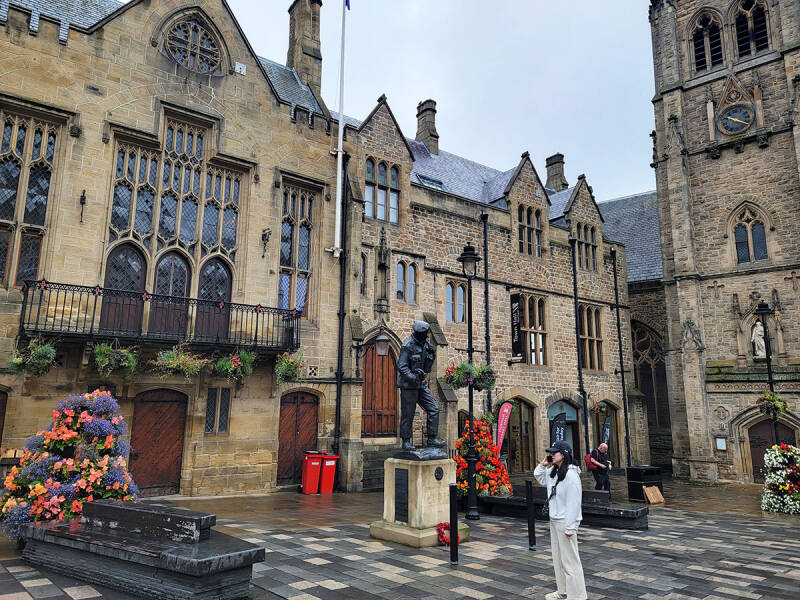
Of course, we still went for a walk and were impressed anyway. But we quickly came to the conclusion that Durham was still no match for St Andrews.
So we headed back toward the sea. Today’s plan, despite the terrible rain and almost zero visibility, was to visit two castles. Maybe it was even better that way—it felt like the real rainy northern England, the land of the Kings of the North.
Our first castle was Alnwick.
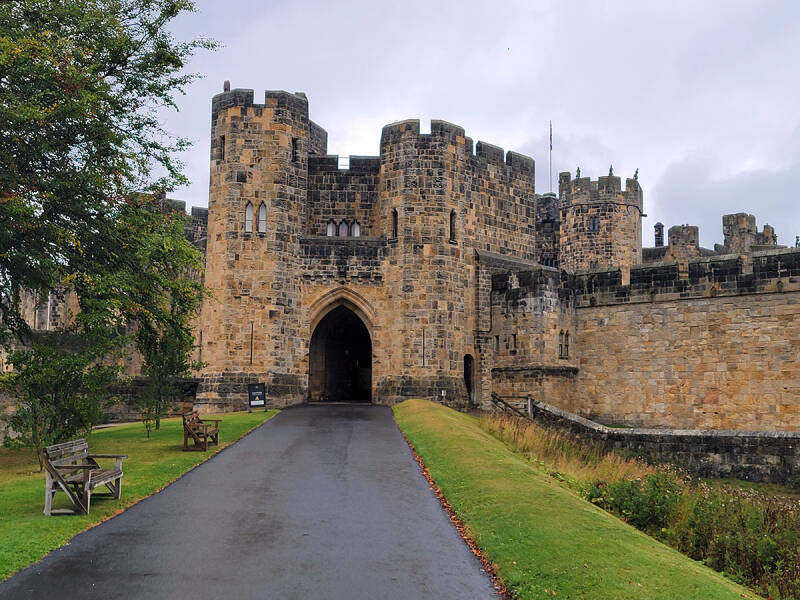
A magnificent ancient castle, dating back to 1096. Anyone who has watched Harry Potter will recognize it, since the broomstick-flying and Quidditch scenes were filmed here. Right here:
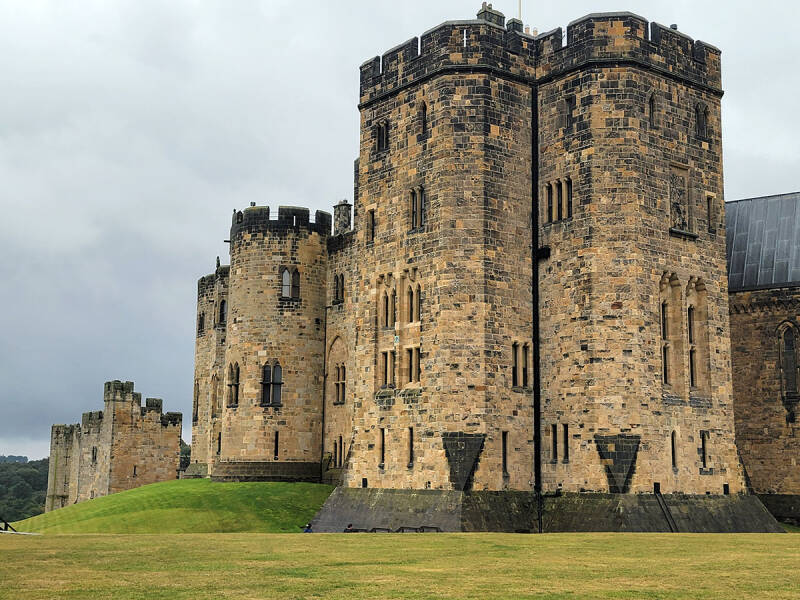
If you travel around England a lot (as we’ve been doing fairly regularly for the past seven years), you start to notice that castles and fortresses dating from 1066–1100 are scattered across the country like mushrooms—the first decades after William the Conqueror came to power. From Windsor, Warwick, and the Tower of London to the fortresses in the far north.
And it’s hardly surprising: the land was inhabited by some decidedly unfriendly local Anglo-Saxons, and the Normans urgently needed to build castles and fortify their position.
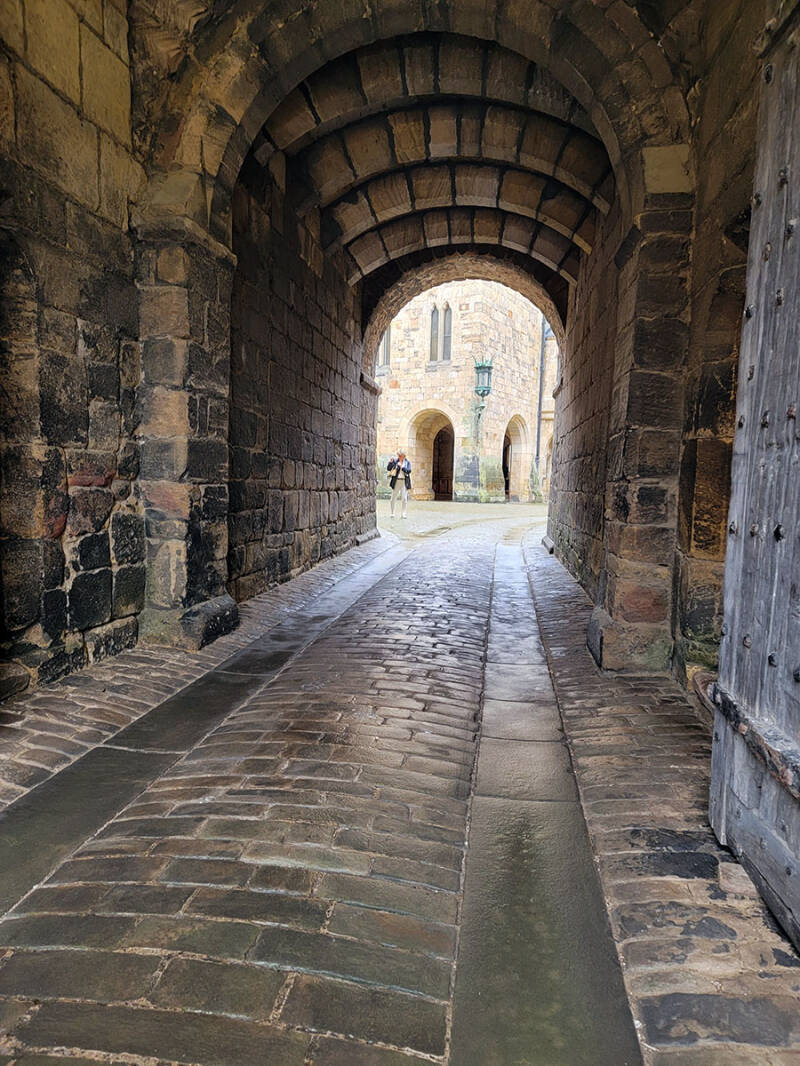
Alnwick’s main purpose was to protect England’s northern border with Scotland. Interestingly, when Henry II—son of my beloved Eleanor—was king of England, his other son, Richard the Lionheart, and a group of northern barons who were unhappy with Henry rebelled against him. The Scottish king, William I the Lion, came to their aid.
But Henry’s forces proved stronger, and the Scottish king was captured here at Alnwick. He was forced to surrender some of Scotland’s sovereignty and become Henry II’s vassal.
Later, when Richard the Lionheart came to the throne and needed a huge amount of money for his crusade, William I the Lion provided it, and in return regained his independence from English vassalage.
Both William the Lion and Richard the Lionheart earned their leonine nicknames for their personal courage.
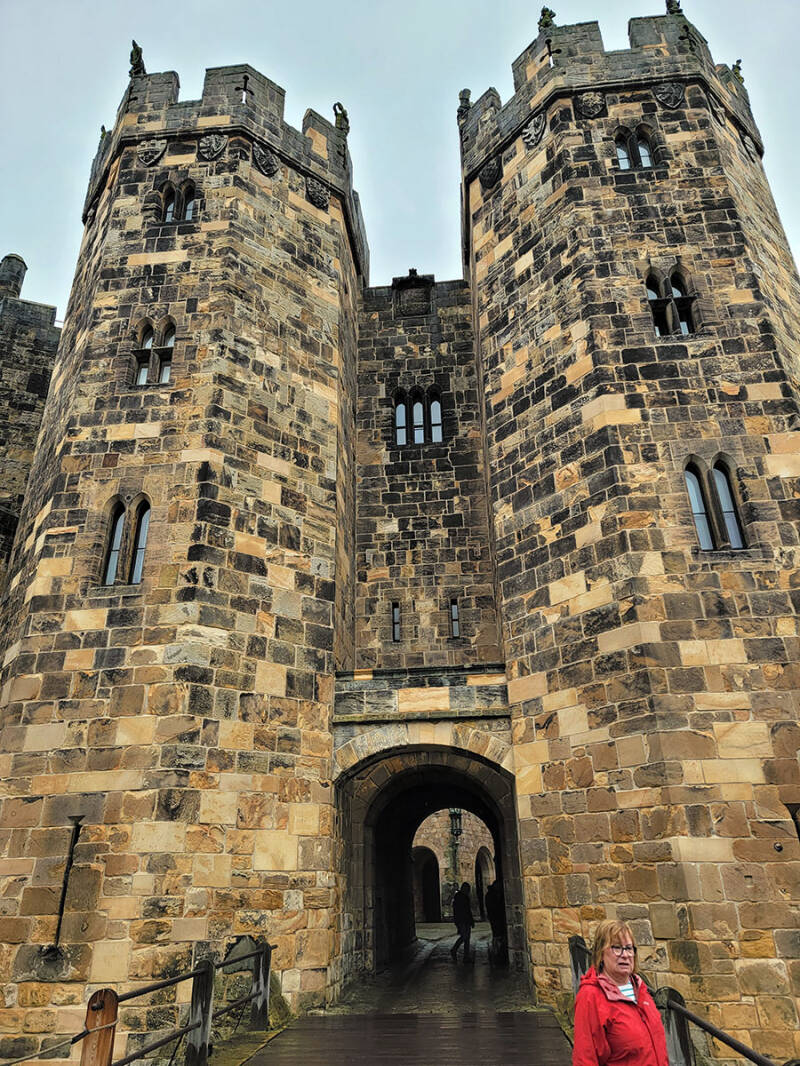
In 1309, Alnwick Castle was acquired by the Percy family, who were appointed Keepers of the North. And they still own the castle to this day. Eight centuries! (I think that’s pretty cool.)
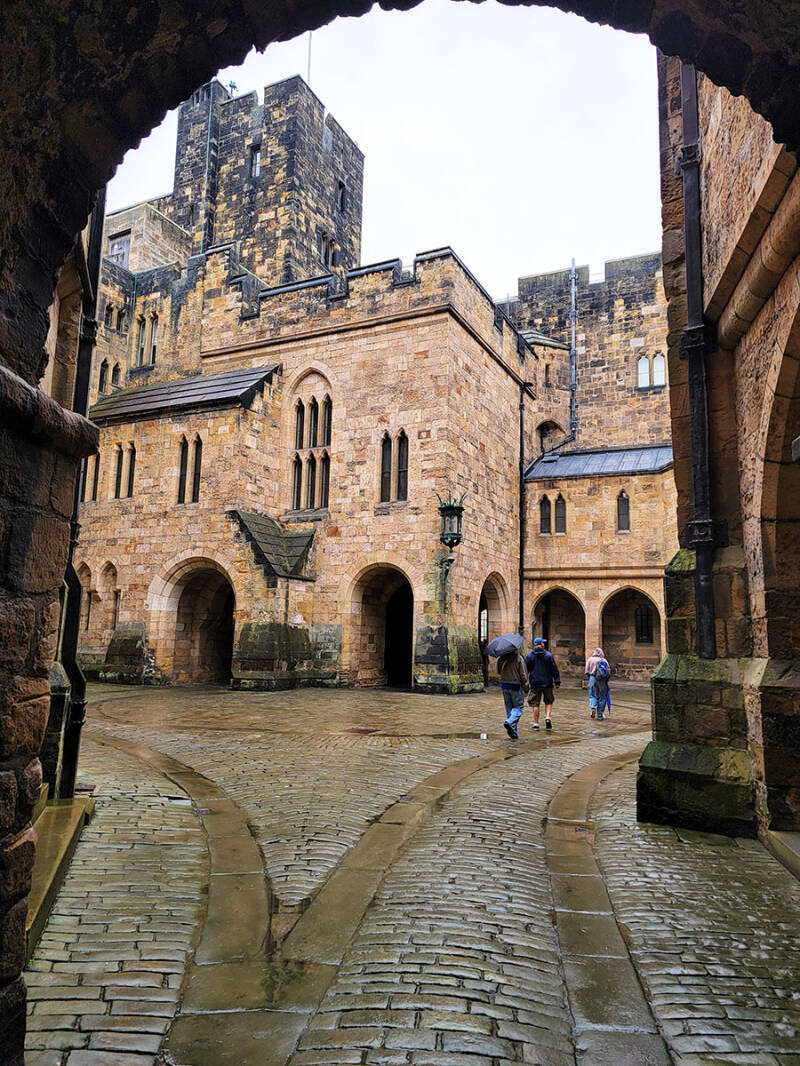
What the castle lacks, though, is the ability to take photographs inside. These restrictions drive me crazy. Somehow, whenever something is especially cool, that’s exactly where photography is forbidden.
And this is one of the things I love about England: you drive away from Alnwick, still completely immersed in a thousand years of history, and just twenty minutes down the road there’s another castle—Bamburgh—that’s even older, by at least five hundred years, and perhaps more.
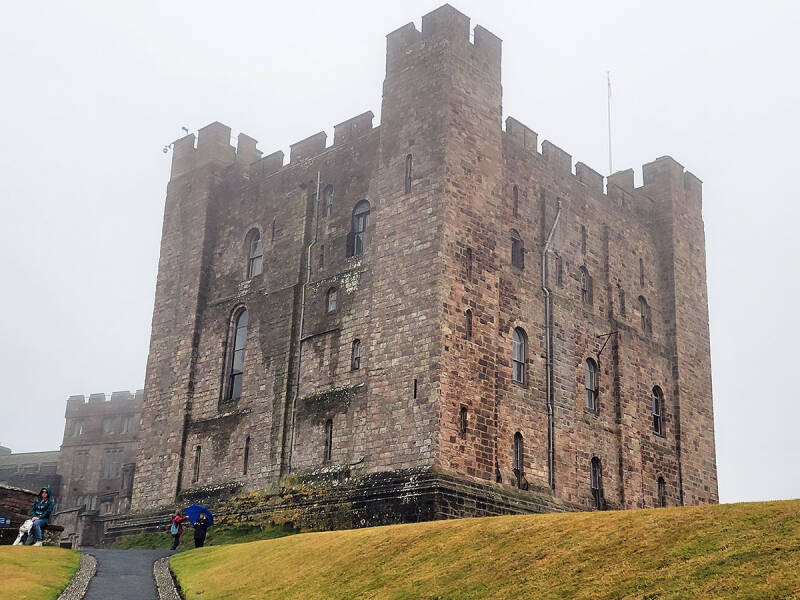
Most likely, the first fortification here was built by the Romans more than two thousand years ago.
In the 6th century, Æthelfrith, King of the Angles, gave the stronghold to his wife Bebba, and it became known as Bebbanburg. When William the Conqueror arrived, he naturally wanted to take the fortress, but he failed. Instead, he captured its owner, Robert de Mowbray. But Robert’s wife, Matilda, continued to defend the castle and surrendered only when William threatened to blind her husband.
You can really feel the North here—the very Jon Snow kind of North:
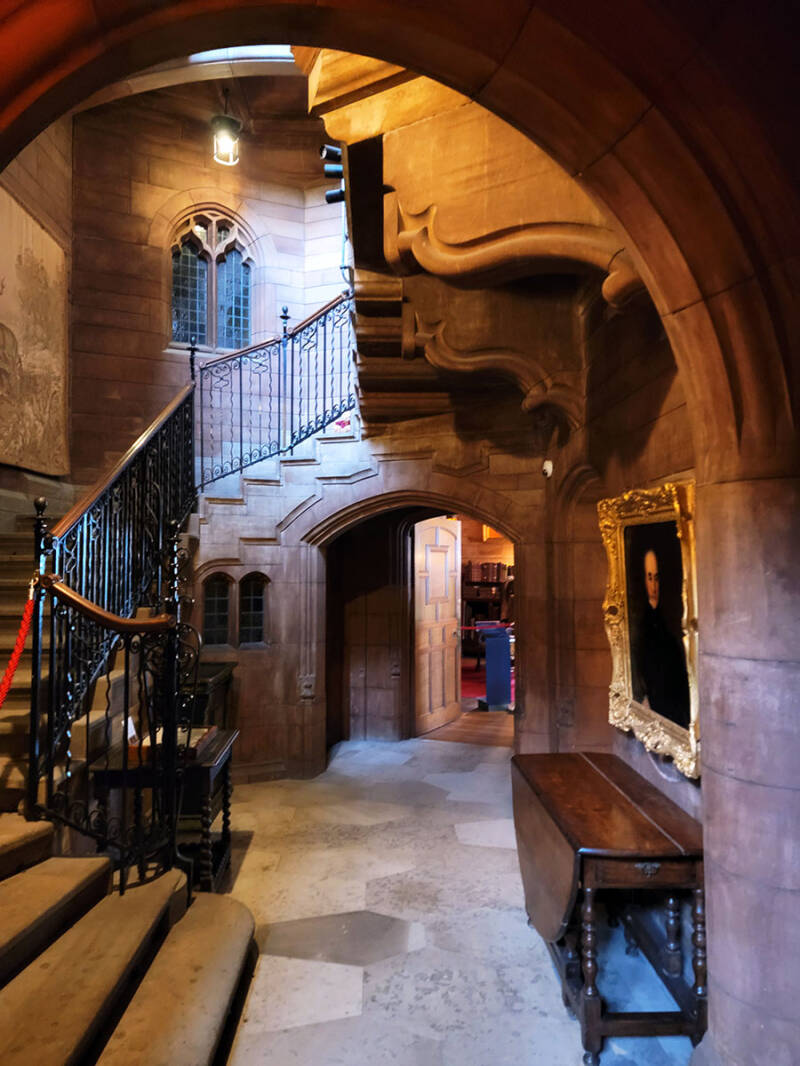
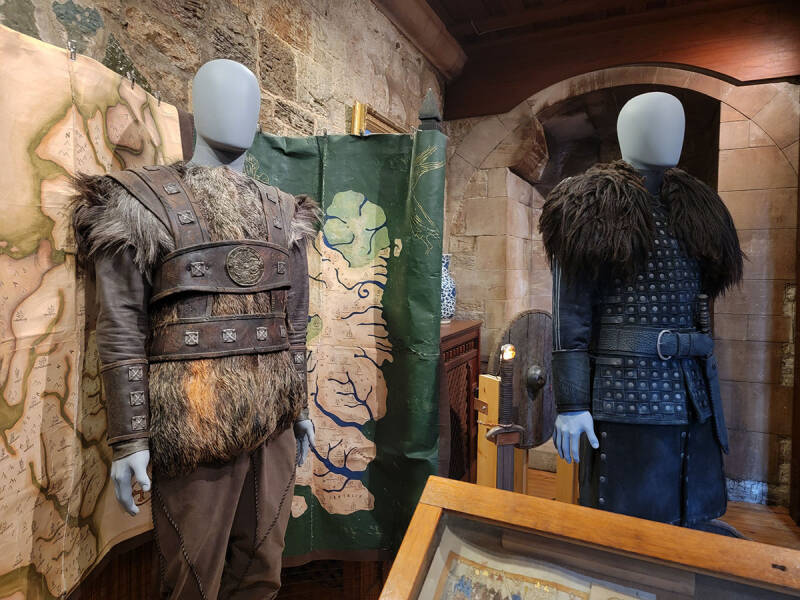
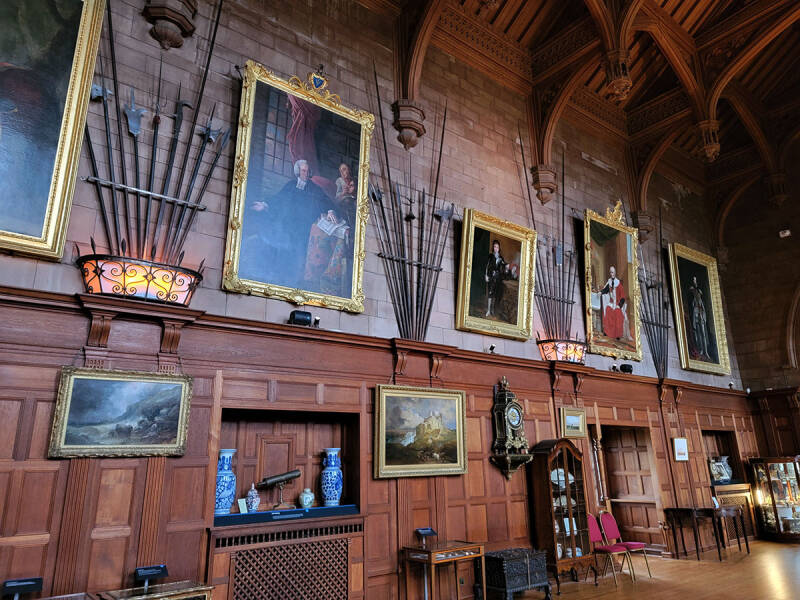
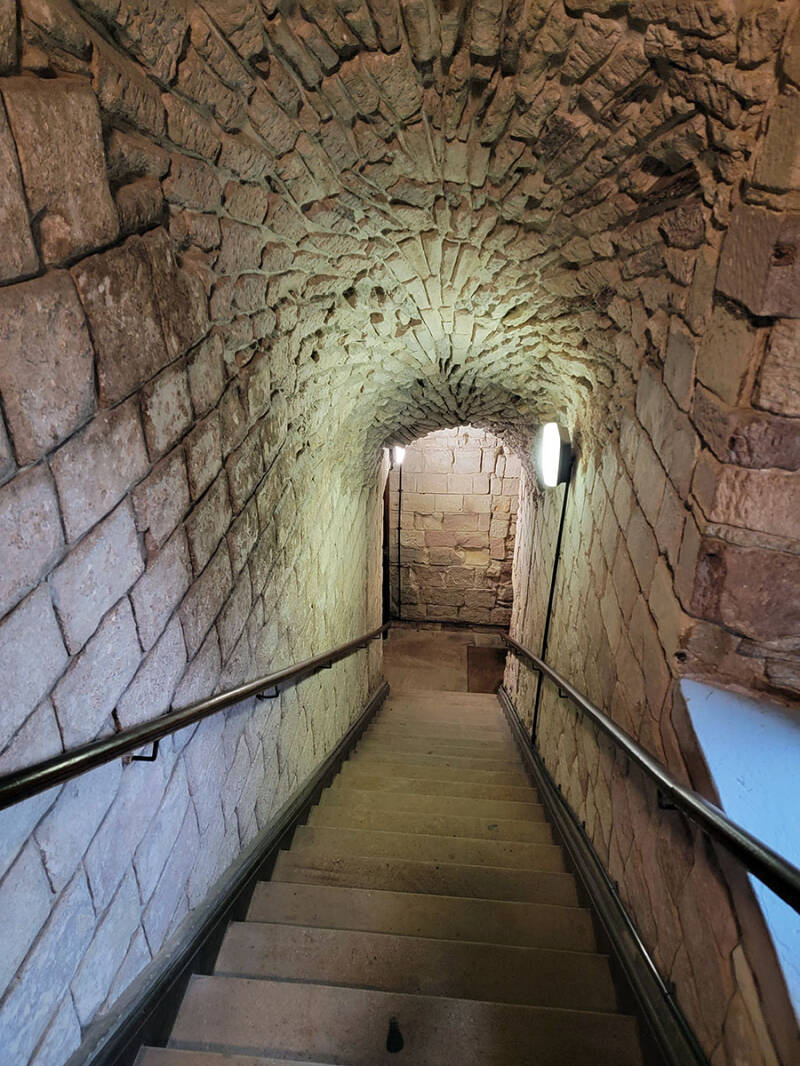
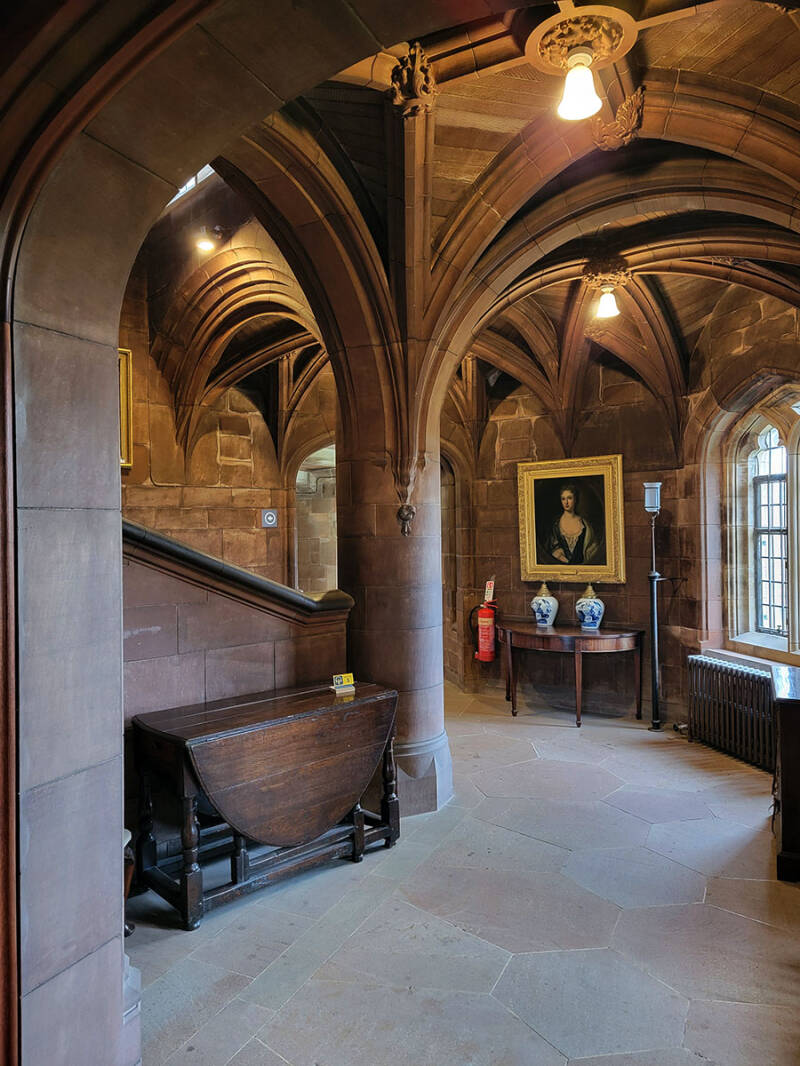
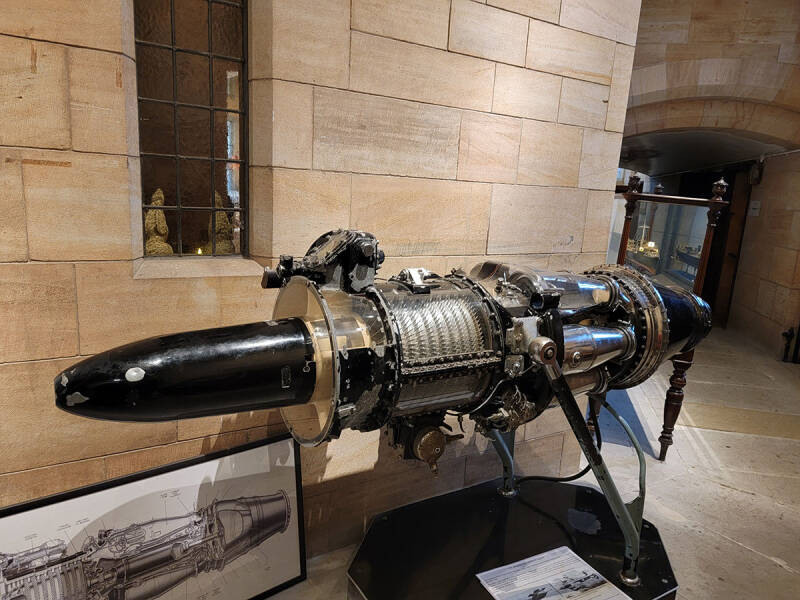
In the 19th century, the castle was purchased by the industrialist Armstrong, and his family still owns it today. Since Armstrong was a renowned engineer and inventor, part of the castle now houses a museum of military technology, where you can see both his own inventions—such as a gun with a hydraulic recoil system—and various weapons produced by his company.
I knew nothing about this museum when I was planning our visit to the castle, but it turned out to be the part that interested Ilya and Arseny more than anything else.
As the rain came down harder and harder, we could barely see the sea, even though the castle is perched on a rocky outcrop right by the shore, surrounded by sweeping grass-covered dunes.
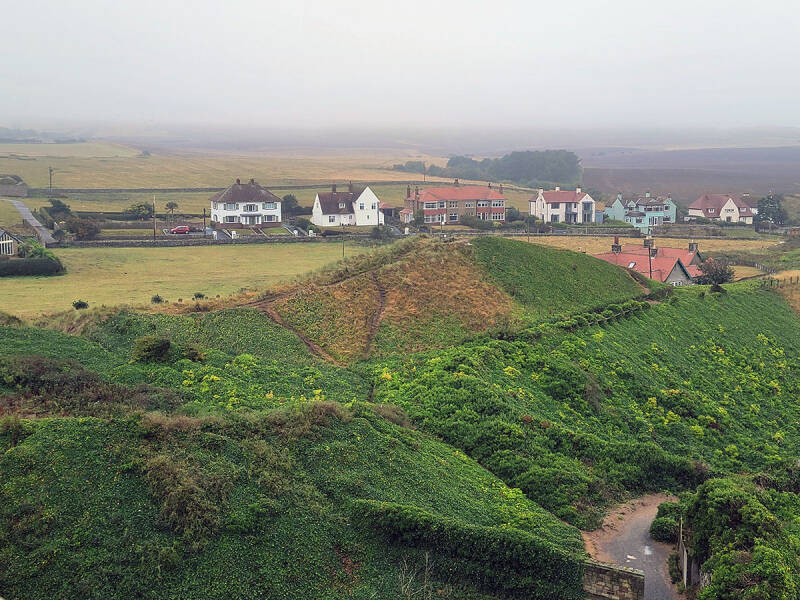
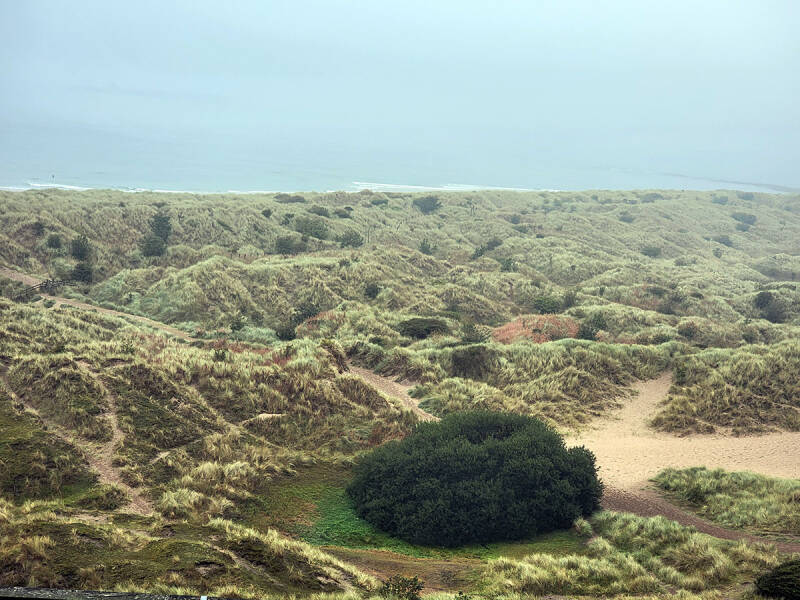
But even with visibility like this, it was obvious that the setting was incredibly atmospheric. We wandered around for quite a while, had lunch there, and then headed even farther north, to the town of Berwick-upon-Tweed.
I suspect the town must be absolutely beautiful in clear weather—beautiful in a completely different way from Whitby. There’s more gray stone here, and bridges connecting this almost-island town to the mainland. You can already feel how close you are to the border and to the North, and even the sea somehow seems harsher here.
Unfortunately, the rain and fog didn’t give us much of a chance to photograph the town, wander around properly, or really take it all in. We just hurried through the center in search of a grocery store and then dashed back to the house to escape the rain.
Day Five
The final day of our journey to the university had arrived. We crossed the invisible border into Scotland and made a small detour to IKEA to stock up on extra bedding, towels, and other little necessities.
And just a few minutes away from IKEA—literally five minutes—was a place I had dreamed of seeing with my own eyes for about fifteen years.
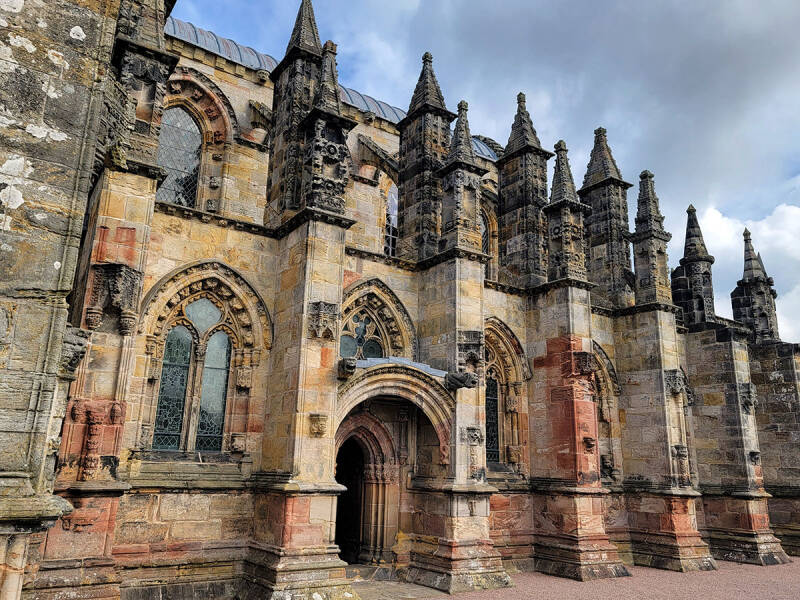
Rosslyn Chapel! AAAAAH!
I already quoted this poem when we were at the Louvre, and here I am quoting it again. (No, I’m not going to get tired of it. Yes, I’m crazy. I absolutely love The Da Vinci Code—and all the books Dan Brown drew inspiration from.)
The Holy Grail 'neath ancient Roslin waits
The blade and chalice guarding o'er Her gates
Adorned by masters' loving art, She lies
She rests at last beneath the starry skies
— Dan Brown, The Da Vinci Code
Here it is—ancient Rosslyn:
The chapel was founded by Sir William St Clair (!) in 1446.
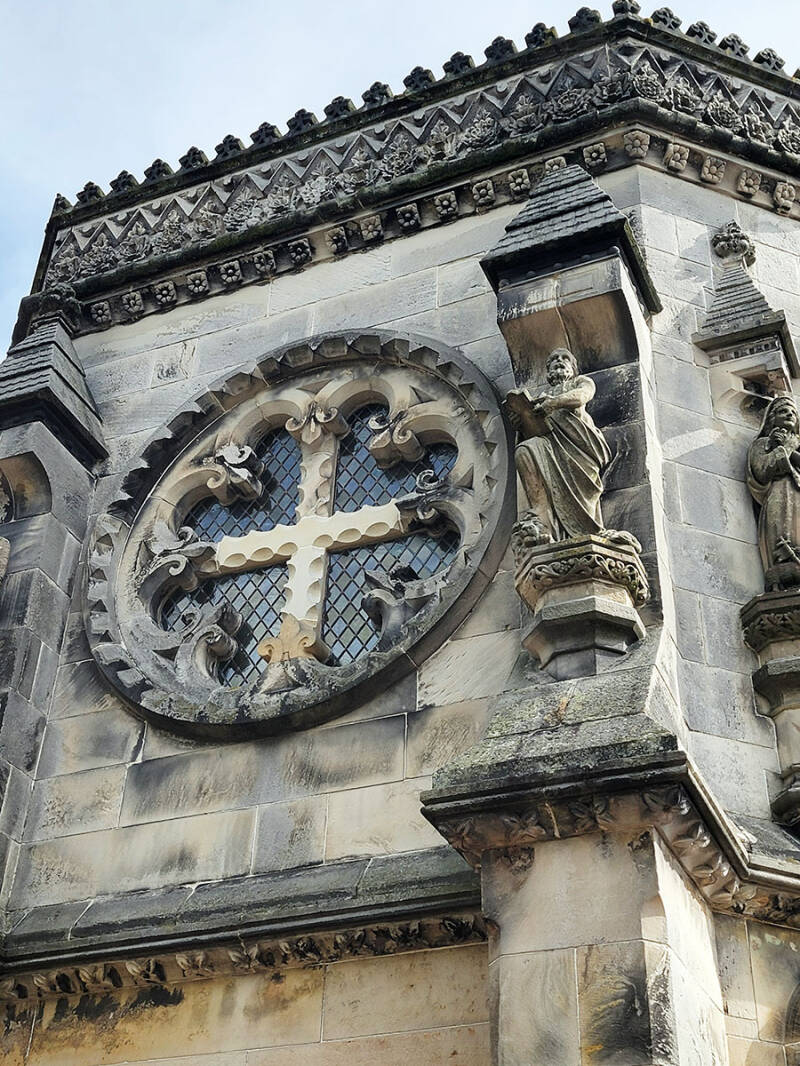
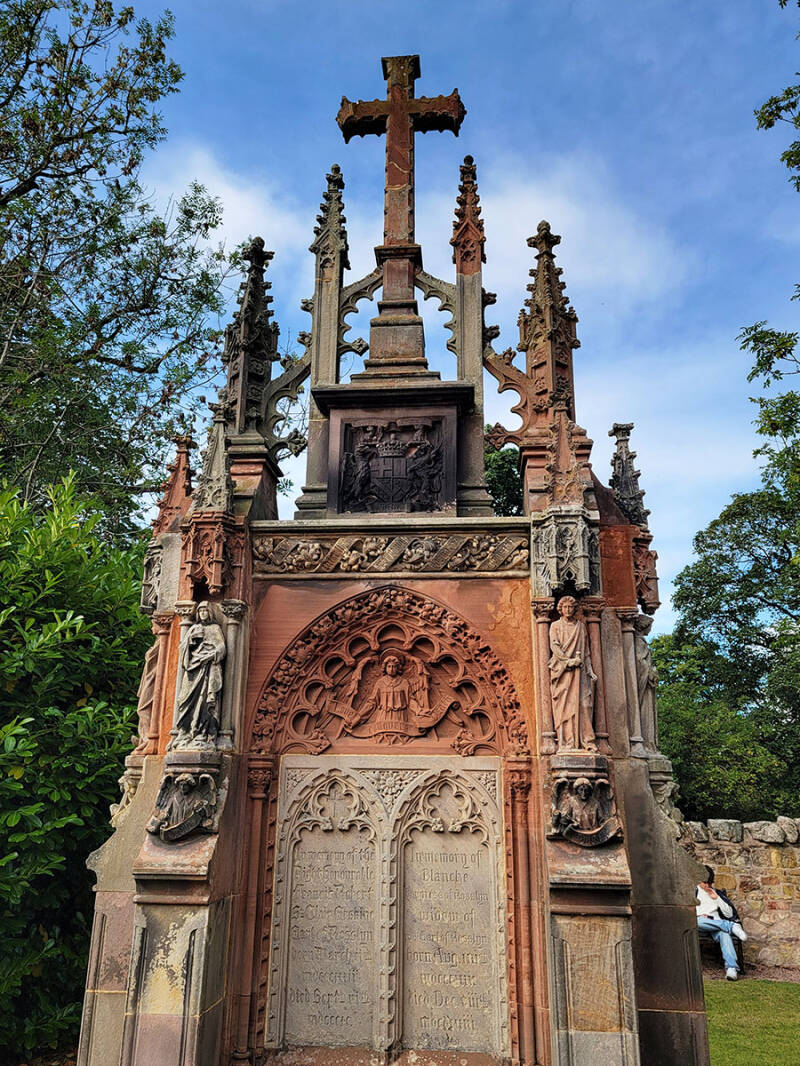
The ancestors of the St Clairs arrived in Scotland as early as the 11th century, with William the Conqueror. And when—returning once again to France—the great persecution and executions of the Templars took place between 1307 and 1314, some of them supposedly managed to escape and find refuge here, under Henry St Clair, Grand Master of the Knights Templar.
Much of the groundwork for this story was done by Baigent, Leigh, and Lincoln in Holy Blood, Holy Grail. They proposed that the Holy Grail was not a physical vessel at all, but a bloodline descending from Jesus and Mary Magdalene—and that the Templars, particularly their Scottish branch led by the St Clairs, were the guardians of this secret.
Dan Brown then beautifully tied all of this together with puzzles, London, Paris, the Rose Line (although Rosslyn actually has a completely different etymology), and wordplay linking St Clair with Sang Real and Saint Grail.
And there it is: Rosslyn Chapel—the place where the “sacred bloodline” and the “line of the rose” come together.
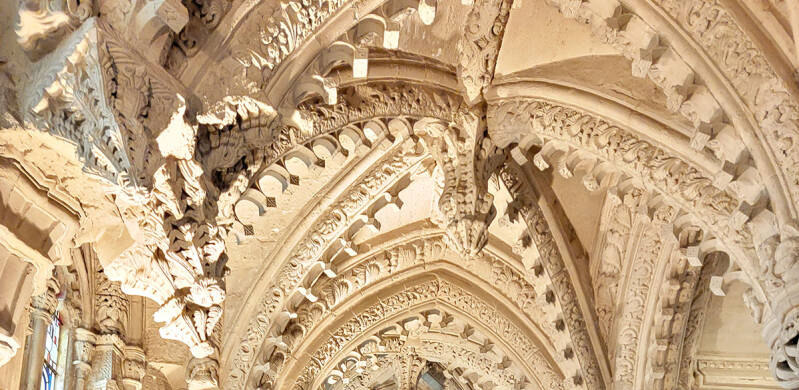
The most terrible thing is that photography isn’t allowed inside. It’s practically torture, because the chapel is extraordinarily beautiful. That star-covered ceiling,
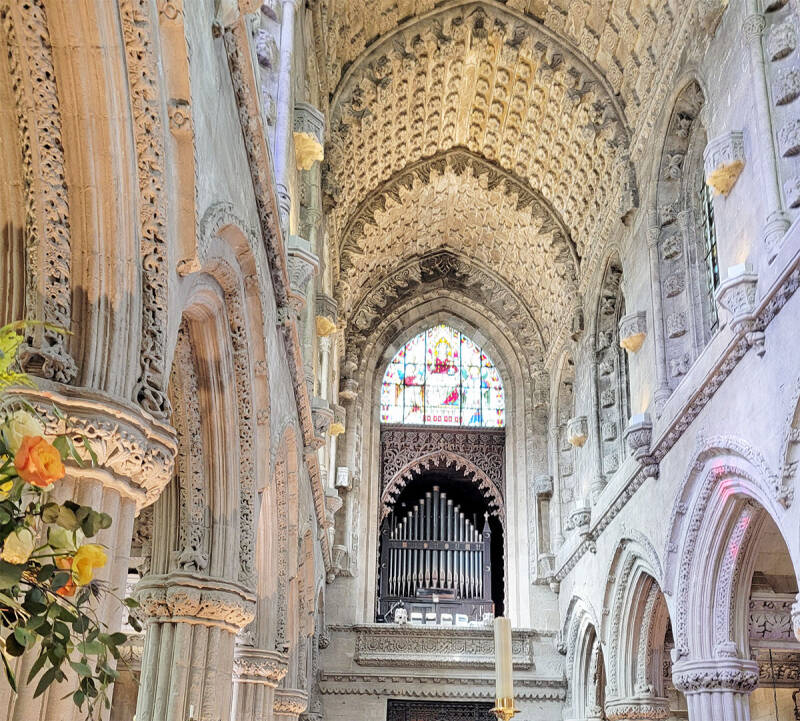
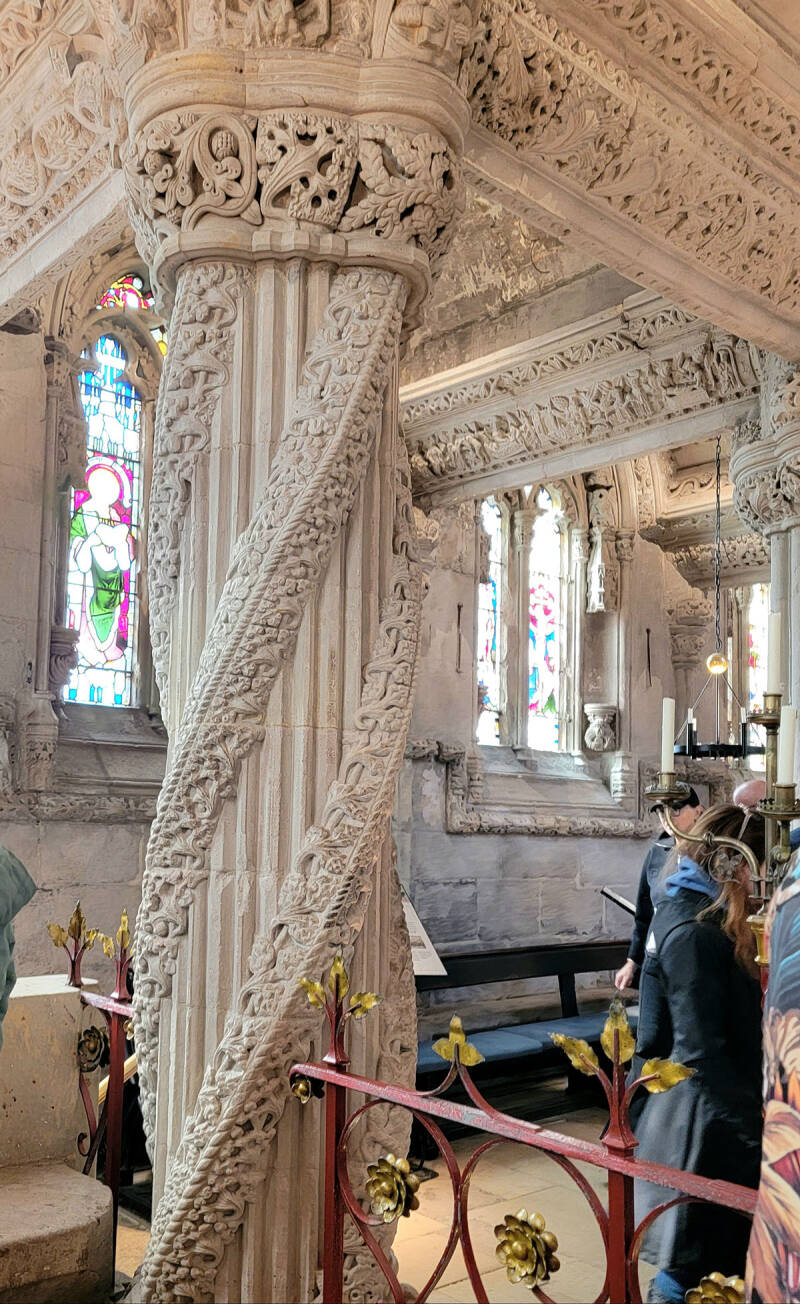
those lace-like columns, filled with symbols and mysteries. Those green faces. Those carvings of corn cobs, with no one quite sure how they ended up in medieval Scotland.
There was so much to look at that I wanted to examine every detail, photograph everything, and then go down a rabbit hole trying to figure out where it all came from and what it meant.
God, I’m so grateful to my boys for putting up with my madness and never putting up too much resistance when I drag them to places like this. They’re absolute gems!
So, basically, for complete happiness—and to finally bring this whole obsession full circle—I absolutely have to join The Saunière Society, which is based here and occasionally organizes all sorts of interesting events for itself and people like me. And the grand finale, of course, has to be a visit to Rennes-le-Château. Then I’ll be truly, completely happy!
On that inspiring note, we finally set off for St Andrews!
We all checked in together, but registration at the student residence was scheduled for the following day. I was curious, excited, happy, anxious—and not at all ready to let him go. A complete emotional mess, basically.
Continued here
Create Your Own Website With Webador